There are moments in corporate history that define a company’s trajectory for a decade — the decisions that are clear in hindsight, murky in the making, and consequential either way. For Kraft Heinz, that moment came in September 2025 when the board announced a plan to unwind the $40 billion merger that had created the company in 2015 — splitting its portfolio into two separate entities as an admission that the deal had not delivered what the dealmakers promised. In December 2025, the board appointed Steve Cahillane, the former chairman and CEO of Kellanova — itself recently acquired by Mars — to take the reins on January 1 and execute the separation.
Cahillane arrived. Assessed. And stopped.
In February 2026, less than six weeks into his tenure, Cahillane announced that the separation was being paused. Not cancelled — paused, with the optionality for a future split preserved. But the priority, in his judgment, was not to divide a broken company into two smaller broken companies. It was to fix the underlying business first. He committed $600 million in incremental investment across marketing, sales capabilities, and product development to execute that fix. He paused the split to free up resources and management attention that the separation process would have consumed. And he began the patient, granular work of rebuilding a consumer packaged goods business that had been managed for cost efficiency for so long that it had gradually stopped being managed for growth.
On Wednesday, May 6, four months after taking over, Cahillane delivered his first full quarterly results. The numbers were better than expected. The story behind the numbers was more interesting still.
The Q1 Numbers: A Genuine Beat
Kraft Heinz reported first-quarter revenue of $6.05 billion — comfortably above the LSEG consensus estimate of $5.89 billion, a beat of approximately $160 million or 2.7%. Earnings per share came in at 58 cents, beating the analyst expectation of 50 cents by a meaningful margin. Shares rose approximately 2.7% to 4% in trading following the results. The company maintained its full-year guidance, including a target for adjusted EPS of $1.98 to $2.10 and an expectation of organic net sales declining between 1.5% and 3.5% versus the prior year.
That full-year guidance range — projecting organic sales declines of between 1.5% and 3.5% — is itself a statement of the scale of the challenge ahead. Kraft Heinz is not yet growing. It is declining more slowly, and it is investing to reverse that trajectory. The Q1 beat is not evidence that the turnaround is complete. It is evidence, as Cahillane carefully framed it, that the investments made in 2025 and in the first months of 2026 are beginning to produce early traction. The distinction between “early traction” and “turnaround complete” is one that Cahillane himself has been scrupulous about preserving.
“While we are encouraged by the strong start to the year, we are reiterating our 2026 outlook,” he said. “This reflects an operating environment that remains volatile, with increasing inflationary pressures and persistently low consumer sentiment. At the same time, we are retaining the flexibility to increase investments in areas that are delivering strong returns.”
From 29% to 54%: The Market Share Story
The most revealing number in Wednesday’s earnings materials was not the revenue beat or the EPS outperformance. It was a data point buried in Cahillane’s prepared remarks about market share.
At the start of the year, 29% of Kraft Heinz’s US retail portfolio was gaining or holding market share. By March 2026, that figure had risen to 54% — a 25 percentage point improvement in two months. If the trend is real and sustainable, it represents a fundamental shift in the competitive momentum of a business that had been losing ground in key categories for years.
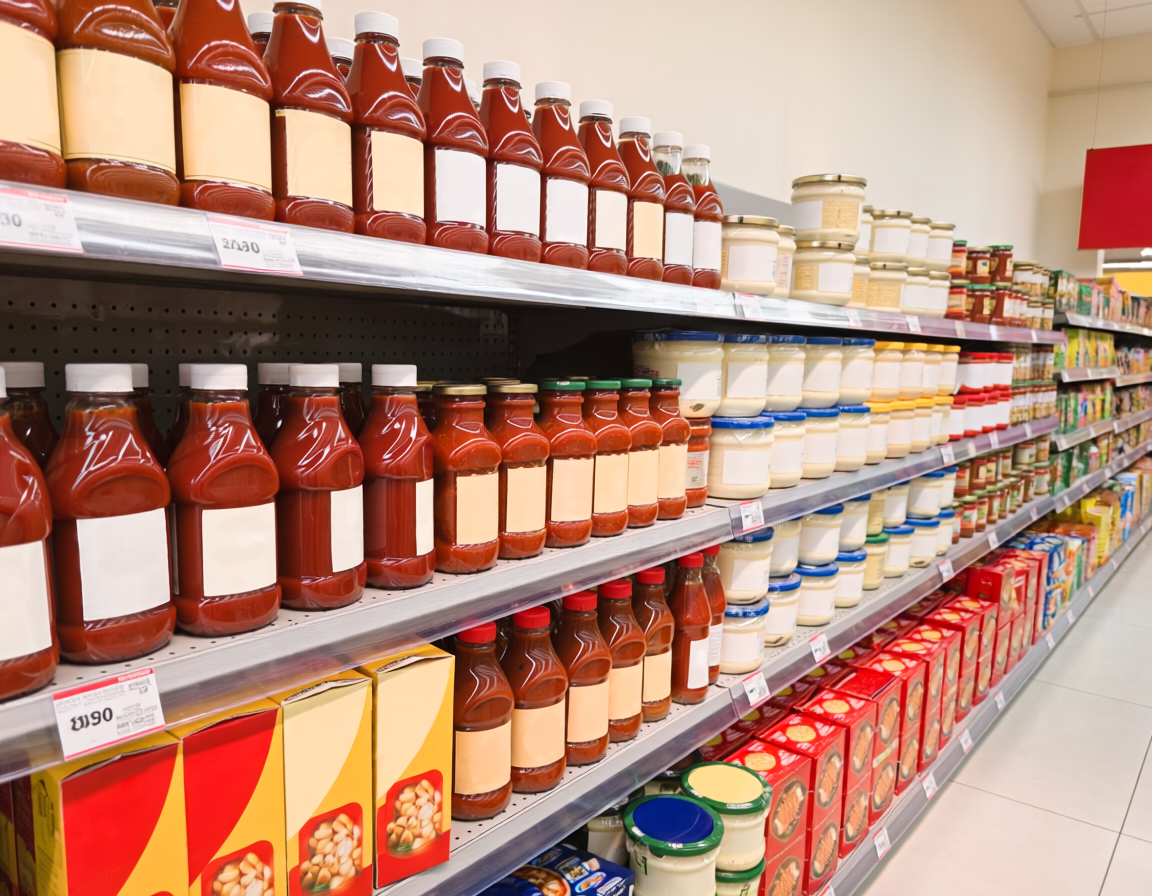
The improvement is concentrated in what Cahillane calls the “Taste Elevation” portfolio — the sauces, condiments, and condiment-adjacent products built around Heinz’s core brand equity. The Heinz brand, Cahillane said, is “one of the single clearest examples” of a brand where the company has the “right to win” — meaning the brand heritage, the product quality, and the consumer loyalty to justify investment rather than managed decline. Ketchup, hot sauces, mustards, BBQ sauces, the Cholula integration — these are the categories where Kraft Heinz’s reinvestment is being concentrated first, and where the early market share data suggests the investment is beginning to work.
The picture is less encouraging in other parts of the portfolio. Meats and meals — categories including Oscar Mayer processed meats and the Mac & Cheese franchise — remain challenged, with market share not yet recovering. Cahillane acknowledged this directly: “We still have much work to do, particularly in categories like meats and meals.” He described targeted actions being taken, including price investments across Oscar Mayer and increased innovation across Mac & Cheese — most notably the launch of Kraft Mac & Cheese PowerMac, a nutritionally enhanced variant with strong retail distribution across 35,000 stores. But results in those categories remain behind the trajectory he wants.
The $600 Million Investment Thesis
The strategic logic Cahillane has articulated is a deliberate rejection of the cost-cutting playbook that defined the 3G Capital era of Kraft Heinz management. Under the Brazilian private equity firm’s influence following the 2015 merger, Kraft Heinz aggressively reduced costs across every part of the business — marketing budgets, R&D investment, sales force headcount, and manufacturing capacity. The theory was that the company’s iconic brands could sustain volume on the strength of brand recognition alone, even as investment behind those brands was systematically reduced.
The theory proved wrong. Category by category, as marketing investment declined, as product innovation stalled, and as competitors continued investing in their brands, Kraft Heinz lost market share. The 2019 write-down of $15.4 billion in brand values — one of the largest impairment charges in consumer goods history — was the financial acknowledgement of what had happened to the business. The years that followed were spent managing a company whose brands were diminished, whose revenue was declining, and whose strategic path remained unclear.
Cahillane’s $600 million investment is the explicit reversal of that approach. He is increasing headcount in marketing, sales, and ecommerce. He is funding R&D for new product launches. He is making price investments in categories where Kraft Heinz’s pricing has become uncompetitive. He is restructuring incentive frameworks to reward growth rather than cost control. The $300 million in cost savings freed by pausing the split is being recycled almost entirely back into the business rather than returned to shareholders — a signal that Cahillane views the investment requirement as more urgent than the capital return question.
“Pausing the split freed up lots of resources as we said it would,” he told journalists, “and we reserve the right to continue to get smarter.”
The Macro Headwinds Cahillane Cannot Control
The turnaround is being executed in a macro environment that is not cooperating. Iran war-driven energy inflation is adding cost pressure to Kraft Heinz’s supply chain — food inputs, packaging, and logistics all carry exposure to oil price movements. Cahillane said the company is well hedged against higher oil prices for 2026, a statement that suggests prior-year purchasing contracts are providing short-term insulation similar to what Coca-Cola described last week. But he warned that longer-term challenges could emerge if costs remain elevated — an honest acknowledgement that hedging positions expire and that $100 oil sustained through 2027 would eventually reach the income statement.
The SNAP headwind is a separate structural challenge. Kraft Heinz’s full-year organic sales guidance includes an approximate 100 basis point drag from lower Supplemental Nutrition Assistance Program funding — the US government food assistance programme whose benefit reductions under the current administration are reducing the purchasing power of lower-income households who over-index on Kraft Heinz products. Lower-income consumers buying fewer processed food products is both a McDonald’s problem and a Kraft Heinz problem, and the SNAP funding reduction is compounding the Iran war fuel cost pressure on the same demographic.
Despite these headwinds, Kraft Heinz’s adjusted operating income guidance — expected to fall between 14% and 18% year-over-year in constant currency — already incorporates the $600 million investment and the SNAP headwind. The company is telling investors that it is choosing to absorb significant near-term profit pressure in exchange for building the brand equity and market share momentum that longer-term recovery requires. That is a coherent strategic choice. It requires patient capital to execute.
Warren Buffett’s Berkshire Hathaway remains a significant Kraft Heinz shareholder — the company is listed in analyses of Buffett’s value positions — which provides a degree of institutional patience that few turnaround situations enjoy. The question Cahillane is answering, one quarter at a time, is whether that patience is warranted.
Wednesday’s Q1 results suggest the early answer is yes. Carefully, tentatively, provisionally — but yes.
Written by Shalin Soni, CMA specializing in financial analysis, global markets, and corporate strategy, with hands-on experience in financial planning and analytical decision-making.
ALSO READ
• London Stocks Slip as Investors Weigh Mixed Earnings and Central Bank Outlook
• Best Buy Taps Veteran Bonfig to Lead Turnaround Amid Weak Consumer Demand
• Adobe Launches AI Suite for Enterprises as Competition Intensifies
Source: Based on Kraft Heinz Reports First Quarter 2026 and publicly available financial information.