It began, as far as investigators can determine, somewhere in the remote landscapes of South America — in the scrubland and grasslands of Argentina, Chile, or Uruguay where a species of rodent carries a virus that most of the world has never heard of, and where a Dutch birdwatcher spent four months travelling before boarding a cruise ship in Ushuaia on April 1. By the time the full scale of what happened next became clear, three people were dead, a Dutch-flagged vessel was stranded in the South Atlantic with 147 passengers and crew aboard, 22 countries were coordinating an evacuation operation, the World Health Organisation Director-General had personally visited Tenerife, and a US government aircraft carrying 17 Americans was crossing the Atlantic with two passengers in biocontainment units — one of whom had tested positive for one of the rarest and most dangerous viral diseases on earth.
On Sunday, May 10, the Department of Health and Human Services confirmed that one American passenger from the MV Hondius had tested positive for the Andes hantavirus. A second American was symptomatic. Their flight landed at Eppley Airfield in Omaha, Nebraska, in the early hours of Monday morning. The positive passenger was transported to the Nebraska Biocontainment Unit at the University of Nebraska Medical Center — the same facility that treated Ebola patients during the 2014 West African outbreak. The symptomatic passenger was taken to a second Regional Emerging Special Pathogen Treatment Center. The remaining 15 Americans were assessed at the National Quarantine Unit.
This is the story of how a birdwatching trip in Patagonia became an international public health crisis.
The Virus That Almost Nobody Carries and Its Unique Danger
Hantavirus is a family of viruses transmitted primarily through contact with the urine, faeces, or saliva of infected rodents — most commonly through breathing in dust contaminated by infected rodent droppings in enclosed or outdoor spaces where those rodents are present. The disease is rare, but when it strikes, it is frequently lethal. There is no approved antiviral treatment and no vaccine. Hantavirus Pulmonary Syndrome — the form the Andes virus causes — progresses from flu-like symptoms to acute respiratory distress syndrome and cardiac shock with terrifying speed. Case fatality rates in historical outbreaks have ranged from 35% to 50%.
What makes the Andes hantavirus specifically alarming — and what has driven the WHO’s elevated response to the MV Hondius outbreak — is a characteristic that distinguishes it from every other known hantavirus species. The Andes virus is the only hantavirus confirmed to spread between humans. Every other species of hantavirus requires direct contact with infected rodents for transmission. The Andes virus can pass from person to person. The epidemiological implications of that single characteristic are the reason the CDC classified this outbreak as a Level 3 emergency response, the highest tier in its emergency classification system.
In practice, human-to-human transmission of Andes virus has historically required close, sustained contact — the kind typical of household members or healthcare workers without adequate protection. It is not airborne in the way that influenza or COVID-19 is. WHO currently assesses the global risk from this outbreak as low. But the nature of a cruise ship — 147 people sharing dining rooms, corridors, ventilation systems, and social spaces over several weeks — creates the kind of sustained proximity that makes transmission risk difficult to fully assess.
The Timeline: How the Outbreak Unfolded
The reconstruction of events, pieced together by WHO investigators, the Argentine health ministry, and health authorities across the eight countries whose citizens are confirmed or suspected cases, reveals a sequence that highlights why hantavirus is so difficult to detect early.
The index case — a Dutch man, 70 years old — boarded the MV Hondius in Ushuaia, Argentina, on April 1, having spent four months travelling through Chile, Uruguay, and Argentina on a birdwatching trip. He returned to Argentina from Uruguay just four days before departure. The Argentine health ministry’s report documented his route, which passed through areas where the rodent species known to carry the Andes virus is present. He developed symptoms on April 6 and died aboard the ship on April 11.
Here is where the first critical failure of detection occurred: because his symptoms resembled those of common respiratory viruses, no samples were taken at the time of his death. Hantavirus was not suspected. His body was removed from the vessel when the ship docked at Saint Helena on April 24. His wife — who had been in close contact with him throughout his illness — disembarked at Saint Helena with gastrointestinal symptoms. She subsequently deteriorated during a flight to Johannesburg and died upon arrival at a hospital emergency department on April 26. On May 4, laboratory testing confirmed her death was caused by hantavirus. That confirmation, arriving nearly two weeks after her husband’s death, was the moment the outbreak became visible.
By May 2, when the WHO received formal notification from the UK — Saint Helena is British territory — the ship was already at sea, carrying an unknown number of passengers who may have been exposed. The total of confirmed and probable cases has since risen to 10, including the two confirmed deaths, one suspected additional death, the critically ill British passenger evacuated to South Africa, a Swiss patient treated in Zurich, and now the American who tested positive during evacuation.
The Evacuation: 22 Countries, One Ship, Six Days of Diplomatic Complexity
The logistical challenge of safely evacuating 147 passengers of more than 15 nationalities from a disease-affected vessel anchored in the mid-Atlantic was, by any measure, extraordinary. The MV Hondius spent several days anchored off the coast of Cape Verde — judged to have insufficient medical infrastructure to manage the operation safely — before Spain approved its arrival in Tenerife despite the initial objection of the Canary Islands president, Fernando Clavijo, who cited concern for his region’s population.
Spain ultimately overruled the regional objection on humanitarian and legal grounds, invoking its obligations under international law. The Spanish health and interior ministers personally supervised the operation at Tenerife, alongside WHO Director-General Dr. Tedros Adhanom Ghebreyesus, who flew to the Canary Islands — a signal of the seriousness with which the WHO is treating the outbreak. Evacuation was conducted by nationality: passengers were transferred from the anchored vessel to the port by speedboat, separated from local populations at every point, and placed directly onto repatriation aircraft without contact with the Canary Islands public. Crew members involved in the transfer wore hazmat suits and respirators. A French passenger developed symptoms during their repatriation flight to Le Bourget airport in Paris, where French authorities identified 22 additional contact cases among people on the same flights.
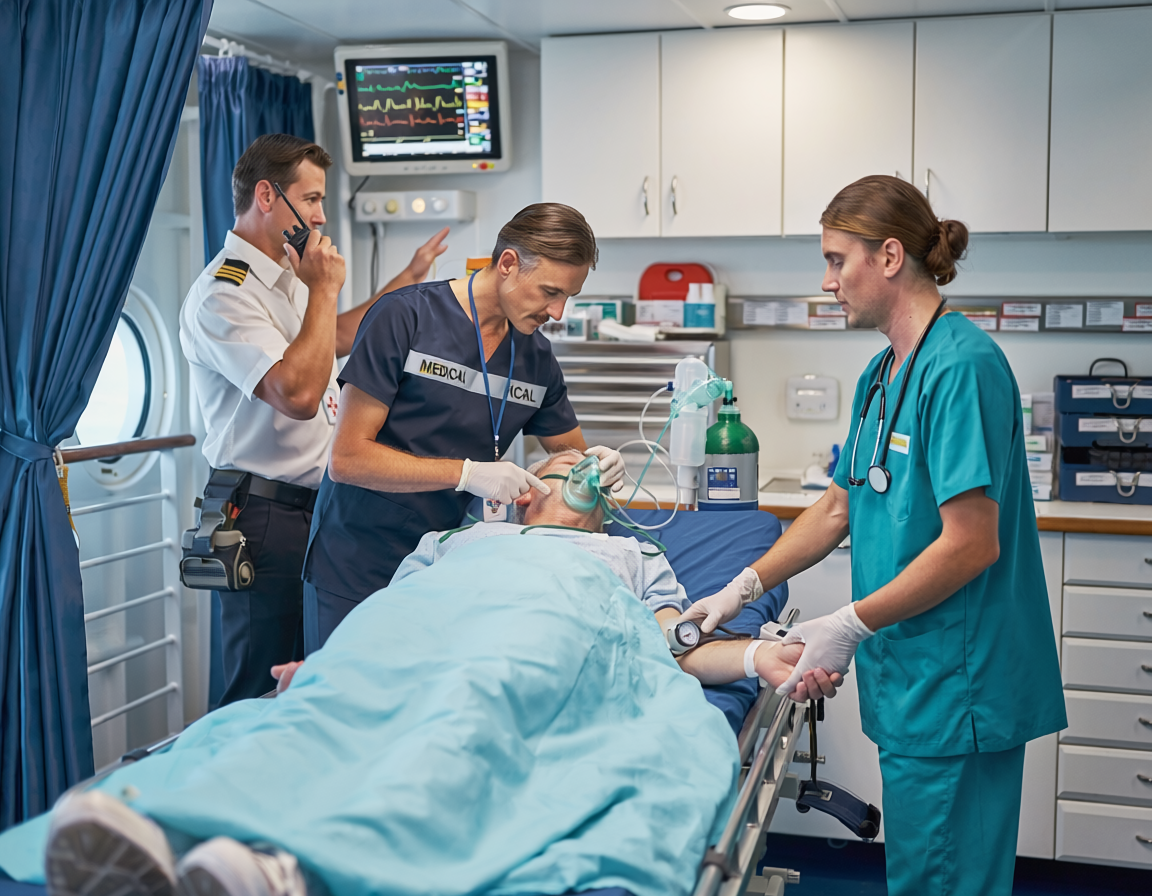
The American operation was particularly carefully managed. The State Department coordinated the repatriation flight. Two passengers — the PCR-positive individual and the symptomatic individual — travelled in the aircraft’s dedicated biocontainment units, physically separated from the other 15 Americans for the duration of the transatlantic flight. On landing in Omaha, the positive passenger was transported to the Nebraska Biocontainment Unit — one of only a handful of facilities in the United States with the physical infrastructure and clinical expertise to safely treat patients with highly infectious, high-consequence diseases. Nebraska Medicine confirmed the positive passenger was not experiencing symptoms at the time of arrival and would receive a follow-up confirmatory test.
What Public Health Authorities Are Saying
The WHO’s formal risk assessment — global risk low — is grounded in the epidemiology of Andes virus transmission. Human-to-human spread has been documented, but it requires close, sustained contact. The outbreak appears to have been seeded by a single index case whose exposure occurred in South America before boarding, with subsequent transmission limited to close contacts.
Experts quoted in American and European media have emphasised the “end-of-its-run” framing for the outbreak. If the source of exposure was the index case’s South America travel rather than ongoing rodent exposure aboard the ship, and if human-to-human transmission has been limited to the close contacts already identified, then the progression of new cases should slow as those contacts are isolated and monitored. The critical unknown is whether any cases remain undetected among the 147 passengers and crew — and that question will only be answered as the 21-day incubation period runs its course for everyone who was aboard.
The CDC has issued guidance for US residents returning from the ship, advising self-monitoring for symptoms including fever, muscle aches, and respiratory difficulty. Any individual who develops symptoms is advised to contact their physician and inform them of the exposure history before visiting a healthcare facility — a precaution designed to ensure that physicians can take appropriate infection control measures before any examination.
For the 17 Americans now in Nebraska, the immediate question is whether the positive test indicates an active infection requiring treatment, or whether the “mild PCR positive” is an early signal that will clear without clinical progression. That answer will come from the Nebraska Biocontainment Unit in the hours and days ahead. For the rest of the world watching, it will be the clearest indicator yet of how far the MV Hondius outbreak has reached — and whether the extraordinary international evacuation operation managed to contain it in time.
Written by Shalin Soni, CMA specializing in financial analysis, global markets, and corporate strategy, with hands-on experience in financial planning and analytical decision-making.
ALSO READ
• China’s CATL Expands Into Turkey With First Overseas EV Chassis Project
• Apple’s AI Strategy in 2026: Reinvention or Evolution?
• Gunman in White House Dinner Shooting Faces Court Hearing as Charges Loom
Source: Based on Forbes and publicly available financial information.