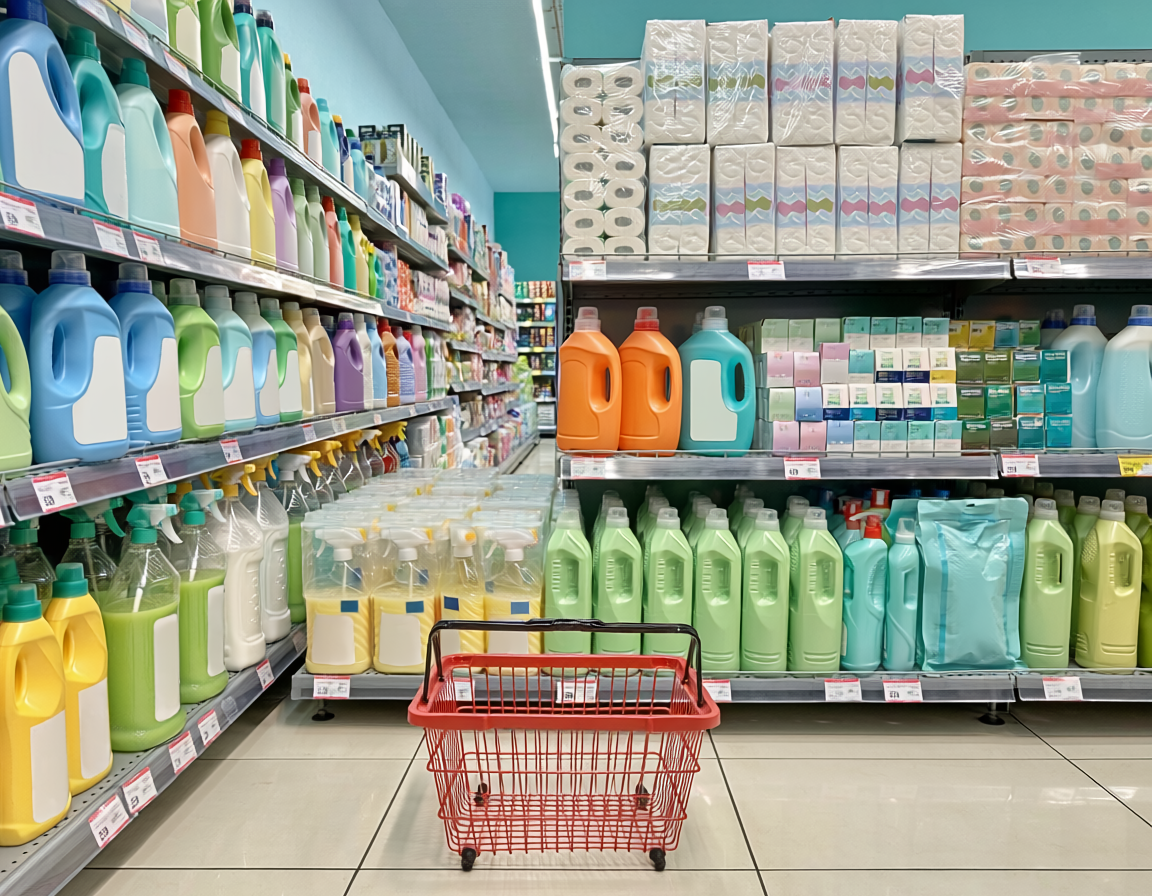
Procter & Gamble is one of the most reliably defensive businesses in the world. The maker of Tide, Pampers, Pantene, Oral-B, Gillette, and dozens of other household staples has paid an uninterrupted quarterly dividend since 1890 — 136 years of consecutive payments that have weathered world wars, the Great Depression, the financial crisis, and the pandemic. When the world gets complicated, people still brush their teeth, wash their clothes, and buy nappies. That non-discretionary demand foundation is precisely why investors own P&G through difficult markets, and why its earnings are watched as a barometer of the global consumer economy rather than just as a corporate results event.
On Friday, April 24, P&G reported fiscal third-quarter results that were, by its own high standards, genuinely solid. Net sales rose 7% to $21.2 billion. Organic sales grew 3%, driven by 2% volume growth — the first time in a year that the company reported growing volume across the entire business — and 1% contribution from pricing. Core earnings per share came in at $1.59, up 3% from the prior year, beating analyst expectations. Beauty, the segment most at risk from Chinese consumer caution and premium skincare competition, posted 7% organic growth. P&G raised its dividend for the 70th consecutive year, announcing a further 3% increase. The shares rose 2.6% on the day.
Then came the paragraph that complicated everything: a $1 billion post-tax profit warning for fiscal 2027 from surging oil prices driven by the Iran war.
The $1 Billion Oil Warning and What It Means
The scale of the forward warning is significant enough that P&G’s CFO Andre Schulten was at pains to ensure analysts understood its weight. “The noise, I would call it, from the commodity exposure is significant, as a billion dollars after tax is nothing to sneeze at from a headwind standpoint,” he said on the post-earnings call. The characteristic understatement of “noise” for a ten-figure post-tax profit impact is either deliberate corporate calm or the reflexive language of a finance chief trained never to alarm markets unnecessarily. Probably both.
The mechanism is straightforward. P&G is one of the world’s largest buyers of petrochemical-derived materials. The plastic packaging that protects a bottle of Head & Shoulders shampoo. The superabsorbent polymer in a Pampers nappy that locks away moisture. The synthetic fibres in a Gillette shaving gel. The resin in a Febreze spray canister. The diesel that moves all of it from factory to distribution centre to store shelf. A significant proportion of what P&G makes and ships is either directly made from oil derivatives or moved using fuel whose price is set by crude markets. The company’s total cost of goods sold was $40.85 billion in 2025. Even small percentage movements in commodity costs translate into very large absolute dollar impacts at that scale.
“A lot of our materials are petrol-based, so with oil at around $100, there’s a significant impact in terms of input cost,” Schulten said on the media call. The reference point is explicit and important: oil at around $100 per barrel, compared with approximately $60 before the US-Israeli strikes on Iran on February 28. That roughly $40 per barrel increase, sustained across P&G’s full procurement exposure over a fiscal year, produces the $1 billion post-tax hit the company is now flagging for fiscal 2027.
The nearer-term impact is smaller but not trivial: P&G also flagged a $150 million hit in the fourth quarter of fiscal 2026 from the same combination of commodity cost inflation, feedstock exposure, and logistics disruption from the Middle East conflict. The $150 million represents the immediate, already-priced effect of the oil shock on Q4 supply chains and transportation costs. The $1 billion is the forward-looking estimate of what a sustained $100 oil price environment does to P&G’s full-year cost structure from July 2026 onwards.
The Quarter That Beat Despite the Shadow
The Q3 results, which covered the January-to-March 2026 period, tell a story that is analytically distinct from the forward warning — and worth examining on its own terms, because the operational performance was stronger than the headline narrative of oil-cost anxiety might imply.
Volume growth of 2% across the company was the most important positive signal in the results. For context: P&G spent much of fiscal 2024 and the first half of fiscal 2025 fighting volume declines as consumers, squeezed by the cumulative effect of years of post-pandemic price increases, traded down to private labels and reduced pack sizes. The return to volume growth means consumers are buying more P&G products — not just paying more for the same amount. That is the health metric that matters most for a consumer goods company, because it measures demand rather than pricing power.
Beauty was the standout segment, posting 7% organic growth driven by strong performance in Hair Care, Personal Care, and Skin Care. The segment that perhaps most surprised analysts was Greater China, which delivered 3% organic growth in the quarter despite a consumer environment that the company itself described as “challenging.” SK-II, P&G’s premium Japanese skincare brand that had been a persistent drag during China’s luxury goods slowdown, grew 13% in the country. That single data point — SK-II up 13% in China in a quarter when consumer confidence was under pressure from the Iran war’s energy shock — speaks to the power of product quality and brand investment over economic cycle headwinds when executed well.
The Baby, Feminine and Family Care segment delivered 3% organic growth with an 11% increase in net earnings, benefiting from productivity savings and commodity cost tailwinds in materials that are less directly oil-exposed than some of P&G’s other segments. Fabric and Home Care grew volume 2%, driven by North American Tide demand. Health Care and Grooming were the two relative underperformers — health care volume declined 2%, and grooming, which houses Gillette and Venus, also saw a 2% volume decline. Both reflect specific competitive dynamics rather than macroeconomic deterioration.
The Strategic Response: Three Levers, No Silver Bullet
The question every analyst asked on the call, in various formulations, was the same: given the $1 billion headwind, does P&G still see a path to earnings growth in fiscal 2027? Schulten’s answer was carefully structured around three responses the company can deploy, none of which individually resolves the challenge, and all of which carry trade-offs.
The first lever is pricing. P&G has demonstrated, across multiple commodity cost cycles, a formidable ability to push price increases through to consumers in ways that preserve volume better than most of its peers. The brand equity built over decades allows P&G to take selective price increases on specific product lines without triggering the mass trading-down that lower-equity brands fear. The trade-off is that pricing power is not unlimited, particularly in a period when household purchasing power is already under pressure from Iran war-driven energy inflation. A consumer choosing between a $12 Tide and a $7 store-brand detergent is doing that calculation every time they visit the supermarket.
The second lever is productivity and cost savings. P&G has maintained a sustained programme of manufacturing and supply chain efficiency improvements that has consistently generated several hundred million dollars in annual savings. The company generated $4 billion in operating cash flow in Q3 alone and maintains an adjusted free cash flow productivity rate of 82%. The balance sheet provides the flexibility to absorb cost shocks without immediate restructuring. But productivity savings are bounded: they cannot substitute for a billion-dollar commodity headwind.
The third lever is portfolio and geographic mix management — shifting sales toward higher-margin products and faster-growing markets that dilute the impact of cost inflation on total profitability. The Beauty segment’s premium SK-II performance in China, the strong Skin Care personal care mix, and continued North American market share gains in Fabric Care all represent this lever being deployed in real time.
Schulten’s bottom-line answer on whether earnings growth is still achievable in 2027 was measured: “Geopolitical dynamics have thrown new challenges in front of us, but we will continue to fully support the business to maintain the momentum we’re creating.” That is a CEO answer — affirming commitment without guaranteeing outcomes, because outcomes depend on oil prices that P&G does not control.
The Warning That Will Echo Through Earnings Season
P&G’s $1 billion profit warning matters beyond P&G itself. It is a specific, quantified statement from one of the most competently managed large-cap consumer companies on earth about what sustained $100 oil means for the cost structure of a business that depends on petrochemical inputs and global logistics. The warning joins a growing catalogue of similar disclosures from airlines, chemical companies, food manufacturers, and logistics providers — all of which are translating the Iran war’s energy shock into specific financial damage estimates.
The cumulative message from this earnings season is that the economic cost of the conflict extends far beyond the directly affected sectors of oil and aviation. It is embedded in the cost of a bottle of shampoo, a bag of washing powder, and a pack of nappies. The $1 billion that P&G is flagging for 2027 will ultimately flow, at least in part, to the consumer — through price increases, reduced promotional spending, or product size adjustments — in ways that are difficult to see in quarterly results but that will be felt in household budgets across 180 countries.
P&G has beaten commodity cycles before. It will likely beat this one too. But the warning was not “noise.” It was the honest arithmetic of what happens to a $40 billion cost base when oil moves $40 a barrel and stays there.
Written by Shalin Soni, CMA specializing in financial analysis, global markets, and corporate strategy, with hands-on experience in financial planning and analytical decision-making.
ALSO READ
• Swiss National Bank Defends Investment Strategy Amid Calls to Drop Palantir Stake
• Handelsbanken Profit Beats Forecast as Lower Costs Offset Interest Income Pressure
• Mulberry Returns to Sales Growth as Turnaround Strategy Gains Momentum
Source: Based on P&G Q3 Earnings Call Highlights and publicly available information.