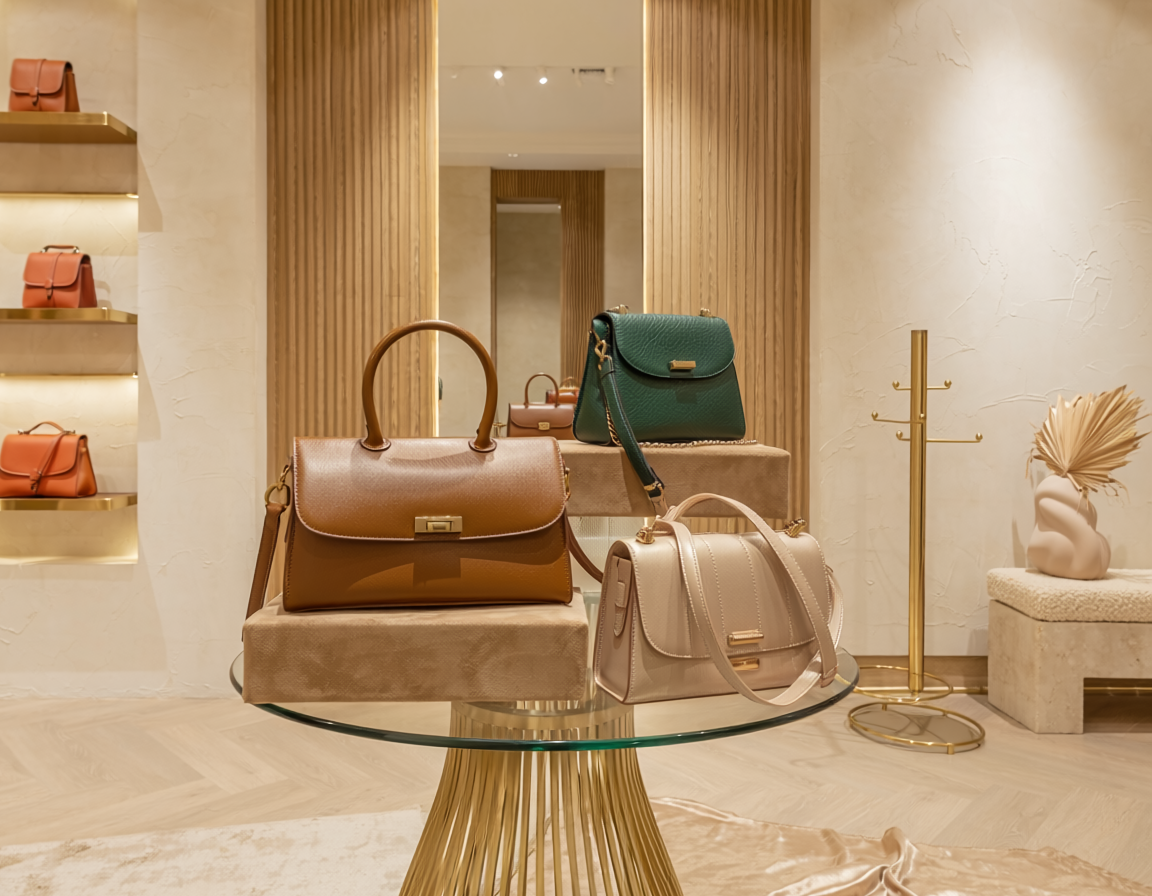
For a brand that was once described as Britain’s answer to luxury — an authentically homegrown alternative to the French and Italian houses that dominate the global handbag market — Mulberry had spent several difficult years drifting. Price cuts, heavy discounting, a failed push into accessible luxury, and then the abrupt collapse of a potential acquisition by fellow luxury brand Frasers Group left the Somerset-based company in a position that its management acknowledged required fundamental reset. The share price had fallen. The brand’s clarity had blurred. Its identity as a distinctively British lifestyle label had become uncertain.
On Monday, April 21, Mulberry delivered a report that suggests the reset is working. The company posted full-year revenue growth of 5.7% on a constant currency basis for the 52 weeks ended March 28 — its first return to annual sales growth after an extended period of decline — with like-for-like retail and digital sales rising in every market in the second half. The shares responded immediately, rising nearly 8%.
The Numbers Behind the Recovery
The headline 5.7% full-year growth figure understates the velocity of the recovery, because the improvement was heavily concentrated in the second half of the financial year. In the first half, the business was still finding its footing. In the second half, constant currency sales grew 13.6% year-on-year — a meaningful acceleration that suggests the strategy shift is gaining real momentum rather than producing a one-time statistical improvement.
By channel, the standout performer was the franchise and wholesale business, which grew 33.3% across the full year — advancing 35.5% in the first half and 31.2% in the second. This is significant because wholesale and franchise growth reflects not just consumer demand but the confidence of retail partners in the brand. When Selfridges in the UK and The Webster in the US deepen their engagement with Mulberry, they are making a commercial bet on the brand’s trajectory. That level of wholesale growth suggests the trade is placing that bet.
Retail and digital sales were more mixed across the year but strengthened markedly in the second half: store sales posted 12.5% growth in H2 after a 7.0% decline in H1, and digital sales grew 9.2% in H2 after contracting 9.9% in the first half. The full-year figures — 2.9% store growth and 1.1% digital growth — look modest, but the second-half acceleration demonstrates that the channel recovery is real and building.
Regionally, the performance was broad-based and striking in its breadth. UK like-for-like retail and digital sales rose 13.7% in H2 — important because the UK is Mulberry’s core market and the bedrock of its brand identity. But the international markets delivered even stronger numbers. US like-for-like sales grew 20.1%. The European Union (excluding the UK) surged 37.8%. Asia Pacific grew 20.8%. For a brand that had been struggling to articulate its international proposition, the recovery of these markets alongside the domestic foundation is the most encouraging element of the results.
The Strategy: Back to the Mulberry Spirit
Andrea Baldo, who joined Mulberry as CEO in 2024 from Danish brand Ganni, inherited a company that had tried to grow by broadening its appeal and lowering its prices — a strategy that proved to dilute rather than expand the brand’s value. His response, crystallised in the ‘Back to the Mulberry Spirit’ programme, is the opposite: simplify the business, reconnect with the brand’s British heritage and craftsmanship narrative, restore full-price discipline, and reignite the creative identity that made Mulberry an aspirational product in the first place.
The full-price discipline aspect of the strategy is critical and commercially consequential. The luxury industry has a well-documented pathology around discounting: brands that rely on markdowns to move inventory train customers to wait for sales, erode the perceived value of the product, and compress margins without generating sustainable loyalty. Mulberry had fallen into that pattern. Under Baldo’s direction, the company has cut back on discounting and concentrated sales on full-price transactions — a harder discipline in the short term but one that supports both margin improvement and brand perception. Gross margin improved in fiscal 2026, continuing the progress established in the first half when it reached 69%.
Two product initiatives illustrate the strategy’s execution. The Bayswater Limited Edition bag — a reinterpretation of one of Mulberry’s most iconic styles — sold out within minutes of its February launch. That kind of response is not achieved by discounting; it is achieved by managing scarcity, communicating heritage, and activating a customer base that wants to feel they are buying something genuinely special. The Boston bag performed strongly across the year. These are not new product categories or technological departures as they are investments in the brand’s existing equity, delivered with renewed conviction and quality of execution.
The creative dimension of the reset received its most significant statement with the appointment of Christopher Kane as creative director of Mulberry’s returning ready-to-wear collection. Kane, who closed his own eponymous label in 2023, brings a reputation for intelligent, distinctively British design and a media profile that has generated what the company described as “remarkable engagement from the industry,” including from leading partners at Selfridges and The Webster. The first Kane collection will be unveiled in September 2026, with product available in stores and online from January 2027.
The Headwinds That Did Not Stop the Recovery
The achievement of this turnaround performance deserves to be contextualised against the conditions in which it was delivered. The broader UK retail sector has faced significant pressure in 2026, with cautious consumers increasing savings amid sluggish economic growth. Key luxury markets globally have not made it straightforward either. China, which was a major growth driver for luxury houses during the post-pandemic recovery years, has remained slow to rebound to pre-2022 spending levels. Mulberry itself had strategically decided to scale back its China exposure under Baldo — a decision that in the context of 2026’s China slowdown looks prescient rather than conservative.
The Iran war added a further headwind specific to the luxury sector. The fallout from the conflict has hit high-margin airport retail — a significant channel for luxury goods — and dampened demand in Gulf markets, where elevated energy revenues had historically supported strong luxury spending. For Mulberry to post the numbers it did against that backdrop makes the underlying recovery more credible, not less.
What the Campaign Says About the Brand’s Direction
A detail in the results announcement worth noting is the brand’s latest campaign, which featured not models or celebrities but the artisans and craftspeople working on the factory floor at Mulberry’s Rookery factory in Somerset — one of the original manufacturing sites that gives the brand its Made-in-Britain credentials. The campaign, shot by long-time collaborator Tim Walker, depicts seven craftspeople at their workstations holding finished Mulberry bags.
This is not accidental. It is a deliberate statement about what Mulberry wants to be and who it wants to attract: customers who value the knowledge that their bag was made by skilled hands in Somerset, who understand that the price premium reflects craftsmanship rather than marketing overhead, and who connect to a narrative of British heritage that is increasingly rare in a luxury market dominated by French and Italian conglomerates. In an era where provenance and authenticity are competing with fast fashion and logo-driven excess at the top and bottom of the market, Mulberry is betting that the genuine article — a bag genuinely designed and made in Britain with decades of craft heritage — is a powerful differentiator.
Baldo’s own language in the results announcement captures the ambition plainly: “We are simplifying the business, restoring full-price discipline, strengthening our connection with customers and reasserting Mulberry’s position as a distinctive British lifestyle brand.” The word “reasserting” is doing important work there. This is not a reinvention. It is a return — to the values, the craft, and the identity that built the brand’s reputation before a decade of strategic drift diluted it.
The 5.7% top-line growth, the 8% share price response, and the broad-based regional acceleration are the early financial evidence that the reassertion is working.
Written by Shalin Soni, CMA specializing in financial analysis, global markets, and corporate strategy, with hands-on experience in financial planning and analytical decision-making.
ALSO READ
• The Final Countdown to Tax Day 2026: New Breaks, Big Changes, and an IRS Under Pressure
• Why Bitcoin Miners Are Emerging as AI Infrastructure Stocks
• U.S. Bank Profits Rise on Deal Activity as Iran War Clouds Outlook
Source: Based on Drapers and publicly available information.