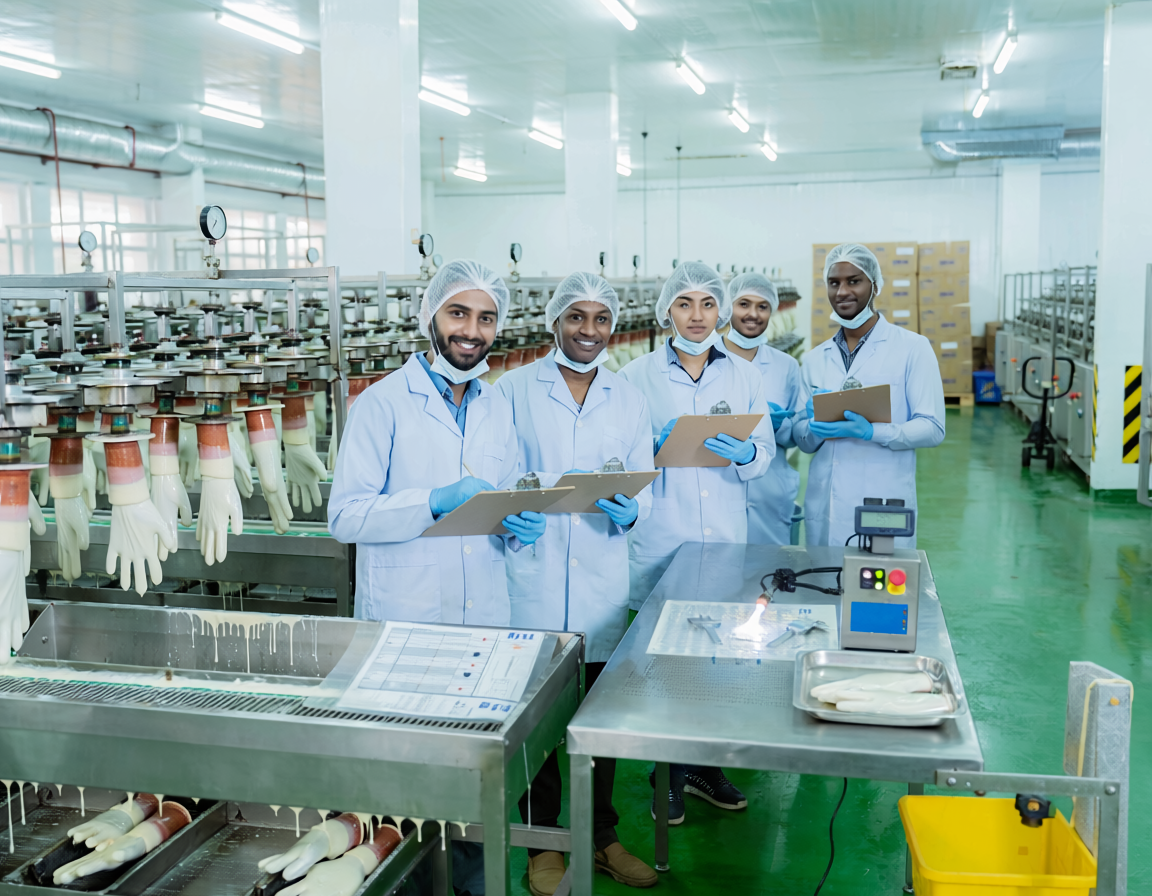
In the long catalogue of unexpected consequences from the US-Israel war on Iran, the global condom supply chain might seem like an unlikely entry. And yet the world’s largest condom manufacturer — Malaysia’s Karex Berhad, a company that produces more than five billion condoms annually and supplies one in every five condoms sold globally — is raising prices sharply in response to a supply chain crisis that traces directly back to the Strait of Hormuz.
The mechanism is not complicated once you understand how condoms are made. But the implications extend well beyond the inconvenience of higher retail prices. They reach into family planning programmes in developing countries, HIV prevention budgets at the United Nations and the World Health Organization, and the daily lives of hundreds of millions of people around the world who depend on affordable access to a basic health product.
Karex: A Family Business That Became the World’s Biggest
To understand why the war in Iran rattles pharmacy shelves from Mumbai to Manchester, it helps to understand what Karex is and how it operates. The company traces its roots to the 1920s, when the Goh family arrived in what was then Malaya and found themselves surrounded by rubber plantations in the southern state of Johor. They ran a small shop, accepted rubber as payment, and eventually opened a rubber processing factory. From that beginning, four generations of the Goh family built what is now the world’s dominant condom manufacturer.
Karex is listed on the Main Market of Bursa Malaysia and operates three factories in Malaysia — at Port Klang, Pontian, and Senai — plus a facility in Hat Yai, Thailand. Its customers include some of the largest consumer brands in the world: it supplies condoms to Durex as well as operating its own branded lines and supplying bulk product to the United Nations and the World Health Organization for global health programmes. Five billion condoms a year. One in every five sold, anywhere on earth.
CEO Goh Miah Kiat, the fourth-generation family member leading the company, has navigated multiple shocks in his tenure — including the pandemic, when global condom consumption paradoxically fell as social interactions declined and factory lockdowns restricted production. After returning to profitability, Karex had been building momentum in its higher-margin consumer and branded segments. The Iran war has introduced a new disruption of a different character — not a lockdown that limits production, but a supply chain shock that attacks the company’s input costs at multiple points simultaneously.
The Chemistry of the Crisis
Condoms are manufactured primarily from natural rubber latex — the milky white sap harvested from rubber trees, the supply of which is broadly available across Southeast Asia, where Karex’s factories are located. Malaysia is one of the world’s leading natural rubber producers. That part of the supply chain is not directly disrupted by events in the Middle East.
And what is disrupted is everything else.
Processing natural rubber latex into a condom requires two critical chemical inputs. Anhydrous ammonia stabilises the latex during production, preventing it from degrading before it can be shaped, vulcanised, and tested. Silicone oil is applied as a lubricant, giving condoms their characteristic smooth surface and improving both user comfort and contraceptive reliability. After production, condoms are packaged in foil pouches — typically aluminium or PVC-based packaging that protects them from light, moisture, and contamination.
Ammonia, silicone oil, and packaging materials are all products of the petrochemical industry. And the petrochemical industry’s supply chains run directly through the Strait of Hormuz.
India, which imports approximately 86% of its anhydrous ammonia from Middle Eastern countries including Saudi Arabia, Qatar, and Oman, has experienced the most acute supply disruption — but the input cost crisis is global in nature. The Strait of Hormuz, through which roughly 20% of the world’s oil and gas normally flows, has been effectively closed since early March 2026. QatarEnergy declared force majeure on its export contracts. Gulf petrochemical facilities have either been directly damaged or their distribution networks severed by the shipping blockage.
Industry officials across Southeast Asia and South Asia have reported a “huge shortage” of silicone oil. Ammonia prices have surged 40 to 50% from pre-war levels. PVC and aluminium foil — the packaging materials that protect every condom sold — have become more expensive as petrochemical derivatives across the board. The cost pressure is not hitting one input but all of them simultaneously.
The Scale of the Price Impact
For an industry that operates on what the sector describes as a “high-volume, low-margin” model — producing billions of units at very low per-unit costs specifically to ensure affordability for mass-market consumers — simultaneous input cost spikes of 40 to 50% on multiple materials are not absorbable without passing costs forward.
Karex’s decision to raise prices sharply — reported by Reuters — is both commercially logical and strategically significant. The company cannot operate at a loss indefinitely, particularly as a publicly listed entity on Bursa Malaysia with obligations to its shareholders. If its input costs rise substantially and the price increase cannot be passed through, the only alternative is to cut production — which would worsen the global supply situation further.
Consumer markets in India face the prospect of retail prices rising by as much as 50% from pre-war levels, according to industry analysis. That is not a trivial increase for a product whose accessibility directly affects public health outcomes. Condoms play a dual role in the global health system: as a contraceptive and as the most widely available barrier against sexually transmitted infections including HIV. The World Health Organization and UNAIDS depend on bulk procurement from manufacturers including Karex to supply condoms at very low cost to high-burden countries across sub-Saharan Africa and South and Southeast Asia. When the wholesale price of a basic health product rises sharply, the procurement budgets of international health organisations must stretch further to buy the same volume — or buy less.
The Public Health Dimension
The price pressure hits hardest in the markets least equipped to absorb it. The Indian government’s National Health Mission distributes condoms through its family planning programmes, with brands like Nirodh available free at government health facilities and supplied by community health workers at minimal cost. The underlying manufacturing cost of those condoms is passed upstream to manufacturers. If procurement costs rise substantially, either the government must increase its health budget allocation, reduce the quantity distributed, or find alternative sourcing — none of which is straightforward in the short term.
Across sub-Saharan Africa, where HIV incidence remains the world’s highest and where contraceptive access is a cornerstone of public health infrastructure, the supply chain disruption carries consequences that go beyond pricing inconvenience. Reduced availability and higher prices for a product that prevents both unwanted pregnancy and HIV transmission is, in public health terms, a crisis in its own right — one that will not appear in war casualty counts but will be felt in rising infection rates and unplanned births in communities already carrying significant health burdens.
The Ways Looking Forward
The severity of the Karex price increase, and the duration of its effects, will depend largely on how quickly the Strait of Hormuz reopens to normal commercial traffic. The two-week ceasefire between the US and Iran expires Wednesday, April 21, and as of Monday, the strait had returned to near-wartime footing with Iran reasserting control over vessel passage. Peace talks in Islamabad remain uncertain. The supply disruption that has been building since early March shows no sign of resolving within days.
Even if a deal is reached and the Hormuz corridor reopens promptly, supply chain recovery is not instantaneous. Petrochemical production facilities that have been idled or reduced cannot restart at full capacity overnight. Shipping schedules that have been upended across the global ocean freight network cannot simply be reset. Inventory that has been consumed cannot be immediately replenished. The gap between a political deal and the return of stable input prices at a Karex factory in Port Klang may be measured in months rather than weeks.
The Iran war’s most visible costs are counted in weapons fired, infrastructure destroyed, and lives lost. Its less visible costs — the pharmacy shelves that are thinning, the family planning programmes that are quietly understocked, the public health workers in clinics across the developing world who are receiving fewer units per delivery — are harder to see but equally real.
Written by Shalin Soni, CMA specializing in financial analysis, global markets, and corporate strategy, with hands-on experience in financial planning and analytical decision-making.
ALSO READ
• The $10 Billion Startup Aiming to Automate White-Collar Jobs with AI
• Tech Surge Continues: TSMC Boosts Rally as US Markets Hit New Highs
• Hidden AI Demand in Organizations: The Silent Driver of Growth
Source: Based on Reuters and publicly available information.