For most of its existence, CATL has been the world’s most powerful supplier that most consumers had never heard of. The Ningde-based company — whose full name, Contemporary Amperex Technology Co. Limited, gives little away about the scale of its dominance — has for the better part of a decade supplied the lithium-ion battery cells that power vehicles bearing the logos of Tesla, Volkswagen, BMW, Toyota, Ford, and dozens of other names far more familiar to the general public. In the global electric vehicle revolution, CATL has been the engine behind the engines: indispensable, technically unmatched, and deliberately invisible in the consumer’s eye.
On Thursday, May 7, that story became considerably more interesting. CATL announced that it will co-develop three vehicle models with Turkish EV manufacturer Togg, supplying its Bedrock integrated intelligent chassis — also known as the Panshi platform — as the foundational hardware underpinning those vehicles. The announcement, confirmed to Reuters, marks the first time a Chinese integrated intelligent chassis system has been supplied to an overseas passenger vehicle market. CATL is no longer merely selling cells. It is selling the architecture of the car itself.
What the Bedrock Chassis Actually Is
To understand why this deal matters, it helps to understand what CATL’s Bedrock chassis represents as a piece of engineering because it is not a component. It is a platform.
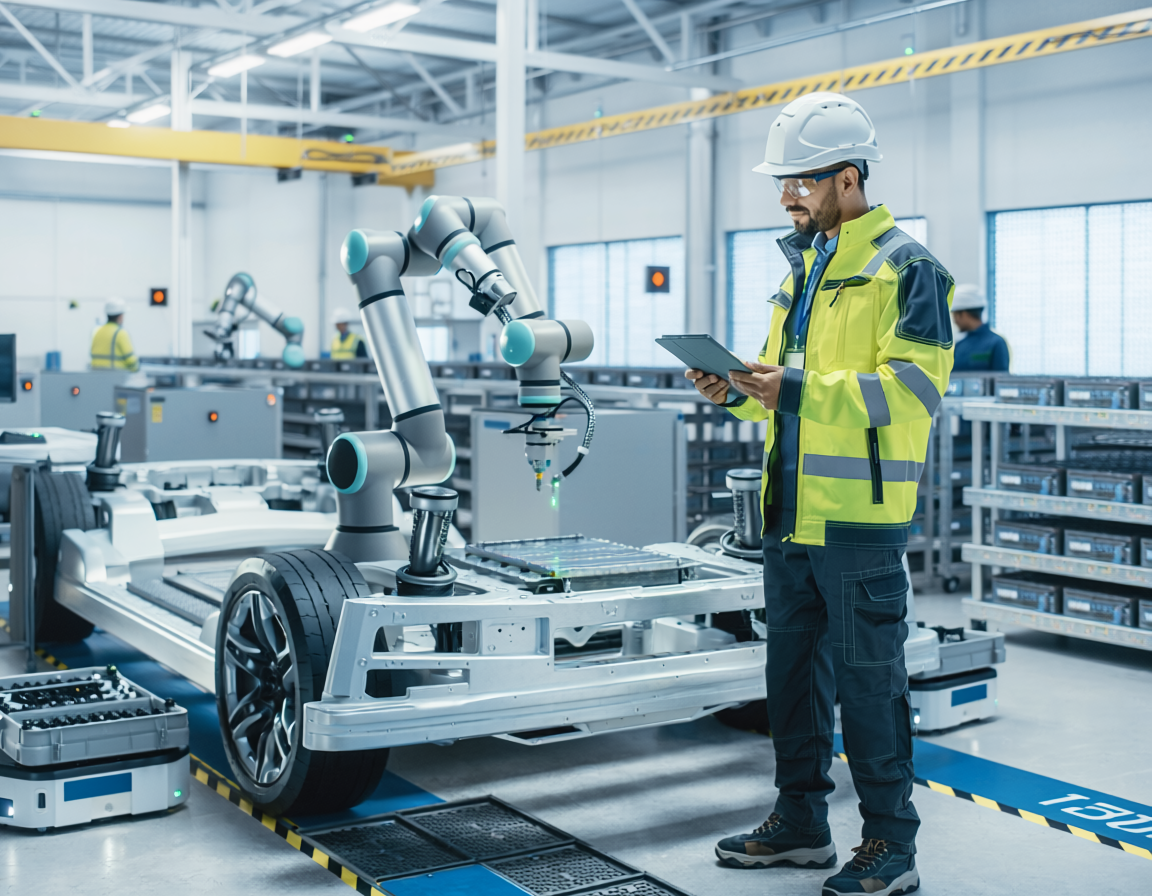
The Bedrock system, developed by CAIT (Contemporary Amperex Intelligent Technology), CATL’s passenger vehicle subsidiary, is what the industry calls a skateboard chassis — a flat, integrated platform that combines the battery pack, electric motors, suspension, steering, braking, and high-voltage electrical architecture into a single unified structure. The body of the car — the passenger cabin, the exterior design, the interior technology — sits on top of this platform, mechanically decoupled from the underlying hardware.
This architecture has several strategic implications. The first is safety: the Bedrock chassis integrates structural, cell, and high-voltage safety into the platform itself, rather than treating them as design challenges for individual automakers to solve. The second is flexibility: by decoupling the upper and lower car bodies, the system allows automakers and platform suppliers to develop simultaneously rather than sequentially — cutting the time-to-market for new vehicle models. The third is performance: during testing in China, the CATL Bedrock platform demonstrated a range of 1,000 kilometres on the Chinese CLTC cycle, and showcased crash performance that allowed a vehicle travelling at 120 kilometres per hour to be struck by a 50-tonne truck without the battery compartment being penetrated — a safety benchmark that CATL claims surpasses current industry standards.
The analogy that makes its strategic significance clear is Qualcomm’s Snapdragon platform for smartphones: a reference hardware architecture that allows manufacturers to build distinctive devices without designing the underlying processing infrastructure from scratch. Bedrock is, in CATL’s framing, the Snapdragon of electric vehicles.
Togg: Why Turkey Was First
The choice of Togg as the first overseas Bedrock partner is not accidental, and the logic runs in multiple directions simultaneously.
Togg — Türkiye’nin Otomobili Girişim Grubu, or Turkey’s Automobile Joint Venture Group — was established in 2018 by five Turkish automotive suppliers and a telecom company with a mandate to create Turkey’s first domestically designed and manufactured electric vehicle. Its first model launched in 2023. The company has the government’s explicit backing as a national industrial project and operates within a policy environment that actively wants Turkish-branded vehicles to succeed in both domestic and export markets.
For CATL, Togg offers several things simultaneously. Turkey is a NATO member with preferential trade relationships with the European Union — meaning vehicles produced using Togg’s Turkish manufacturing infrastructure can potentially access the EU market with far lower tariff exposure than vehicles imported directly from China. The EU’s punitive tariffs on Chinese-made EVs, which range up to 35% depending on manufacturer, do not apply to vehicles manufactured in Turkey under EU-Turkey customs union arrangements. CATL’s Bedrock platform, embedded in a Turkish-manufactured Togg vehicle, provides a route into the European passenger vehicle market that the tariff regime cannot easily block.
This is not an incidental benefit. It is the structural logic that makes the Togg partnership strategically significant beyond its commercial terms. Every Bedrock-equipped Togg vehicle sold in Europe is, in effect, CATL technology arriving in a European showroom without triggering the tariff barriers that were specifically designed to prevent Chinese automotive technology from capturing European market share at Chinese cost structures.
CATL’s Strategic Transformation: From Supplier to Platform Provider
The Togg announcement is one piece of a much larger transformation that CATL has been executing since its Hong Kong IPO in May 2025.
CATL’s domestic market position, while still dominant — the company holds a 48.3% share of the Chinese power battery market, with Q1 2026 data from the China Power Battery Alliance showing it surpassing 50% — faces structural headwinds that make international expansion an existential priority. Electric vehicle penetration in China has risen sharply, meaning the incremental market for battery sales is no longer growing at the pace it once was. BYD, CATL’s most formidable domestic competitor, is vertically integrated in ways that allow it to effectively bypass CATL by manufacturing its own cells. The domestic price war in Chinese EVs, driven by overcapacity and the hypercompetition described at the Beijing Auto Show, is compressing margins across the entire supply chain.
Against that backdrop, CATL’s Chairman Robin Zeng has been executing a strategic expansion that goes well beyond simply opening new factories in new countries. The company’s approach has three dimensions. The first is geographic diversification: the Hungarian battery plant in Debrecen is targeting production start in 2026; the Stellantis joint venture in Spain is commissioning with 2,000 Chinese workers; Indonesia has a facility targeting March 2026 launch; India is under development. The second dimension is vertical integration: moving from selling cells to selling modules, to selling packs, to — with Bedrock — selling the integrated platform that the entire vehicle is built around. The third dimension is technology licensing: making CATL’s intellectual property the architecture that third-party manufacturers build on, creating a recurring technology royalty model that supplements and eventually potentially exceeds the revenue from cell manufacturing alone.
Bill Russo, CEO of Automobility, described the logic precisely: CATL’s expansion plans appear “designed to sustain its global leadership and scale,” driven by limited growth momentum in its domestic market and rising competition. The Togg deal is the first overseas proof of concept for the vertical integration dimension of that strategy — and the fact that it is being executed with a Turkish national champion rather than a Chinese-branded vehicle makes it simultaneously more commercially achievable and more geopolitically subtle.
What Comes After Turkey
The three models being co-developed with Togg are targeted for initial mass production in 2027. The first will be a B-segment vehicle — a compact car class that represents the highest-volume segment in European and emerging markets. CATL and Togg will co-develop the vehicles, with Togg leading user experience design, vehicle requirement definition, and digital architecture, while CATL’s Bedrock chassis provides the hardware foundation.
Beyond Togg, the Bedrock platform has already attracted attention from other markets. CATL’s CAIT subsidiary also supplies skateboard chassis through its Synland brand for commercial vehicles — Pony.ai launched an L4 autonomous light truck at the 2026 Beijing Auto Show built on Synland’s Kun Speed platform. The commercial vehicle chassis technology and the passenger vehicle technology are developed in parallel, giving CATL a presence in both the consumer EV market and the autonomous commercial fleet market simultaneously.
The broader question the Togg deal raises for the global automotive industry is one that Western manufacturers and regulators will need to answer with increasing urgency: at what point does a Chinese technology supplier cease to be a supplier and become the infrastructure on which competitor vehicles are built? CATL began as a cell chemistry company. It became a battery systems integrator. It is now selling the chassis. If the progression continues, the answer to “what is CATL?” may eventually be: the platform on which much of the world’s automotive industry runs.
That is a different kind of dominance from building cells. It is also, from CATL’s perspective, a far more defensible one.
Written by Shalin Soni, CMA specializing in financial analysis, global markets, and corporate strategy, with hands-on experience in financial planning and analytical decision-making.
ALSO READ
• AirTrunk to Invest $3 Billion in Malaysia Data Centers as AI Demand Surges
• US Companies Signal Resilience as Iran War Risks Continue to Rise
• Meta Strikes Multi-Billion Dollar Deal With Amazon AWS to Use AI CPU Chips
Source: Based on Reuters and publicly available financial information.