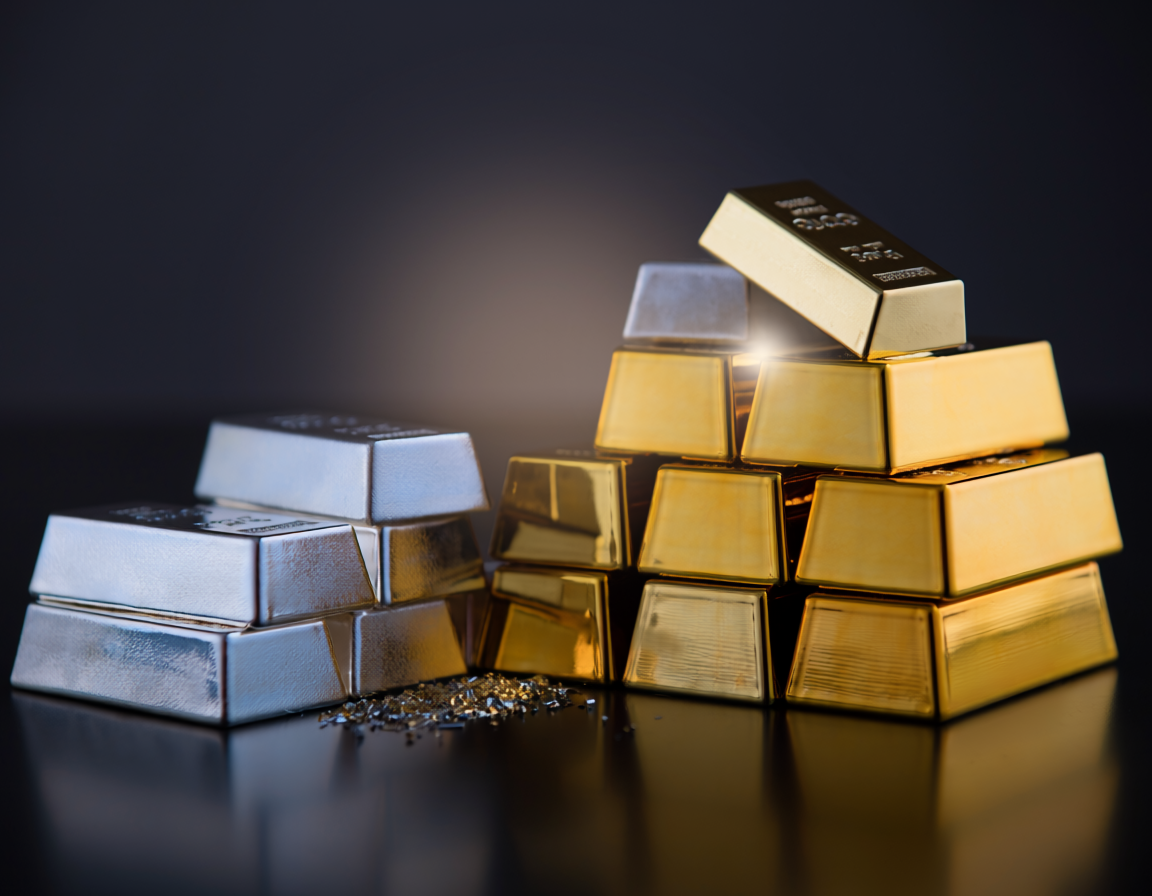
There is a pattern in precious metals markets that has repeated through every major bull run of the past fifty years, and it goes something like this: gold moves first, driven by monetary anxiety, geopolitical fear, or currency debasement. Silver watches. For months — sometimes longer — silver lags while gold sets new records. Investors who bought silver early grow impatient. The thesis seems broken. And then, almost without warning, silver catches up. Not gradually, but explosively, outperforming gold by margins that leave the earlier analysis looking conservative.
The 2024–2025 cycle was a near-perfect textbook illustration of this pattern. Gold opened 2025 at around $2,798 an ounce and set off on a sustained bull run, gaining more than 17% by April. Silver, through those same first eight months, had gained just 4%. By September, silver began to move. By November, it had surged more than 80%. By December, more than 128%. Then, in January 2026, silver hit $113.95 per ounce — a gain of nearly 264% from its January 2025 base, while gold over the same period had risen around 88%. Gold led the race. Silver won it.
Why Gold Always Gets the Head Start
The structural reason gold moves first in precious metals bull markets comes down to what each metal represents in the global financial system. Gold is the monetary metal. Central banks hold it as a reserve asset. It is the first instrument that institutional investors and sovereign institutions reach for when inflation rises, currencies weaken, or geopolitical risk spikes. When Russia invaded Ukraine in 2022, gold moved. When inflation began accelerating in 2021, gold moved. It is the safe haven that gets activated first — before almost anything else does.
Silver’s role is more complicated. It is a precious metal and a store of value, but it is also, crucially, an industrial metal. More than half of all silver consumed globally goes into industrial applications: solar panels, electric vehicles, consumer electronics, medical devices, AI server infrastructure. This dual nature means silver gets pulled by two very different forces simultaneously — one monetary, one industrial — and in the early stages of a bull run, the monetary signal is not yet strong enough to override the cautious industrial demand picture.
The result is the characteristic lag. Silver waits while gold builds the narrative. Then, when investors who have already accumulated gold begin rotating into the next metal — seeking the leverage and volatility that gold’s large, deep market cannot provide — silver receives that capital and amplifies it.
The Gold-Silver Ratio: The Market’s Most Reliable Timing Signal
The gold-silver ratio — how many ounces of silver it takes to purchase one ounce of gold — is arguably the single most useful indicator for timing the transition between gold leadership and silver outperformance. Its historical average over the long run sits around 60:1, but it oscillates widely. At the 1980 precious metals peak, the ratio briefly touched 17:1. At the 2011 silver peak, it fell to roughly 32:1. In April 2020, amid the COVID panic selloff, the ratio spiked to above 100:1 — meaning silver was extraordinarily cheap relative to gold.
A ratio above 80:1 has historically been one of the strongest buy signals for silver relative to gold, because it reflects precisely the lag dynamic described above: gold has moved but silver has not yet followed. Conversely, as silver catches up and outperforms, the ratio compresses. By the time silver peaked at $113.95 in January 2026, the ratio had compressed dramatically from its prior highs.
As of early-to-mid April 2026, with silver trading around $72 per ounce and gold near $4,700, the ratio sits at approximately 64:1 — near the long-run historical average. This reading is more neutral than the extreme compression seen at the peak, suggesting neither metal is dramatically over or undervalued relative to the other based on ratio analysis alone.
The Structural Story Behind Silver’s 2025 Surge
The 2024–2025 silver rally was not simply a sentiment-driven catch-up to gold. It was also the result of structural supply-demand dynamics that have been building for years. The silver market has been running a supply deficit for at least five consecutive years — meaning demand, across all its forms, has consistently exceeded what mines and recycling can supply. The cumulative deficits over that period have been estimated at roughly 800 million ounces, nearly equivalent to a full year’s global mine production.
That structural tightness became explosive when combined with three accelerating demand trends. Solar panel manufacturing — now one of silver’s largest single end uses — has been growing rapidly as the global renewable energy buildout continues. Electric vehicles require meaningfully more silver than conventional cars. And AI data centre infrastructure has added a new and rapidly growing category of demand for high-purity silver in server components and connectivity hardware. Against a backdrop where most silver comes as a byproduct of copper, lead, and zinc mining rather than from dedicated silver operations, supply cannot be quickly expanded to meet these rising demands.
What the Iran War Has Done to Both Metals
The US-Iran conflict that began in February 2026 added a new layer of complexity to precious metals pricing — and not in the direction many investors expected. Conventional wisdom says war drives safe-haven demand, which should push gold and silver higher. What actually happened was more nuanced.
Oil price surges driven by the Hormuz closure fed inflation expectations, which pushed Treasury yields higher and strengthened the dollar — both of which increase the opportunity cost of holding non-yielding metals like gold and silver. The result was that both metals actually fell sharply in March 2026, with gold recording what one analysis described as its worst monthly performance since October 2008. Silver fell further, in percentage terms, than gold — reflecting its higher beta and greater sensitivity to the risk-off, dollar-strength dynamic.
The divergence matters for understanding silver’s specific vulnerability. While gold has a structural floor provided by central bank buying — BlackRock notes that 95% of central banks expect global gold reserves to rise in 2026, and central banks added over 860 tonnes to their reserves in 2025 — silver lacks that sovereign demand backstop. Industrial demand, which makes silver more sensitive to global economic growth, also becomes a liability when war threatens to slow that growth.
J.P. Morgan’s head of base and precious metals strategy, Greg Shearer, articulated this risk directly: “Without central banks as structural dip buyers as in gold, we think there remains the risk for a further move back higher in the gold-to-silver ratio.” He added that the firm was “more cautious on re-engaging in silver in the near term until it becomes clearer that some of the recent froth in prices has been fully shaken out.”
What Comes Next, What Investors Need to Know
The case for silver’s continued outperformance over the longer term rests on a set of structural factors that have not changed: supply deficits persisting through at least 2027 according to Silver Institute projections; accelerating industrial demand from solar, EVs, and AI; bullish monetary conditions if the Federal Reserve resumes cutting rates; and a gold-silver ratio that, while no longer extreme, still leaves room for compression toward the 50:1 and below levels historically associated with silver outperformance.
The near-term picture is more contingent. If the Iran ceasefire holds and oil prices fall further, inflation expectations may ease, reducing the dollar-strength headwind that has suppressed metals in 2026’s early months. A resumption of Federal Reserve rate cutting would reduce the opportunity cost of holding silver, boosting both its monetary and industrial demand outlook simultaneously.
The pattern that has defined precious metals markets for fifty years — gold leads, silver waits, then silver wins — has not been repealed. The question is whether we are currently in the “waiting” phase of the next silver outperformance cycle, or whether the first cycle has exhausted itself and a new one is not yet ready to begin. The gold-silver ratio at 64:1, comfortably near its long-run average, is not giving a strong directional signal either way. What it is saying is that the trade is no longer obviously cheap — and that the next leg of silver’s outperformance, when it comes, will require a catalyst rather than simply continuing the momentum of 2025.
Written by Shalin Soni, CMA specializing in financial analysis, global markets, and corporate strategy, with hands-on experience in financial planning and analytical decision-making.
ALSO READ
• Meet Indonesia’s Coffee Brand Challenging Starbucks With Affordable Luxury
• Beyond the Spreadsheet: How Finance Teams Can Actually Succeed with AI
• NASA Revises Moon Strategy, Ties Landing Timeline to SpaceX and Blue Origin
Source: Based on Forbes and publicly available information.