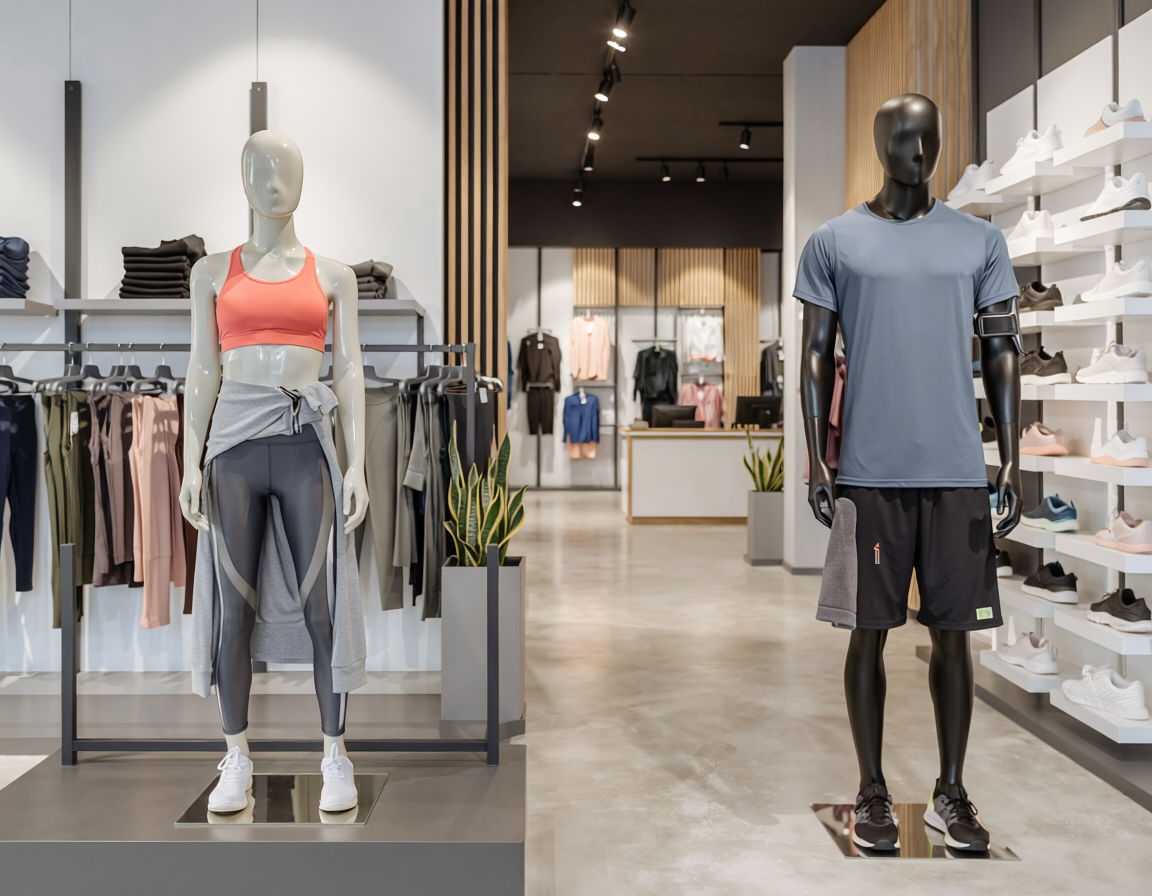
In the spring of 2020, when the pandemic emptied offices and gyms worldwide and people discovered that they could wear performance leggings both for a morning yoga session and a Zoom call, Lululemon became one of the most consequential beneficiaries of a seismic shift in how the Western world dressed. The athleisure category it had spent two decades building from a Vancouver yoga studio concept into a global premium brand suddenly found itself at the centre of the biggest wardrobe transition since the casualisation of corporate dress codes in the 1990s. Revenue surged. Margins expanded. The stock reached heights that seemed, at the time, to reflect something close to cultural inevitability.
Five years later, the picture looks considerably less comfortable. Americas revenue fell 4% in the most recent quarter. North America sales are projected to decline 1% to 3% for fiscal 2026. The product line has been criticised — including by the company’s own former CEO — as having become “too predictable.” Competition from Alo Yoga, Vuori, and a growing roster of premium performance apparel challengers has intensified. The stock has fallen more than 21% year-to-date through Wednesday’s close. The founder is at war with the board. An activist investor has taken a $1 billion stake and was pushing for its own CEO candidate.
Into this fraught environment, on Wednesday, April 22, Lululemon named Heidi O’Neill as its next chief executive officer, effective September 8. O’Neill joins from Nike, where she spent approximately 26 to 27 years, most recently serving as President of Consumer, Product and Brand before departing as part of a major restructuring under current Nike CEO Elliott Hill last year. Shares fell 4% to 5% in after-hours trading following the announcement — a reaction that captures the complexity of what investors are being asked to accept.
Who Heidi O’Neill Is
O’Neill is not a name that has appeared in athleisure headlines before this week, but her career at Nike represents one of the broadest executive tenures in the history of global sportswear. Joining Nike in 1998, she went on to lead the company’s marketplace operations, four geographic operating regions, Nike Direct (its digital and direct-to-consumer channel), and the women’s business — the division whose growth was one of Nike’s defining success stories of the 2010s. She also oversaw product and innovation at a time when Nike was attempting to balance its performance heritage with the increasingly casual demands of athleisure-influenced consumer culture.
Beyond Nike, O’Neill’s career spans industries in a way that speaks to genuine breadth of commercial experience. She has served on the boards of Spotify, Hyatt Hotels, and Lithia & Driveway. Earlier in her career, she worked in marketing for the Dockers brand under Levi Strauss. These are not decorative board positions — they suggest an executive who thinks about brand, consumer experience, and organisational culture across multiple business contexts.
The Lululemon board was unambiguous in its endorsement. “Heidi is an inspiring leader and proven, consumer-driven brand strategist, with a rare ability to both imagine a new future for a brand and to create the structure and processes to deliver on that vision,” said executive chair Marti Morfitt. The board noted it conducted an “extensive search” and that O’Neill received unanimous support from all board members. Her compensation package reflects the seriousness of the role: a base salary of $1.4 million, a target performance bonus of up to 200% of annual salary, and annual equity awards of approximately $10 million, of which 60% will be performance-vesting restricted stock units — a structure that explicitly ties significant pay to the turnaround delivering measurable results.
The Fires She Is Walking Into
Saying that O’Neill arrives “amid pressure” is an understatement that barely covers the surface of what she is inheriting.
Calvin McDonald, who led Lululemon from 2018 through one of the most extraordinary consumer brand moments in retail history, stepped down in January 2026 after months of declining performance and escalating criticism. McDonald himself acknowledged that Lululemon’s product had become too predictable — a damaging admission from a sitting CEO of a brand whose entire value proposition rests on the idea that its products are worth paying a significant premium for precisely because they represent something different and better.
The competitive landscape has shifted more than the headlines typically acknowledge. Wells Fargo analysts wrote in December that Lululemon was “unable to comp positive in 12+ months” with the US market negative, and identified the core problem as “a lack of innovation on core product and increasing competition from new entrants” including Alo Yoga, Vuori, and others. This is not a macro problem. It is a product and brand problem — the kind that requires leadership with genuine commercial instincts about consumer desire, not just operational management skill.
Chip Wilson, the company’s founder and largest shareholder who no longer holds a formal role, has been conducting what amounts to a guerrilla campaign against the board for the better part of a year. He has accused the board of “complacency,” said the brand has “lost its edge,” and pushed to overhaul the board with product-first directors who would then conduct their own CEO search. Wilson’s intervention is politically uncomfortable but not strategically incoherent: his concern that the company lacks product imagination is a diagnosis that the market data broadly supports.
Elliott Investment Management, one of the world’s most influential activist funds, built a more than $1 billion stake in Lululemon in December 2025 and pressed for the appointment of Jane Nielsen — a former Ralph Lauren executive — as the next CEO. Elliott’s preferred candidate reflected a specific thesis about what Lululemon needs: someone with deep luxury brand management experience and a track record of executing premium positioning at scale. The board’s decision to appoint O’Neill instead of Elliott’s candidate means Elliott has not gotten what it wanted, and how the fund responds to Wednesday’s announcement will be one of the more closely watched governance dynamics in the weeks ahead.
The Nike Complexity
The choice of a Nike executive carries its own narrative complications, and analysts were quick to raise them.
O’Neill played a key role in Nike’s direct-to-consumer strategy under former CEO John Donahoe — the strategy that pivoted Nike away from wholesale partners toward its own website and stores. That strategy is now widely considered to have been a mistake that damaged Nike’s retail relationships, reduced brand visibility, and contributed to the performance difficulties that Elliott Hill has been spending his tenure correcting. When Hill took over Nike, one of his first priorities was walking back the direct-to-consumer pivot and rebuilding wholesale relationships.
After O’Neill’s departure from Nike last year, her role was split into three separate positions as part of a major restructuring of Nike’s leadership — a structural signal that the scope of her responsibilities had, under the previous regime, been concentrated in ways that the new leadership considered suboptimal.
GlobalData’s retail analyst Neil Saunders offered the most balanced framing of the O’Neill appointment: “There will be some, mostly activist investors, who see O’Neill as something of a safe and traditional choice. This argument is partly valid as a lot of cultural change is needed at Lululemon in order to improve performance. However, in our view, O’Neill is her own person who will come with an agenda of change.”
That last phrase carries the most weight. O’Neill’s task at Lululemon is not to replicate Nike’s strategy. It is to diagnose why a brand that genuinely created a category has allowed its product engine to stall, re-engage the consumer who has been drifting toward competitors, and rebuild the creative confidence of an organisation that knows how to execute but has recently struggled to innovate.
Interim co-CEOs Meghan Frank and André Maestrini will continue leading the company until O’Neill formally joins in September, at which point both will return to their prior roles as CFO and Chief Commercial Officer respectively. The board and management will have several months to prepare the ground before O’Neill takes the wheel.
Lululemon is not a business in crisis. International sales grew 17% in the most recent quarter, demonstrating genuine global demand for the brand. The challenge is specific, concentrated, and correctible with the right product and strategic leadership. Whether O’Neill’s particular combination of consumer instincts, digital commerce experience, and brand-building track record from Nike represents the right prescription for what ails Lululemon in North America is a question that September 8 will begin to answer.
Written by Shalin Soni, CMA specializing in financial analysis, global markets, and corporate strategy, with hands-on experience in financial planning and analytical decision-making.
ALSO READ
• Alternative Asset Managers Face Investor Test as AI Risks and Redemptions Mount
• Apple Taps John Ternus as CEO to Succeed Tim Cook in AI Era
• Trump Signals Iran Deal Progress as Lebanon Ceasefire Begins
Source: Based on CNBC and publicly available information.