There is a quiet industrial transformation underway that most technology observers have been too busy watching the AI software wars to notice. While Microsoft, Google, Amazon, and Oracle compete to dominate the application layer of artificial intelligence — the models, the platforms, the subscriptions — a different battle is being fought at the physical infrastructure level. And the surprising early winners are not the hyperscalers with trillion-dollar balance sheets. They are the Bitcoin miners who spent years building what the AI economy now desperately needs: power, land, and purpose-built data centre shells in places where electricity is cheap.
The thesis, which seemed eccentric when it first emerged in 2024, has hardened into documented industrial reality by 2026. Public Bitcoin miners signed over $65 billion worth of AI and high-performance computing contracts with hyperscalers including Amazon and Microsoft in 2025 alone, according to CoinShares. A further $70 billion in cumulative AI and HPC contracts has now been announced across the public mining sector. And according to CoinShares’ Q1 2026 report, publicly listed Bitcoin miners could derive up to 70% of their revenues from AI by the end of 2026 — up from roughly 30% today. That is not a pivot. That is a sector-wide identity transformation.
The Economics That Made Mining Unsustainable
To understand why miners are pivoting to AI, you need to understand why Bitcoin mining has become economically treacherous. The April 2024 Bitcoin Halving cut the block reward from 6.25 to 3.125 BTC, slashing the guaranteed revenue per unit of computing power overnight. The hashprice — the metric measuring miner earnings per petahash per day — collapsed to approximately $28–$30 per PH/s/day in early 2026, levels not seen since the post-halving lows of 2024.
The CoinShares Q1 2026 mining report found that the weighted average cash cost to produce one bitcoin among publicly listed miners reached approximately $79,995 in Q4 2025. Bitcoin was trading in the $68,000–$70,000 range — meaning that listed miners were losing approximately $19,000 for every coin they produced. Gross margins in Bitcoin mining have fallen from roughly 90% during the 2021 bull run to approximately 60% today. For companies carrying heavy debt loads and operating industrial-scale facilities, those economics are structurally unsustainable.
AI cloud infrastructure, by contrast, generates margins of approximately 85% with lower energy overhead and — crucially — long-term contracted revenue streams. AI infrastructure can generate three times the revenue per megawatt compared to Bitcoin mining, according to CoinShares. CoinDesk went further, reporting that AI workloads can deliver up to 25 times more revenue per kilowatt-hour than mining, depending on the application. When the math looks like that, the strategic question becomes not whether to pivot but how fast.
The Strategic Advantage Miners Bring That Nobody Expected
What makes the Bitcoin miner advantage genuinely structural — rather than a temporary arbitrage — is the nature of what miners have already built. Large-scale AI data centre development faces three primary constraints: power access, permitting timelines, and physical infrastructure construction. Bitcoin miners have already solved all three.
According to a Bernstein report, miners have collectively secured over 14 gigawatts of power — much of it contracted from hydro, wind, and solar facilities in low-cost, rural areas. Those power contracts are the scarcest resource in the AI infrastructure buildout. The hyperscalers queuing to build new AI compute facilities are discovering that securing grid capacity in locations with sufficient land and appropriate zoning can take years. Bitcoin miners are already there.
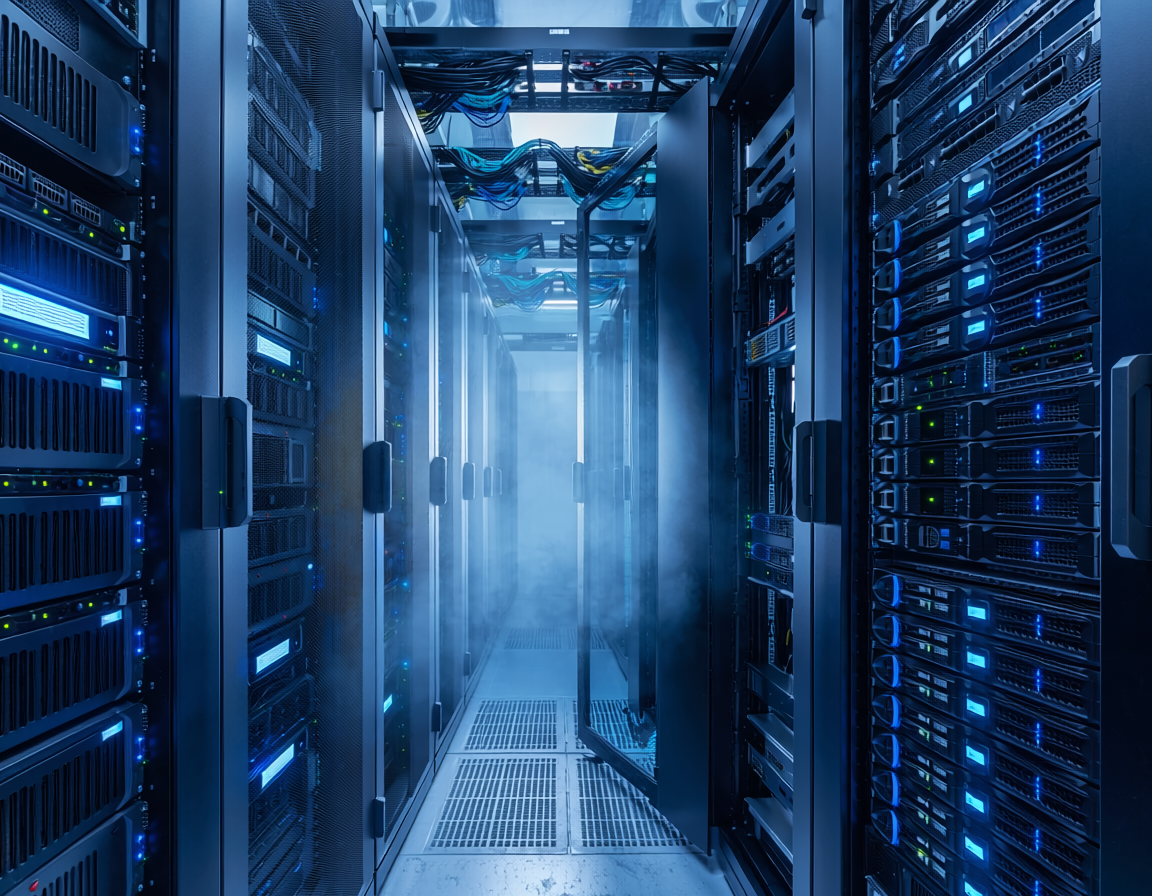
The physical infrastructure is the second advantage. What miners built — the substations, the transformers, the cooling systems, the industrial-grade electrical distribution — are precisely the bones of a data centre. Converting a Bitcoin mining facility into a high-performance computing centre capable of running AI workloads is not a trivial exercise, but it is dramatically faster than building from scratch. Estimates suggest miners can cut data centre deployment times by as much as 75% compared to traditional new-build approaches. In a market where GPU supply chains are constrained and hyperscalers are under pressure to deploy compute capacity at speed, that time advantage translates directly into contract value.
Data centre construction as a whole is rising 23% in 2026, according to FMI, as AI demand lifts it to over 6% of all non-residential building activity in the United States. Against that backdrop, a company that already holds operational facilities in power-rich locations is holding an asset that the market is actively repricing upward.
The Deals Being Done
The scale of specific transactions illustrates how real this transition has become. CoreWeave’s expanded deal with Core Scientific is worth $10.2 billion over 12 years. TeraWulf has $12.8 billion in contracted HPC revenue. Hut 8 signed a $7 billion, 15-year lease for AI infrastructure at its River Bend campus. These are not exploratory pilot agreements — they are multi-decade infrastructure contracts with investment-grade counterparties that fundamentally transform the risk profile of businesses that were previously entirely dependent on Bitcoin’s spot price.
The revenue shift is already visible in financial results. Core Scientific’s AI colocation revenue now accounts for 39% of its total. TeraWulf is at 27%. IREN — formerly Iris Energy, a Nasdaq-listed miner — is at 9% and scaling rapidly, with up to 200 megawatts of liquid-cooled GPU capacity under construction. IREN deployed more capital building AI data centre infrastructure in a single recent year than it spent across three years expanding its Bitcoin mining fleet post-IPO.
MARA Holdings, famous for its conviction “HODL” strategy, sold over $1 billion in Bitcoin in recent months to fund its infrastructure transition — a move that would have been almost ideologically inconceivable twelve months earlier. Core Scientific sold roughly 1,900 BTC worth $175 million in January and is planning to liquidate substantially all remaining holdings. Bitdeer reduced its treasury to zero in February. These are not tactical hedges. They are statements that the business model has fundamentally changed.
The Risks Embedded in the Transition
The pivot carries genuine risks that optimistic framing can obscure. The debt levels now being accumulated are, for many miners, at levels the sector has never previously carried. IREN holds approximately $3.7 billion in convertible notes. TeraWulf carries total debt of roughly $5.7 billion. These are companies that a year ago were primarily valued on their Bitcoin treasury and mining capacity. They are now carrying leverage ratios more associated with infrastructure private equity than with crypto mining operations.
Customer concentration is another structural vulnerability. Several of the largest AI infrastructure contracts are single-hyperscaler agreements — arrangements where one counterparty represents a dominant share of revenue. If a hyperscaler relationship sours, or if the hyperscaler’s own AI capex cycle turns, the miner is exposed to revenue loss at precisely the moment its legacy mining revenue has been reduced.
And Bitcoin itself presents an ironic challenge. The miners selling BTC to fund AI buildouts are the same companies whose mining operations secure the Bitcoin network. Global hashrate fell from a peak of approximately 1,160 exahash per second in October 2025 to roughly 961–1,000 exahash in early 2026. The network’s difficulty adjustment mechanism has compensated, as it always does — but the underlying tension between the mining industry’s AI pivot and the health of the network it nominally secures is a dynamic that will warrant watching.
The Defining Thesis
What is happening in the Bitcoin mining sector in 2026 is one of the most significant industrial pivots in the short history of the digital economy. Companies that built their entire identity around extracting value from a cryptographic ledger are becoming, in the span of eighteen months, the physical infrastructure layer of the artificial intelligence revolution. They did not intend to be positioned this way. They simply built the things that the AI economy turned out to need: cheap power, big land, and data centre shells that can be upgraded faster than anything can be built from scratch.
Everyone is scrambling to own a piece of the AI future. The Bitcoin miners already built much of it.
Written by Shalin Soni, CMA specializing in financial analysis, global markets, and corporate strategy, with hands-on experience in financial planning and analytical decision-making.
ALSO READ
• U.S. Bank Profits Rise on Deal Activity as Iran War Clouds Outlook
• Asian Markets Rally on U.S.–Iran Ceasefire as Oil Uncertainty Persists
• Weak Demand at Japan’s 30-Year Bond Auction Raises Global Yield Concerns
Source:
Based on reporting from Forbes and publicly available information.
Disclaimer
This article is based on publicly available information, market developments, and credible media reports. The content is intended for informational and analytical purposes only and should not be considered financial, investment, or legal advice.