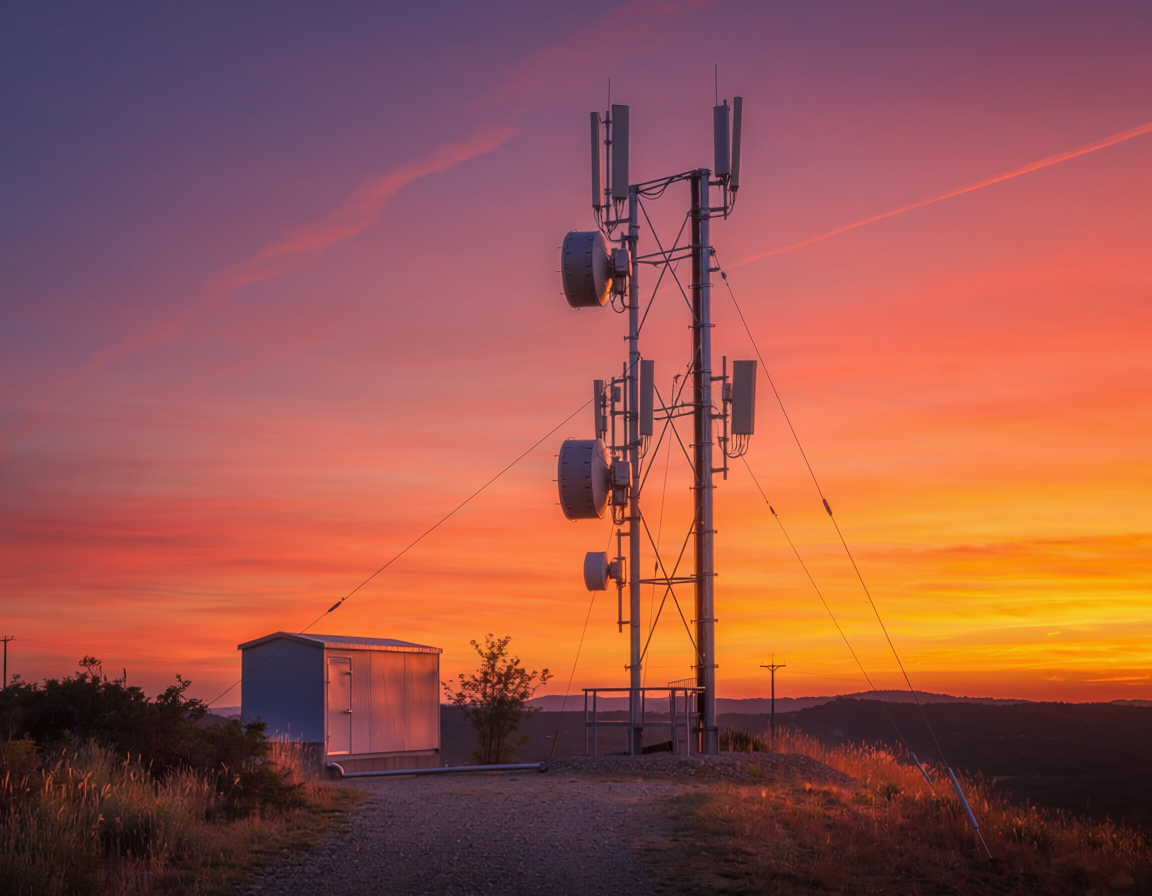
Deutsche Telekom has spent 26 years managing what is, by any measure, one of the most consequential investment positions in corporate history. When the German telecommunications giant acquired VoiceStream Wireless in 2000 for $50.7 billion — a deal widely mocked at the time as a German company wildly overpaying for a mid-tier American mobile operator — few predicted that the renamed T-Mobile USA would eventually become the most valuable asset in Deutsche Telekom’s portfolio, the primary engine of its global earnings, and the company that would eventually transform the US wireless market by defeating both AT&T and Verizon for the subscriber growth crown. That $50.7 billion has compounded, through years of patient strategy and a series of transformative mergers, into a T-Mobile US market capitalisation of approximately $218.57 billion.
Now Deutsche Telekom is reportedly considering taking the next logical step: not merely remaining the majority shareholder, but fully combining the two companies into a single global telecommunications entity that would rank as the largest wireless operator on the planet by market capitalisation — and the deal to get there, if it happens, would be the largest public M&A transaction ever recorded.
What Bloomberg Reported and How Markets Reacted
On Tuesday, April 21, Bloomberg News reported that Deutsche Telekom is exploring a full combination with T-Mobile US, citing people familiar with the matter. The structure under discussion would involve creating a new holding company that would make a stock bid for shares of both Deutsche Telekom and T-Mobile — effectively exchanging the shares of both existing publicly traded companies for shares in the new combined entity. That new group would then seek dual listing on a major US exchange and a major European exchange, creating what would effectively be a transatlantic telecommunications holding company.
Deutsche Telekom currently holds a stake of approximately 53% in T-Mobile, according to LSEG data. A full combination would mean acquiring the remaining 47% of T-Mobile that it does not own — at T-Mobile’s market capitalisation of $218.57 billion, a transaction at even a modest premium would rank among the largest corporate transactions in history. Deutsche Telekom itself carries a valuation of approximately $166.46 billion. The combined entity, by market capitalisation, would surpass China Mobile — currently valued at approximately $234.67 billion — to become the world’s largest wireless operator.
The market’s initial reaction captured the ambivalence the news generated. T-Mobile shares briefly jumped more than 3% in afternoon trading on Tuesday before giving up those gains to close the session lower, down approximately 1.5%. Deutsche Telekom shares also slipped following the reports. Both companies declined to comment when contacted by Reuters. The White House and Germany’s Federal Network Agency did not immediately respond to requests for comment.
Why Deutsche Telekom Wants This — The Valuation Discount Problem
To understand the logic driving Deutsche Telekom’s thinking, it helps to understand the structural problem the company has been quietly managing for years: the persistent valuation discount between what Deutsche Telekom’s shares are worth as a Frankfurt-listed German telecoms group and what they would be worth if the market fully priced in the value of the T-Mobile stake they hold.
T-Mobile generates the substantial majority of Deutsche Telekom’s group profits. The US wireless market, where T-Mobile competes directly with AT&T and Verizon, is considerably more valuable to equity investors than the European telecoms markets — Germany, Austria, and various Central and Eastern European operations — where Deutsche Telekom’s domestic businesses operate. European telecom markets have historically been characterised by intense competition, high regulatory burden, and structurally lower returns on capital than their American counterparts.
The consequence is that Deutsche Telekom’s Frankfurt-listed shares have always traded at a discount to the implied value of their T-Mobile stake, because investors applying German market valuations to a holding company structure price in the drag of the European operations. PP Foresight analyst Paolo Pescatore articulated the strategic logic clearly: “Deutsche Telekom’s tighter grip on T-Mobile is all about backing its strongest asset and building the broader group around that momentum.”
A full combination, with dual listing on US and European exchanges, would resolve the discount structurally. If the combined entity traded primarily as a US-listed holding company, it would benefit from US equity market valuations — which tend to be more generous to growth-oriented communications companies — while retaining the European exposure for investors who want it. The merger is, in this reading, not just a consolidation move but a financial engineering exercise designed to unlock value that the current holding company structure permanently suppresses.
Deutsche Telekom CEO Timotheus Hoettges has previously been explicit about this dynamic, warning that European regulations hamper network growth and acknowledging that most of the company’s valuation stems from its American business. The implied conclusion — that the current structure inefficiently prices the group’s most valuable asset — has been clear for years. The Bloomberg report suggests the company is now seriously exploring whether to act on it.
The Obstacles Standing Between Idea and Execution
The Bloomberg report was careful to note that discussions are at a preliminary stage and that the structure and terms of any potential deal could still change significantly. The magnitude of the obstacles between a preliminary discussion and a completed transaction reflects the complexity of the deal that is being contemplated.
The first set of obstacles is political. The German government holds approximately 14% of Deutsche Telekom directly, with the state-controlled bank KfW holding another 14% — a combined government stake of 28%. Any transaction of this significance involving a German state-strategic asset would require at minimum the acquiescence of the German government and realistically its active support. A deal that involved a perceived reduction in German influence over Deutsche Telekom’s operations — or that was seen as ceding a national telecommunications champion to a predominantly US-listed structure — would face significant political resistance in Berlin, regardless of the financial merits. Political friction between President Donald Trump and German Chancellor Friedrich Merz adds a further complicating dimension.
The regulatory picture in the United States is equally complex. The Federal Communications Commission would need to review any transaction involving T-Mobile’s licences, and a merger creating the world’s largest wireless operator from a combination of a German parent and an American carrier would likely draw intense scrutiny on national security grounds. The Committee on Foreign Investment in the United States (CFIUS) could also be involved. Regulatory approvals in both jurisdictions represent significant execution risk, and the timeline for any such review would likely extend the deal’s path to completion by years rather than months.
The history of the relationship between Deutsche Telekom and T-Mobile is also instructive. As PhoneArena noted, the two companies have held on-and-off discussions regarding a possible merger for years, and previous conversations have not reached a transaction. The Bloomberg report represents the latest iteration of a strategic conversation that has been circling this question for some time.
What a Completed Deal Would Mean for the Industry
If the merger were to close, its implications would extend well beyond the balance sheets of the two companies involved. A combined Deutsche Telekom / T-Mobile entity would be the first truly transatlantic telecommunications giant — a company with deep infrastructure roots in both the US and European markets, operating under a single corporate structure and capital allocation framework.
T-Mobile counts more than 142 million wireless lines of service in the United States. Deutsche Telekom brings network assets, fixed-line infrastructure, and enterprise service capabilities across Germany, Austria, and multiple Central and Eastern European markets. The combined entity’s scale would provide leverage in negotiations with equipment vendors, cloud infrastructure providers, and content partners that neither company can currently access independently.
For the wireless industry globally, a merged entity surpassing China Mobile in market capitalisation would represent a new reference point in the scale of what a private-sector telecommunications operator can achieve — and would intensify pressure on AT&T and Verizon, whose combined domestic dominance has been consistently challenged by T-Mobile’s aggressive competitive posture.
The talks are preliminary. The obstacles are real. But the strategic logic behind the combination has been clear for years, and the fact that Deutsche Telekom is reportedly exploring it seriously suggests the company believes the political and regulatory environment may be more navigable now than at any previous point in the long history of this conversation.
Written by Shalin Soni, CMA specializing in financial analysis, global markets, and corporate strategy, with hands-on experience in financial planning and analytical decision-making.
ALSO READ
• Karex Plans Sharp Price Increase as Iran Conflict Triggers Global Shortages
• Hidden AI Demand in Organizations: The Silent Driver of Growth
• China Considers Financial Aid for Airlines as Jet Fuel Costs Surge
Source: Based on Bloomberg and publicly available information.