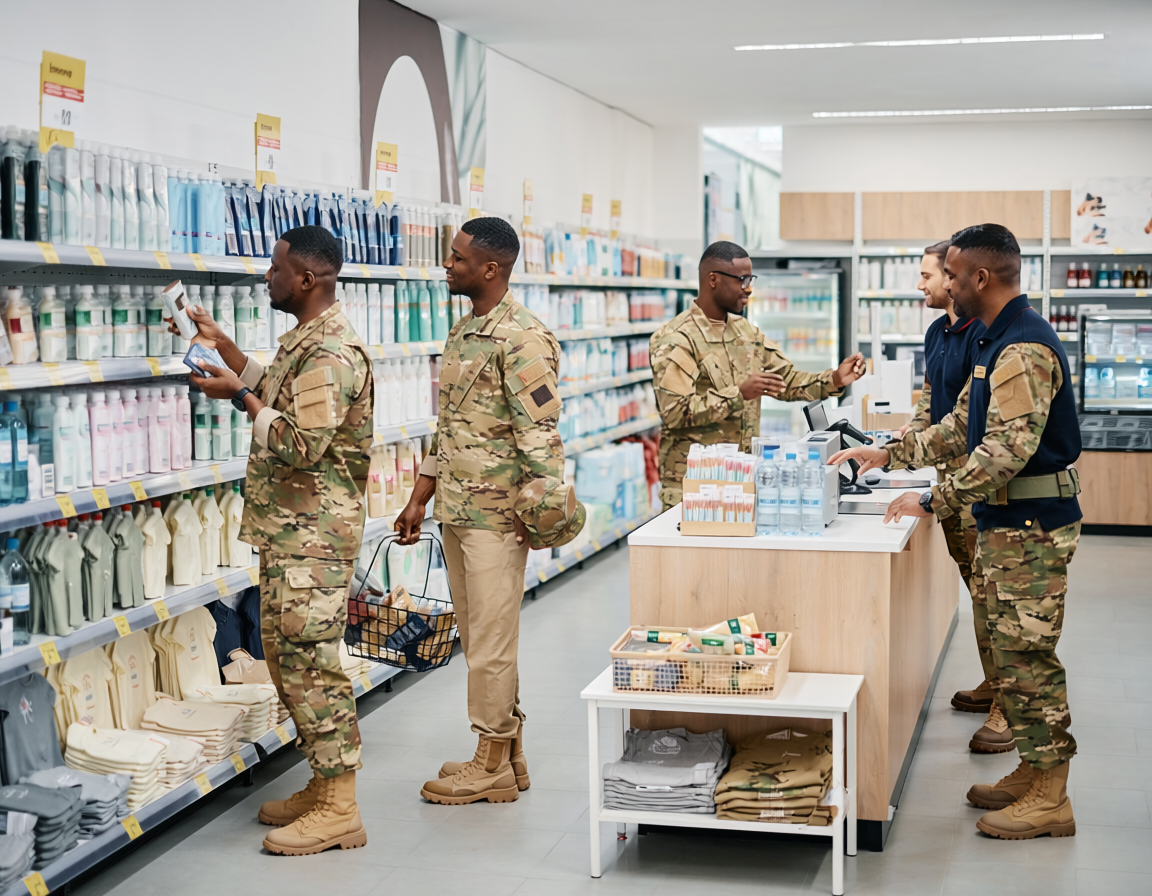
The U.S. Navy’s retail arm, the Navy Exchange, is stepping up efforts to compete with major commercial players like Walmart and Amazon, as it seeks to generate higher revenue to fund military support programs. The initiative reflects a broader transformation of military retail operations, which are increasingly adopting strategies similar to private-sector retailers in order to remain competitive in a rapidly evolving consumer landscape.
According to a report by CNBC, unlike traditional retailers, the Navy Exchange operates with a unique mandate: profits are reinvested into services for military personnel, including morale, welfare, and recreation programs.
Business Model: Retail Profits Fund Military Programs
The Navy Exchange, operated by the Navy Exchange Service Command, runs more than 300 retail locations globally and serves active-duty personnel, veterans, and their families.
While it functions similarly to commercial retailers selling apparel, electronics, and household goods, its core objective differs. Revenue generated from retail operations directly supports military community programs, making financial performance critical not just for business sustainability but for broader defense-related services.
Competitive Pressure: Facing Retail Giants
The competitive landscape has intensified as the Navy Exchange faces pressure from large-scale retailers like Walmart—one of the world’s largest companies by revenue and Amazon, which dominates global e-commerce.
These companies offer:
- Extensive product selection
- Aggressive pricing strategies
- Advanced logistics and delivery systems
To compete, the Navy Exchange is increasingly adopting similar strategies, including enhancing product offerings, improving supply chain efficiency, and expanding digital capabilities.
Strategic Shift: Modernizing Retail Operations
To remain relevant, the Navy Exchange is undergoing a transformation that mirrors broader retail industry trends. This includes:
- Expanding e-commerce capabilities
- Improving in-store experience
- Leveraging data to optimize inventory and pricing
The goal is to create a hybrid retail model that combines the convenience of online shopping with the accessibility of physical stores on military bases.
Financial Imperative: Funding Future Programs
The push to compete more aggressively is driven by a clear financial need. As traditional funding sources face constraints, the Navy Exchange must generate sufficient revenue internally to sustain and expand its support programs.
This creates a dual challenge:
- Compete effectively in a highly competitive retail market
- Maintain its mission-driven focus on serving military communities
Market Dynamics: Retail Convergence Across Sectors
The situation highlights a broader trend where distinctions between public-sector and private-sector retail are increasingly blurred. Military exchanges are now operating in an environment shaped by:
- E-commerce dominance
- Price transparency
- Consumer expectations for speed and convenience
This convergence is forcing traditionally insulated retail systems to adopt market-driven strategies.
Forward Outlook: Balancing Mission and Competition
Looking ahead, the Navy Exchange’s success will depend on its ability to balance commercial competitiveness with its mission-driven objectives. Key factors include:
- Digital transformation and online sales growth
- Cost efficiency and pricing competitiveness
- Continued relevance to younger military consumers
Failure to adapt could reduce funding available for essential programs, while successful transformation could strengthen both financial performance and community support.
Expert Insight
The Navy Exchange’s evolution reflects a deeper structural shift, even mission-driven institutions are now subject to market competition dynamics.
What makes this case unique is the feedback loop between retail performance and social impact. Unlike Walmart or Amazon, where profits flow to shareholders, Navy Exchange earnings directly fund services for military personnel.
This creates a hybrid model where:
- Commercial efficiency becomes a necessity
- Retail strategy becomes a funding mechanism
The key takeaway is that the future of institutional retail whether public or private will depend on the ability to compete in open markets while maintaining core mission objectives.
Written by Shalin Soni, CMA specializing in financial analysis, global markets, and corporate strategy, with hands-on experience in financial planning and analytical decision-making.
ALSO READ
• ASML Shares Fall as U.S. Pushes New China Chip Export Restrictions
• India Refiners Delay Maintenance to Stabilize Fuel Supply Amid Iran War Disruptions
• OPEC+ Debates Output Hike as Iran War Disrupts Global Oil Supply
Disclaimer
This article is based on publicly available information, market developments, and credible media reports. The content is intended for informational and analytical purposes only and should not be considered financial, investment, or legal advice.