On April 1, 2026 — a date that historians may one day note with dark irony — President Trump delivered an Oval Office address proclaiming that the United States had “beaten and completely decimated Iran.” He said the country had been “eviscerated” and was “really no longer a threat.” He then announced the war needed to continue for another two to three weeks.
In a single speech, Trump declared total victory and acknowledged it had not yet been arrived at. That contradiction, visible in real time, captures the central difficulty that has followed the February 28 strikes on Iran right through to the fragile two-week ceasefire announced on April 8: the United States has won significant battlefield engagements while falling short of the political objectives that were supposed to justify the war in the first place. And now, as the ceasefire ticks toward expiration and a second round of negotiations remains unscheduled, the hard question that the Straits Times and a growing chorus of international analysts are asking is becoming impossible to defer: was this a strategic defeat in disguise?
What the US Said It Wanted
The war’s objectives shifted frequently enough to invite scrutiny. When US and Israeli forces struck Iran on February 28, the stated aims included halting Iran’s nuclear programme, destroying its military capabilities, and catalysing regime change. Defence Secretary Pete Hegseth subsequently narrowed the official war aims to four military objectives: destroy Iran’s ballistic missiles, destroy missile production, destroy Iran’s navy, and “ensure they will never have nuclear weapons.” Trump then added new objectives at a Medal of Honor ceremony. Then revised them again.
By April 8, when the ceasefire was announced, the White House quietly issued a revised statement of original intent, claiming that “from day one” the aims were only to destroy Iran’s ballistic missiles and drones, its navy, and its defence industrial base — a considerably more modest list than the earlier public declarations.
The battlefield record on those military terms is genuinely impressive. US and Israeli forces struck more than 13,000 targets. More than 90% of Iran’s regular naval fleet was sunk. Approximately 90% of Iran’s weapons factories were hit, and 80% of its air defence systems were destroyed. Iran’s Supreme Leader, Ali Khamenei, was killed in the strikes, along with numerous senior officials. Netanyahu claimed the strikes eliminated Iran’s ability to produce nuclear weapons and ballistic missiles, removing “two existential threats” to Israel.
These are real military accomplishments. The question is whether military accomplishments and political objectives are the same thing — and in the case of the Iran war, the answer is increasingly clear that they are not.
What the US Actually Got
Iran’s government survived. Its institutions function. And the leadership that stepped into the void left by Khamenei is, by multiple analysts’ assessments, more hardline than what preceded it. Khamenei’s son, Mojtaba, has assumed the top post. Multiple foreign policy specialists quoted in PBS Newshour’s fact-check of Trump and Hegseth’s victory claims noted that the killings of Iranian leaders could produce a more radicalised regime — precisely the opposite of the regime change objective.
Highly enriched uranium stockpiles remain under Iranian control, buried underground beyond the reach of the strikes conducted so far. “If the war stopped tomorrow, this constitutes a historic strategic defeat for the US, especially when this was a war of choice,” said Aaron David Miller, a senior fellow at the Carnegie Endowment for International Peace and former Middle East adviser to multiple secretaries of state. That assessment is not an outlier. It reflects a growing consensus among foreign policy analysts who distinguish between military results — which are real — and strategic outcomes, which remain elusive.
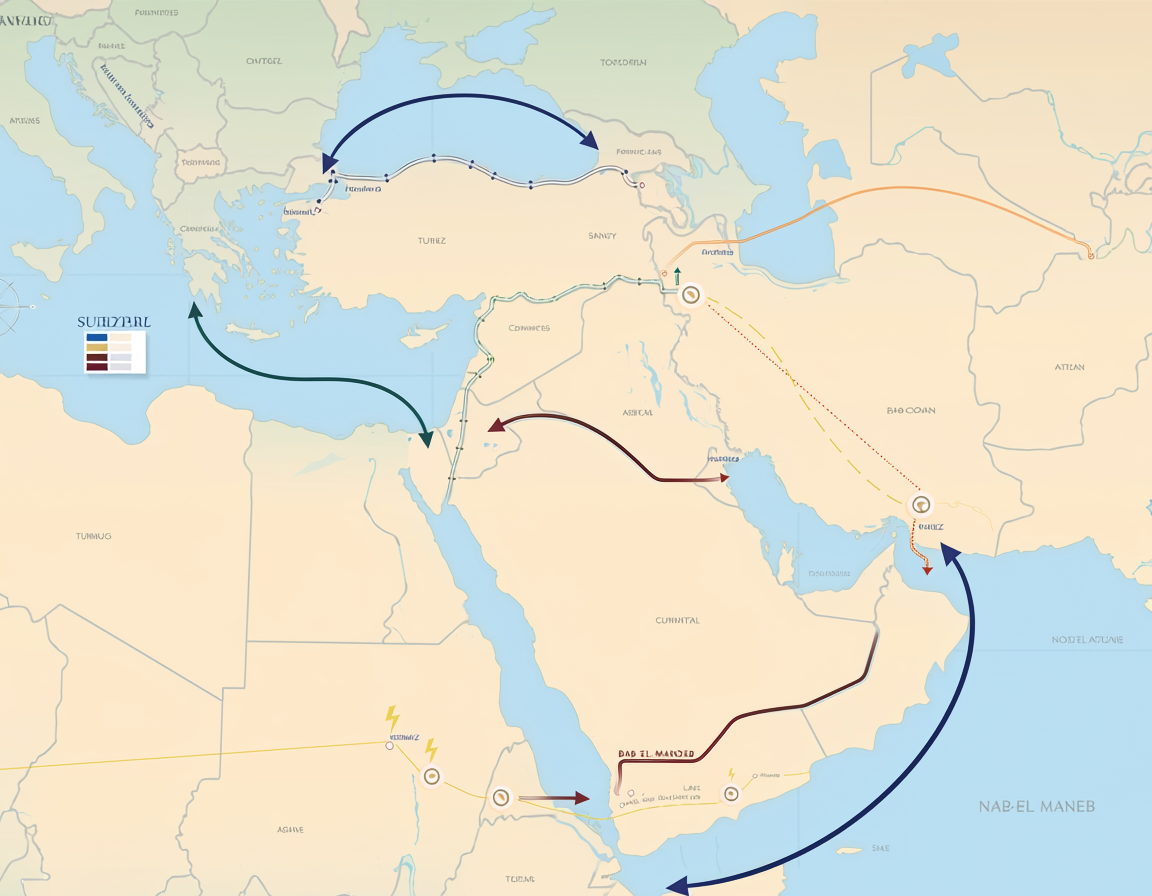
Most consequentially, Iran has achieved something it did not possess before the war began: effective gatekeeper status over the Strait of Hormuz. Before February 28, ships passed through the strait unimpeded. Iran had a theoretical capability to disrupt traffic but did not exercise it as a standing policy. The war changed that calculus permanently. By militarising the strait at the outset of hostilities, closing it to most traffic, extracting transit fees from the vessels it selectively permitted, and embedding itself into the waterway’s operational management, Iran transformed a theoretical leverage point into an active instrument of economic coercion.
“A ceasefire that leaves Iran in control of the strait is a worse outcome than the status quo before the war,” said Ian Ralby, CEO of maritime law and security consultancy I.R. Consilium. “In some ways, it legitimizes Iran’s control. So now they’re in a position to use that to their advantage much more proactively.” Daniel Benaim, a former senior State Department official and distinguished diplomatic fellow at the Middle East Institute, put it more directly: closing the strait “created a new deterrence and new economic weapon” for Iran that Tehran did not previously wield in this form.
The CSIS analysis was blunt: Iran has emerged from the conflict exercising an “unprecedented degree of control” over the Strait of Hormuz. Analysts at War on the Rocks described it as “tactical success, strategic failure” — noting that the war failed “not because the bombs and missiles missed” but because those ordering the campaign could not articulate, before or during the conflict, a desired political end state that the military campaign could actually deliver.
The Nuclear Question Remains Open
The deepest unresolved question is the one that Trump used to justify the war in the first place: Iran’s nuclear programme. The Islamabad talks, which collapsed after 21 hours on April 12, founder ed precisely on this issue. US Vice President JD Vance, who led the American delegation, said Washington needed “an affirmative commitment that they will not seek a nuclear weapon and they will not seek the tools that would enable them to quickly achieve a nuclear weapon.” Iran’s position was that its right to enrich uranium was “indisputable,” even if the level was “negotiable.”
That gap has not been closed. More troubling for the long-term calculus, multiple analysts have noted that the war itself may have strengthened Iran’s incentive to pursue nuclear weapons. The nuclear deterrent argument for Tehran is now more compelling than it was before February 28, not less. “Iran faced this war precisely because it didn’t yet have a nuclear weapon. If it had, the attack almost certainly wouldn’t have happened,” one foreign policy analyst quoted by PBS noted. “This is a concrete incentive structure that every government calculating its own security options is now weighing.”
That is the uncomfortable nuclear paradox at the heart of the ceasefire: a war launched partly to prevent Iran from obtaining nuclear weapons may, by demonstrating the protection that nuclear weapons offer to their possessors, have made Iran’s leadership more determined to obtain them — and made the case to other states watching the conflict unfold.
A Ceasefire That Is a Pause, Not a Resolution
The CSIS assessment of the ceasefire’s nature is perhaps the most honest accounting available: it is “less a resolution than a pause in a conflict whose underlying drivers remain not only intact but, in some cases, intensified.” The nuclear issue is unresolved. Lebanon is destabilised. Iran’s proxy networks — Hezbollah, the Houthis — remain operational. US alliances have been strained by Washington’s unilateral decision to launch the war. And both Iran and Israel retain strong incentives to continue a shadow conflict that may periodically erupt into open violence even if a formal peace agreement is eventually reached.
Thirteen US military personnel were killed. Hundreds more were injured. A human rights group estimated 1,665 civilian casualties in Iran, including 248 children. Iran’s forensic chief put the total death toll since the strikes began at more than 3,300.
Against those costs and that incomplete achievement, the ceasefire that took hold on April 8 — fragile, contested, violated by both sides within hours of its announcement — is the current resting place of a war whose outcomes remain deeply uncertain. Whether a second round of talks produces a durable settlement, or whether the ceasefire expires into renewed hostilities with the Hormuz question still unresolved, will determine which verdict history ultimately records.
The battlefield, for now, belongs to the United States. The strategic ledger is a different matter entirely.
Written by Shalin Soni, CMA specializing in financial analysis, global markets, and corporate strategy, with hands-on experience in financial planning and analytical decision-making.
ALSO READ
• Weak Demand at Japan’s 30-Year Bond Auction Raises Global Yield Concerns
• Kevin Warsh Confirmation Delay Raises Risk of Fed Policy Paralysis Amid Economic Uncertainty
• SpaceX Delays Starship Launch to May 2026, Raising Questions Over Moon Missions
Source: Based on The Straits Times and publicly available information.
Disclaimer
This article is based on publicly available information, market developments, and credible media reports. The content is intended for informational and analytical purposes only and should not be considered financial, investment, or legal advice.