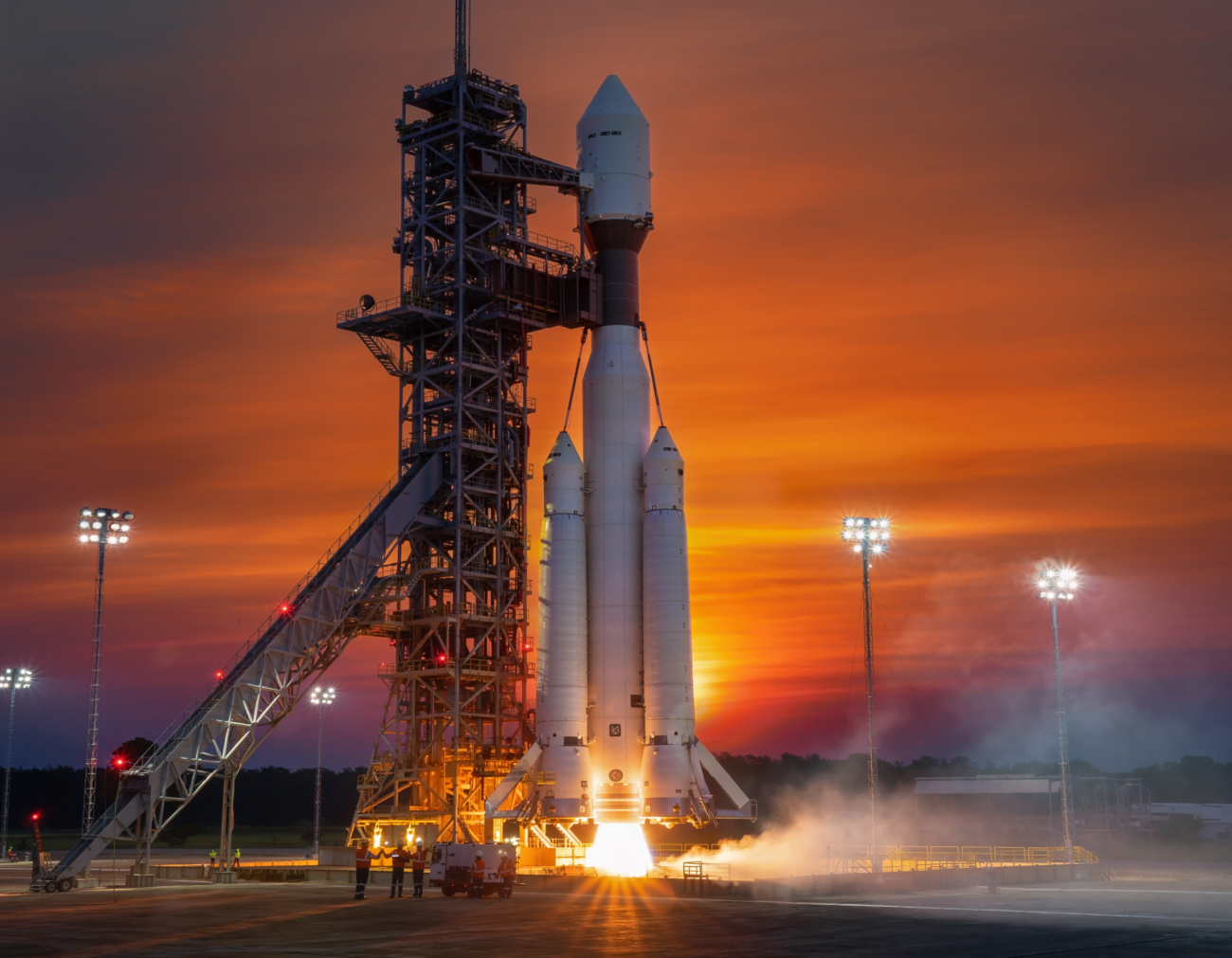
SpaceX has postponed its next Starship test launch, pushing the timeline to May 2026, as the company continues to address technical and engineering challenges associated with its next-generation rocket system. According to The Wall Street Journal, the delay highlights the complexity of developing fully reusable heavy-lift launch vehicles and introduces fresh uncertainty around broader space exploration timelines, including NASA’s lunar ambitions.
The Starship program remains central to SpaceX’s long-term vision for deep space travel, including missions to the Moon and Mars, making any delay strategically significant for both commercial and government-backed space initiatives.
Program Significance: Starship at the Core of Future Space Missions
Starship is designed to be the most powerful rocket ever built, intended to support large-scale payload delivery, lunar landings, and eventual human missions to Mars. It also plays a critical role in NASA’s Artemis program, where it is expected to function as the lunar lander for upcoming Moon missions.
Given this central role, delays in Starship testing have implications beyond SpaceX, affecting timelines across the broader space ecosystem, including government agencies and private sector partners.
Technical Challenges: Engineering Complexity Slows Progress
The postponement reflects ongoing challenges in refining key components of the Starship system, including propulsion, stage separation, and reusability mechanisms. The rocket relies on advanced Raptor engines and complex integration systems, which require extensive testing to ensure reliability under extreme conditions.
Such delays are not uncommon in aerospace development, particularly for systems that aim to push technological boundaries. However, they do reinforce the inherent difficulty of achieving rapid iteration while maintaining safety and performance standards.
Timeline Impact: Pressure on NASA’s Artemis Program
The delay could have downstream implications for NASA’s Artemis timeline, which depends on Starship as a core component of its lunar landing architecture. Any slippage in testing and certification could push back mission schedules, increasing pressure on coordination between SpaceX and NASA.
While NASA has built some flexibility into its planning, repeated delays may require adjustments to mission sequencing and program expectations.
Market Perspective: SpaceX Dominance Faces Execution Scrutiny
SpaceX remains the dominant player in the commercial launch market, with a strong track record of successful missions and reusable rocket technology. However, the Starship program represents a step-change in scale and ambition, attracting heightened scrutiny from investors, regulators, and industry observers.
The delay highlights a broader theme in advanced technology sectors: leadership in innovation must be matched by consistent execution to sustain confidence.
Industry Context: Space Economy Expands Despite Setbacks
The global space economy continues to grow, driven by increasing demand for satellite deployment, defense applications, and deep space exploration. While delays in flagship programs like Starship may create short-term uncertainty, they do not alter the long-term trajectory of the industry.
Competitors and partners alike are closely watching Starship’s progress, as its success could redefine cost structures and capabilities across the sector.
Forward Outlook: Testing Milestones to Determine Momentum
Looking ahead, the focus will be on successful completion of upcoming test milestones. Key factors include:
- Demonstration of reliable launch and recovery systems
- Validation of reusability at scale
- Alignment with NASA’s mission requirements
If SpaceX can achieve these objectives, the program could regain momentum and reinforce its leadership position in the global space race.
Expert Insight
The Starship delay underscores a critical reality of frontier innovation especially breakthrough ambition comes with execution risk. SpaceX is attempting to redefine the economics of space travel through full reusability and unprecedented scale. However, such transformation cannot occur without iterative setbacks.
The key takeaway is that in emerging industries like the space economy, delays are not necessarily signs of weakness but they are often indicators of technological boundary expansion. What ultimately matters is not the absence of delays, but the ability to convert complexity into reliable, repeatable performance.
In that sense, Starship’s trajectory will be a defining test and not just for SpaceX, but for the future of commercial space exploration and interplanetary ambition.
Written by Shalin Soni, CMA specializing in financial analysis, global markets, and corporate strategy, with hands-on experience in financial planning and analytical decision-making.
ALSO READ
• Sakura Internet Surges as Microsoft’s $10 Billion AI Investment Boosts Japan Tech
• Global Companies Delay IPOs and Cut Dividends as Middle East Conflict Shakes Markets
• Oracle Layoffs Signal AI-Driven Restructuring Across Tech Industry
Disclaimer
This article is based on publicly available information, market developments, and credible media reports. The content is intended for informational and analytical purposes only and should not be considered financial, investment, or legal advice.