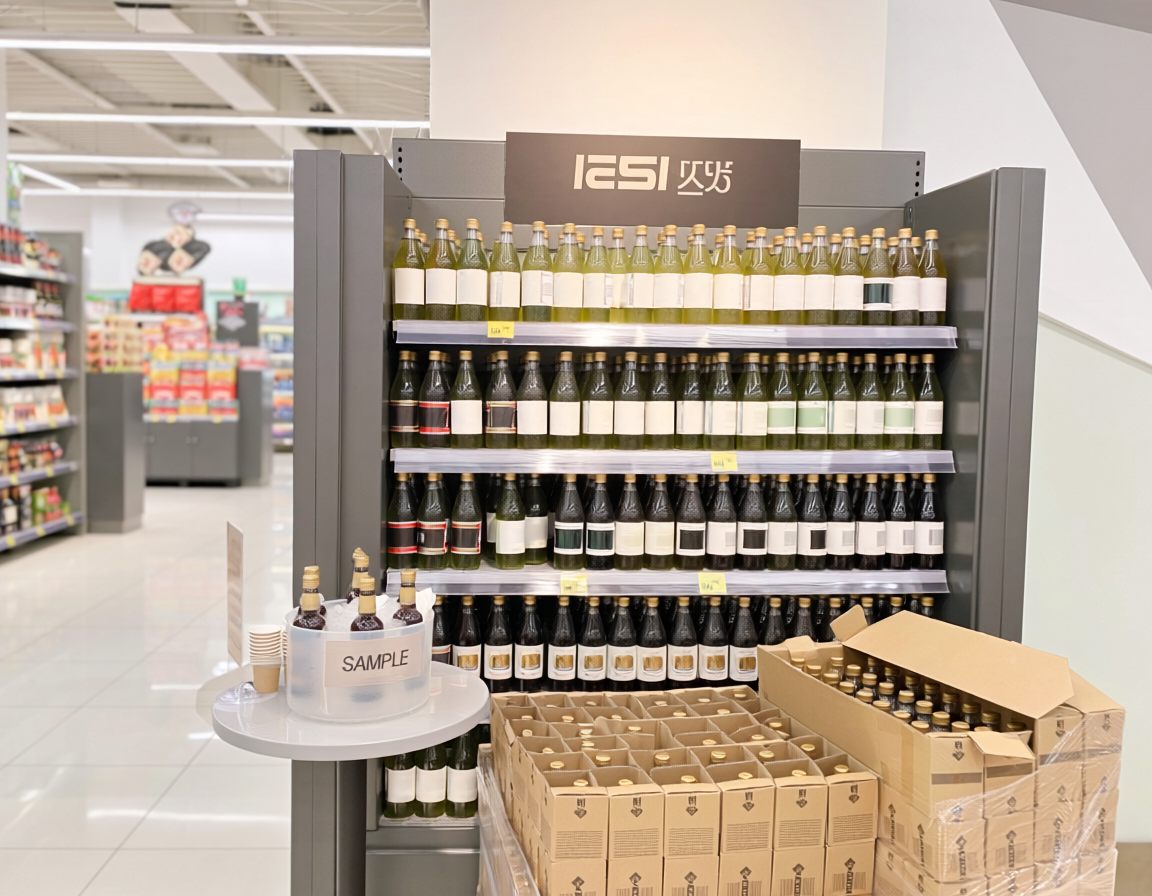
There is a useful phrase in consumer goods analysis — “share of throat” — that describes the competition for what human beings drink in the course of a day. It is a deliberate, slightly irreverent adaptation of the retail concept of “share of stomach,” and it captures something important about the beverage business: that people drink something, multiple times, every day, regardless of geopolitical conditions, regardless of whether the price of crude oil is $60 or $100, and regardless of whether consumer confidence is running at a post-pandemic high or a conflict-driven low. The business of making people’s daily drink is, in its structural core, one of the most defensible revenue positions in global commerce.
Coca-Cola’s first-quarter 2026 results, reported Tuesday April 28 in CEO Henrique Braun’s first quarterly earnings announcement since taking over from James Quincey at the end of March, demonstrated exactly that defensibility — and then some. While Procter & Gamble was warning of a $1 billion profit hit in fiscal 2027 from oil-driven input costs, while airlines were cutting routes and grounding aircraft, and while consumer goods companies across multiple categories were flagging margin pressure from the Iran war’s energy shock, Coca-Cola did something that made its shares jump more than 5% on the day: it raised its full-year earnings forecast.
The Numbers That Surprised the Market
The first-quarter metrics were strong across every dimension that matters to institutional beverage investors. Net revenue came in at $12.47 billion, up 12% year-over-year and comfortably ahead of the analyst consensus estimate of $12.24 billion. Adjusted earnings per share landed at $0.86, beating the $0.81 consensus. On a reported basis, EPS rose 18% to $0.91. Organic revenues — which strip out currency effects and acquisitions to show the underlying commercial momentum — grew 10%, driven by an 8% increase in concentrate sales and 2% growth from pricing and product mix. Global unit case volume grew 3%, with volume growth outpacing price growth — meaning consumers were buying more Coca-Cola products, not just paying more for the same amount.
Volume grew across all four of Coca-Cola’s geographic segments in the quarter. China, the United States, and India were specifically highlighted as the leading contributors to volume growth — a combination that is both geographically diversified and strategically significant. India, in particular, has been identified as one of Coca-Cola’s highest-priority long-term growth markets; the fact that volume growth there is running above group average in an environment of genuine consumer pressure demonstrates the depth of the brand’s penetration into everyday consumption patterns.
The company then raised its full-year comparable EPS growth forecast from 7% to 8%, to 8% to 9%, while reiterating its organic revenue growth target of 4% to 5% for 2026. JPMorgan analysts, in a note published after the results, described Coca-Cola as “a relative outperformer given that it is more insulated from inflationary cost pressures and has a sophisticated playbook to remain engaged with consumers on both the value and premium end.”
That description — “sophisticated playbook” — is worth examining in detail, because the playbook is what separates Coca-Cola’s results from the broader consumer goods narrative of Iran war-driven margin compression.
The Hedging Advantage No Competitor Can Instantly Replicate
The single most important structural reason Coca-Cola was able to raise its forecast while other consumer goods companies were cutting theirs is its commodity hedging programme. CFO John Murphy addressed the point directly in an interview with Reuters: the company had locked in some lower prices before the current disruption began. When the US-Israeli strikes on Iran on February 28 triggered the Strait of Hormuz closure and the subsequent surge in energy-linked commodity prices, Coca-Cola’s input costs did not immediately spike to spot-market rates. The hedging positions it had established in the months before the conflict insulated a significant portion of its cost base from the immediate price movement.
This is not an accidental feature of Coca-Cola’s financial architecture. The company, like PepsiCo, has invested decades and considerable institutional expertise into a sophisticated commodity risk management capability. The competitive advantage of a well-executed hedging programme is precisely that it provides time — time to negotiate with suppliers, time to adjust product mix toward less-exposed categories, time to evaluate whether and how to pass costs to consumers — without the immediate pressure of watching margins compress in real time.
Murphy was careful to frame the hedging advantage in the appropriate context: “We are working hard with our bottling partners to deal with the implications of the situation in the Middle East.” The word “manageable” was used by executives to describe the overall impact on the company’s cost basket. That word carries financial meaning: manageable does not mean zero. It means the magnitude of the impact, within the planning horizon the company is managing, does not require a revision to its financial guidance — which is the opposite of what P&G reported for fiscal 2027.
The India Aluminium Can Shortage and How It Is Being Managed
One specific Iran war impact on Coca-Cola’s supply chain was disclosed without softening: a shortage of aluminium cans in India, which has affected Diet Coke supply in that market due to delayed shipments from the Gulf. “We have had a disruption in can supply … and have been supporting our system in India to address this issue,” Murphy told Reuters. “I expect that to be resolved in the coming weeks.”
The disclosure is a reminder that Coca-Cola’s insulation from the oil shock is relative, not absolute. Aluminium is an energy-intensive material whose prices and supply chains are directly affected by the Hormuz closure. India sources a significant portion of its aluminium and aluminium-related inputs through Gulf supply chains. A disruption there translates into a packaging availability problem for one of Coca-Cola’s fastest-growing markets.
The management response — actively working with bottling partners, expecting resolution within weeks, not revising full-year guidance — reflects the same philosophy that the hedging programme embodies: anticipate disruptions, manage them through the supply chain system rather than through the income statement, and maintain financial guidance stability as evidence that the management team controls the controllables.
Braun’s First Quarter: A New CEO’s Strong Opening
The broader narrative of Tuesday’s results is also, inescapably, a story about succession. Henrique Braun, who took over from the long-serving James Quincey at the end of March, delivered his first quarterly report as CEO with results that have sent the stock up 5%. The timing is fortunate but not entirely accidental — Braun spent years as Coca-Cola’s president of international operations and understands the business intimately — and the results reflect strategic decisions and investments made well before his tenure began.
Those investments are central to the results. Coca-Cola has committed heavily to the Fairlife milk brand, to bottled teas, and above all to zero-sugar and low-sugar variants across its portfolio. The shift in consumer preference toward beverages perceived as healthier has been a structural trend for the better part of a decade, and Coca-Cola’s investment in Fairlife — acquired fully in 2020 and now the fastest-growing brand in the company’s North American portfolio — has proven particularly timely. Fairlife protein shakes, in particular, have become a mass-market product with premium pricing and strong consumer loyalty.
Braun’s own language on the call was characteristically measured but directionally confident. “We’ve had a strong start to the year. Our performance this quarter reflects our unwavering focus on staying close to the consumer, executing locally and managing complexity.” He then acknowledged the external environment clearly: “While many consumers remained resilient, others are under pressure due to persistent inflation, greater macroeconomic uncertainty and volatilities driven by the conflict in the Middle East.”
That pairing — a confident statement of Q1 performance followed by a candid assessment of consumer pressure — is the right way to characterise where Coca-Cola sits in the current economic environment. The company is not immune to the Iran war’s macro consequences. It is better positioned than most of its consumer goods peers to manage them, and Tuesday’s results make that structural advantage visible in a way that a year of quarterly analyst models cannot.
The Competitive Position That Explains the Outperformance
Coca-Cola’s relative outperformance in a difficult quarter for consumer goods is not only a function of hedging and brand strength. It reflects the specific economics of the beverage business compared to other consumer goods categories. Unlike laundry detergent, baby products, or personal care items — categories where plastic packaging and petrochemical-derived ingredients represent a large share of direct production cost — a bottle of Coke or a can of Sprite is primarily composed of water, flavouring syrup, and carbonation, with packaging as an additional but not dominant cost. The petrochemical input exposure is structurally lower than for companies like P&G, which flagged the $1 billion oil shock explicitly because its product portfolio is more materials-intensive.
The pricing dynamic also works differently in beverages than in other consumer goods. The range of pack sizes — from a 7.5 oz mini can to a 2-litre bottle — gives Coca-Cola more levers to manage consumer value perception without formally cutting prices. Offering a smaller pack at the same price point is, economically, a price increase per unit of volume. The consumer experiences it as an accessible price point, not an increase. This “pack architecture” flexibility is a sophisticated commercial tool that beverage companies have developed over decades and that most CPG competitors cannot replicate as fluidly.
Coca-Cola enters the second quarter of 2026 with raised guidance, a clean beat behind it, a new CEO who has started well, and a commodity hedging position that has bought time. The Strait of Hormuz situation, if it persists, will eventually challenge even that position — but for now, the world’s most consumed non-alcoholic beverage is proving, once again, that the thing people drink every day is also the business that holds up best when the world gets complicated.
Written by Shalin Soni, CMA specializing in financial analysis, global markets, and corporate strategy, with hands-on experience in financial planning and analytical decision-making.
ALSO READ
• Zomato Drops Pricing Clause After Restaurant Pushback Amid Antitrust Concerns
• Best Buy Taps Veteran Bonfig to Lead Turnaround Amid Weak Consumer Demand
• Karex Plans Sharp Price Increase as Iran Conflict Triggers Global Shortages
Source: Based on Reuters and publicly available financial information.