There’s a certain irony that becomes impossible to ignore when the world’s most celebrated investor — a man worth $150 billion — sits down to write his final letter to shareholders and tells them, in plain language, that accumulating wealth is not how you achieve greatness.
But that’s exactly what Warren Buffett did. And the fact that it came from him makes it worth paying very close attention to.
In his farewell letter to Berkshire Hathaway shareholders, the 95-year-old Oracle of Omaha stepped away from balance sheets and quarterly returns and offered something far more personal. “Greatness does not come about through accumulating great amounts of money, great amounts of publicity or great power in government,” Buffett wrote. Coming from anyone else, that sentence might sound like a platitude. Coming from Buffett — a man who transformed a struggling textile mill into a trillion-dollar empire and held the title of the world’s richest person — it lands differently.
So what exactly was he saying? And why, at the end of a career spanning seven decades, did he choose this as his parting message?
The Letter That Changed the Conversation
Buffett’s final shareholder letter was unlike anything he’d written before. Less a financial report, more a reflection on life. He told the story of Alfred Nobel — the inventor of dynamite who once accidentally read his own obituary, which described him as “the merchant of death.” Horrified by how history would remember him, Nobel devoted the rest of his life to creating prizes that celebrate the best of humanity.
Buffett used the story as an invitation. “Decide what you would like your obituary to say,” he wrote, “and live the life to deserve it.”
For a man who has spent his adult life compounding capital with extraordinary discipline and patience, the message carried genuine weight. Over 60 years at Berkshire’s helm, he grew the company’s value from around $19 per share in 1965 to an extraordinary $745,000 today — a gain of nearly four million percent. In 2024, Berkshire became the first U.S. non-tech firm to surpass a trillion-dollar market capitalization. And yet, his definition of a life well-lived doesn’t include any of those numbers.
Instead, he turned to something simpler: “When you help someone in any of thousands of ways, you help the world. Kindness is costless, but also priceless.”
The Man Who Never Changed His Address
What makes Buffett’s philosophy credible — and this is important — is that he hasn’t just preached it. He’s lived it, consistently, for decades.
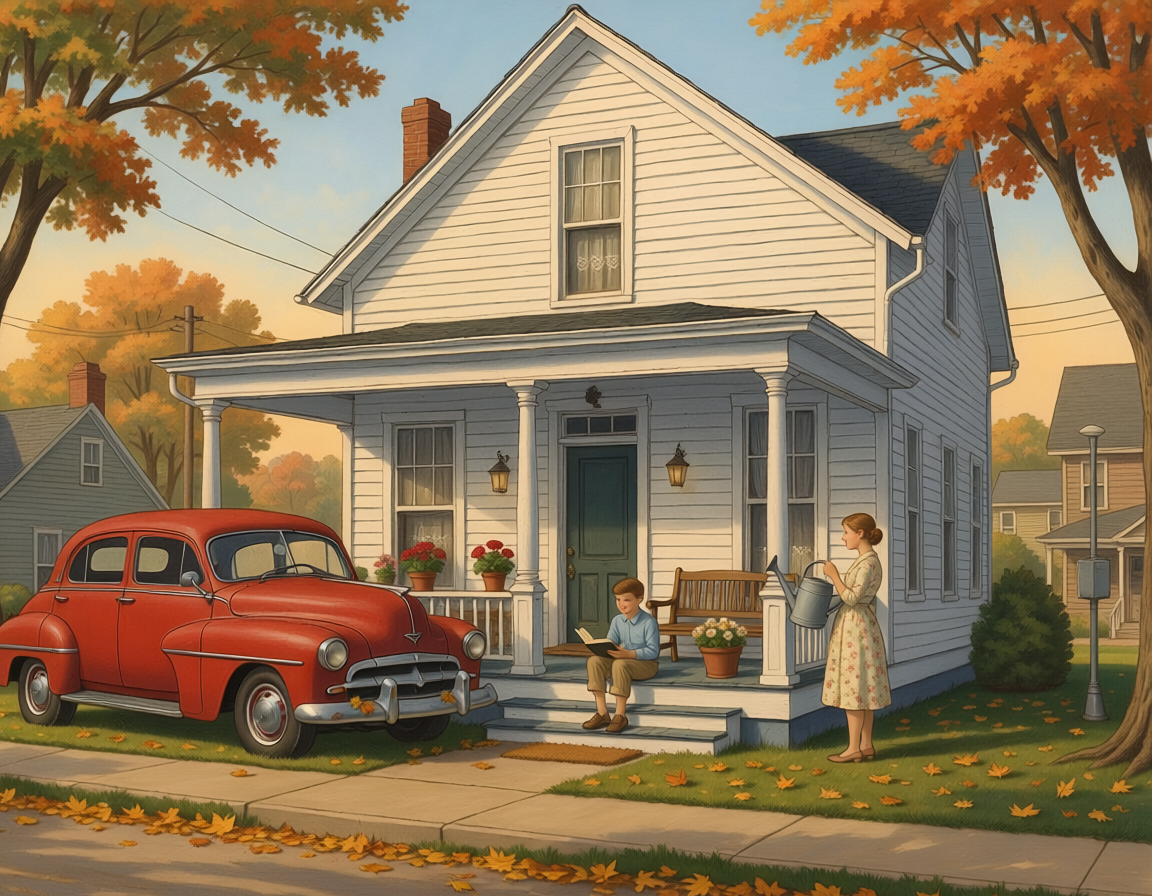
He still lives in the same five-bedroom, two-and-a-half bathroom Omaha home he bought for $31,500 back in 1958. The house would be worth around $1.3 million today — far more affordable than what Buffett could easily purchase — yet he has said he “wouldn’t trade it for anything.” The memories of raising his three children there anchor him in a way no mansion ever could.
His daily habits tell the same story. He still stops by McDonald’s for breakfast, ordering options that come in at less than $4. He once took Bill Gates there for lunch instead of wining and dining him at a fancy restaurant. When the two were at a McDonald’s in Hong Kong, Gates laughed watching Buffett pull coupons from his pocket to cover the tab. His license plate has famously read “THRIFTY.” These aren’t stunts or public relations gestures — they reflect a man who genuinely sees no correlation between spending and satisfaction beyond a certain threshold.
At a Berkshire shareholders meeting in 2014, Buffett addressed this directly. “I do not think that standard of living equates with cost of living beyond a certain point. My life would not be happier — it’d be worse if I had six or eight houses or a whole bunch of different things I could have. It just doesn’t correlate.”
A Warning Disguised as Wisdom
The letter also carried a quieter, sharper edge — a warning to the business world that too often confuses success with net worth.
Buffett called out the corrosive psychology of executive envy with characteristic bluntness. “What often bothers very wealthy CEOs — they are human, after all — is that other CEOs are getting even richer. Envy and greed walk hand in hand.”
This is a remarkably candid observation from someone who has spent decades at the top of the financial world. He’s watched brilliant people destroy their own peace chasing the next milestone — the next billion, the next acquisition, the next headline. And he’s watched others find contentment in far less.
His Golden Rule, as he described it, cuts across class and title with unusual simplicity: “Keep in mind that the cleaning lady is as much a human being as the Chairman.” It’s the kind of sentence that most executives would agree with in theory and forget entirely in practice. For Buffett, it’s genuinely operational.
What a $150 Billion Man Is Actually Passing On
Here’s the part that makes this story unusual rather than merely inspiring. Warren Buffett is not keeping his fortune. He pledged in 2006 to give away 99 percent of his wealth. His three children — now aged 72, 70, and 67 — will receive portions to direct toward their own philanthropic foundations. Buffett has been accelerating lifetime gifts to those foundations, eager to see his philanthropic vision fulfilled while his children are still actively able to carry it forward.
His son Peter, now a musician, composer, and philanthropist, offers a window into what this wealth philosophy looks like inside the family. Peter didn’t even know his father was on the Forbes billionaire list until he was in his twenties. “We didn’t live in a cultural framework where there was a lot of wealth being shown,” Peter recalled. His friends had no idea either.
That’s a remarkable footnote to an extraordinary life. One of the richest men in history raised children who didn’t feel rich — not because they were deprived, but because money was never treated as a marker of identity or status inside the household.
The Lesson for the Rest of Us
In an era when social media has turned wealth display into a competitive sport, and when “building wealth” has become the dominant aspiration of an entire generation of entrepreneurs, Buffett’s words cut against the current in a way that’s hard to dismiss.
He is not saying money doesn’t matter. He’s saying it isn’t the destination. The ability to invest, compound, and build financial security is real and valuable — but it’s a tool, not a trophy. The mistake is treating the accumulation itself as the measure of a well-lived life.
For Buffett, the measure is simpler: Did you treat people with kindness? Did you help where you could? Did you live in a way you’d be proud to defend in your own obituary?
At 95, having built more wealth than almost anyone who has ever lived, that’s the framework he chose to leave behind. Not a portfolio strategy. Not a valuation model. Just the Golden Rule — and a reminder that the cleaning lady and the Chairman are, at the end of the day, equally human.
Written by Shalin Soni, CMA specializing in financial analysis, global markets, and corporate strategy, with hands-on experience in financial planning and analytical decision-making.
ALSO READ
• AI Backlash Grows as Workers Quietly Resist Adoption Amid FOBO Fears
• U.S. Bank Profits Rise on Deal Activity as Iran War Clouds Outlook
• Hong Kong Eyes World’s Largest Digital Bond Sale Worth $1.5 Billion
Source: Based on Fortune and publicly available information.