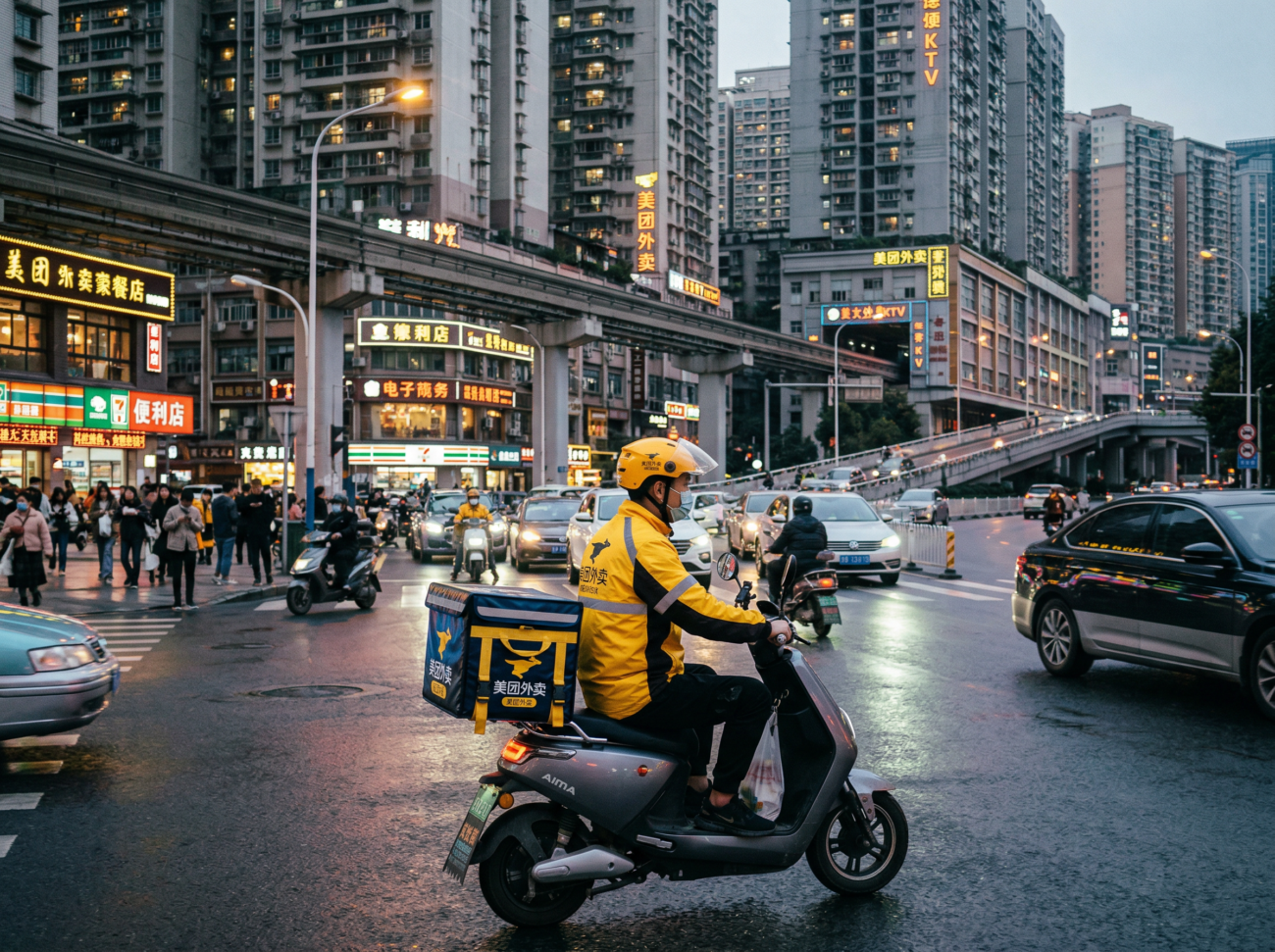
Shares of major Chinese technology companies including Alibaba, JD.com and Meituan climbed after signs emerged that the country’s intense food delivery price war could ease, raising expectations for improved profitability across the sector.
The rebound reflects growing optimism among investors that regulatory pressure and industry fatigue may bring an end to aggressive discounting strategies that have weighed heavily on earnings.
According to a report by Barron’s, stocks of Alibaba and JD.com rose more than 5% and 4% respectively in U.S. trading, while Meituan’s shares surged sharply in Hong Kong, as markets reacted to signals that the prolonged price war may be nearing a turning point.
Price war has hurt profitability across sector
The rally follows months of intense competition among China’s leading e-commerce and delivery platforms.
Companies have been locked in a subsidy-driven battle to attract customers, offering deep discounts on food delivery and quick commerce services.
While these strategies have boosted transaction volumes, they have come at a significant cost to profitability.
Alibaba, for example, recently reported a sharp decline in earnings despite modest revenue growth, with heavy spending on promotions and delivery services contributing to margin pressure.
JD.com has faced similar challenges, with profits falling sharply as the company increased spending to compete in the delivery space.
Meituan, the dominant player in food delivery, has also experienced financial strain as it defended market share through aggressive pricing.
Regulatory signals shift sentiment
Investor sentiment improved after China’s State Administration for Market Regulation signaled concern about the impact of excessive competition.
Authorities highlighted that aggressive price-cutting had disrupted the industry, leading to declining service quality and unsustainable business practices.
The prospect of regulatory intervention to stabilize pricing has been interpreted by markets as a positive development.
A more rational competitive environment could allow companies to reduce subsidies, improve margins and focus on sustainable growth.
Industry dynamics show signs of change
There are early indications that companies may already be adjusting their strategies.
After months of heavy discounting, firms are beginning to scale back promotions and focus on efficiency.
Analysts suggest that the industry may be reaching a point where continued aggressive competition is no longer economically viable.
The shift could mark the end of a period characterized by “involution”—a term used to describe intense, self-defeating competition within Chinese industries.
Impact on Alibaba’s broader strategy
For Alibaba, easing competition in food delivery could provide significant relief.
The company has been investing heavily in quick commerce and delivery services as part of its effort to compete with Meituan and JD.com.
However, these investments have weighed on profitability, even as other parts of the business—such as cloud computing and artificial intelligence—have shown strong growth.
A more stable competitive environment could allow Alibaba to rebalance its strategy and improve overall financial performance.
JD.com and Meituan also stand to benefit
JD.com, which entered the food delivery market more aggressively in recent years, has seen rising costs associated with customer acquisition and logistics.
A reduction in competitive intensity could help the company improve margins and focus on its core strengths in logistics and retail.
Meituan, as the market leader, may benefit the most from a more disciplined pricing environment.
With its scale and established network, the company is well positioned to capitalize on improved industry conditions.
Broader implications for Chinese tech stocks
The potential end of the price war could have wider implications for Chinese technology stocks.
The sector has faced multiple headwinds in recent years, including regulatory scrutiny, economic slowdown and geopolitical tensions.
Improved profitability in core business segments could help restore investor confidence and support valuations.
The recent rally in Alibaba, JD.com and Meituan shares suggests that markets are beginning to price in a more favorable outlook.
Risks remain despite optimism
Despite the positive sentiment, risks remain.
The regulatory environment in China can be unpredictable, and any policy changes could have significant implications for the sector.
In addition, consumer demand remains uncertain, particularly in the context of broader economic challenges.
If demand weakens, companies may be tempted to resume aggressive discounting to maintain growth.
Long-term outlook for the sector
Looking ahead, the Chinese e-commerce and delivery sector is likely to continue evolving.
Companies are expected to focus more on:
- profitability over volume growth
- efficiency improvements
- technological innovation
The integration of artificial intelligence and advanced logistics systems could play a key role in shaping the next phase of competition.
At the same time, the shift away from heavy subsidies could lead to a more sustainable business model.
Conclusion
The recent rise in Alibaba, JD.com and Meituan shares reflects growing optimism that the damaging price war in China’s food delivery sector may be nearing an end.
While challenges remain, the prospect of a more rational competitive environment offers a path toward improved profitability and stability.
For investors, the development signals a potential turning point in one of the world’s most competitive and dynamic technology markets.
ALSO READ
• IAG Likely to Abandon TAP Portugal Deal, Raising Privatization Doubts
• China Brain Chip Firm Trails Neuralink by Three Years in AI Race
• Tencent Revenue Rises 13% on Gaming Strength and AI Demand
Disclaimer
This article is based on publicly available information, market developments, and credible media reports. The content is intended for informational and analytical purposes only and should not be considered financial, investment, or legal advice.