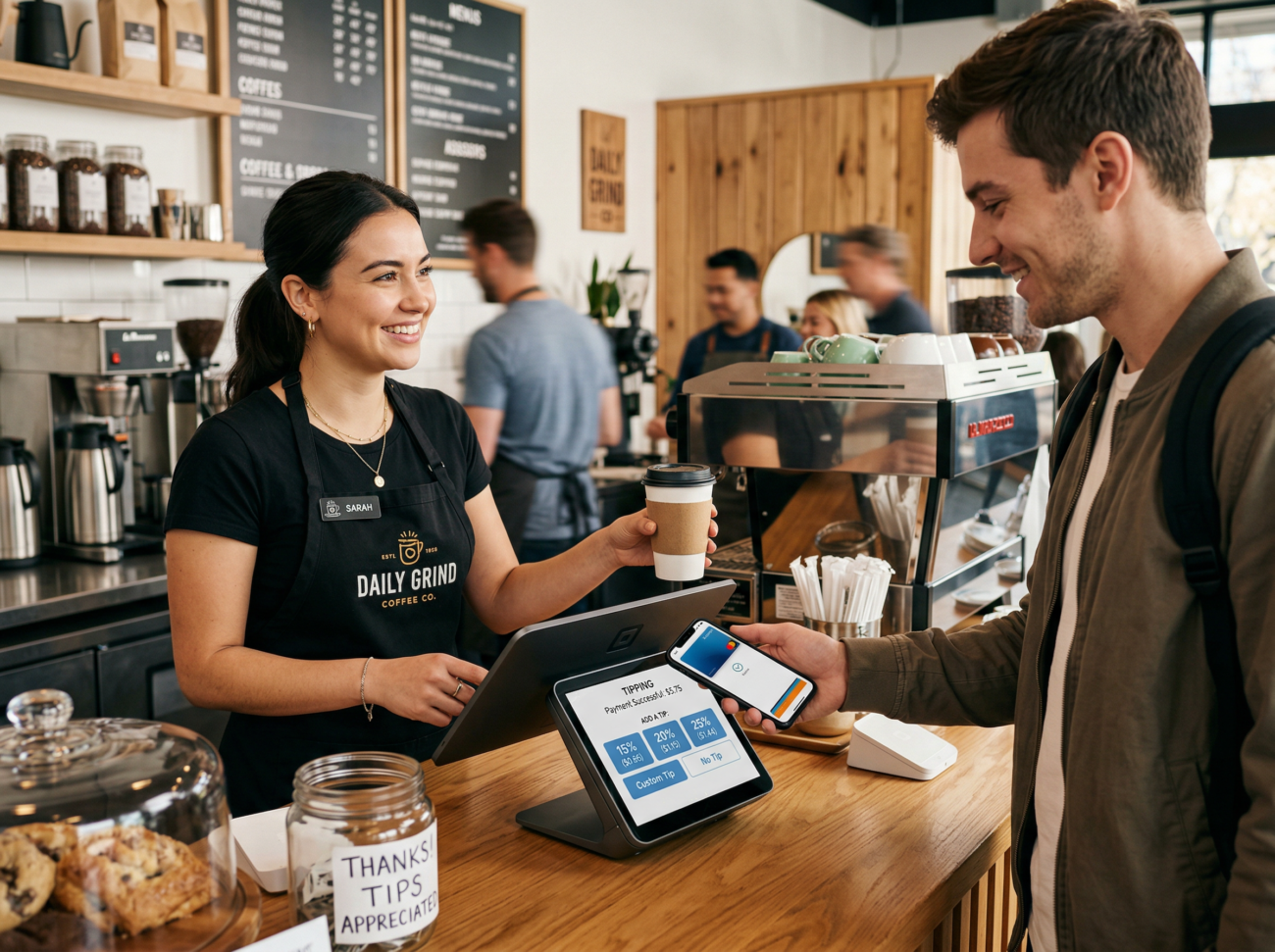
Starbucks is rolling out a new compensation strategy that includes expanded tipping options and performance-based bonuses for baristas, as part of a broader effort to improve employee satisfaction and operational performance. According to CNBC, the initiative reflects a strategic shift under CEO Brian Niccol to enhance service quality while addressing ongoing labor concerns and competitive pressures in the U.S. retail sector.
Compensation Expansion: Bonuses and Tipping Drive Pay Growth
The company is introducing quarterly bonuses of up to $300 per employee, or $1,200 annually, for baristas and shift supervisors working in top-performing stores. These bonuses will be tied to key performance metrics such as sales growth, operational efficiency, and customer satisfaction.
In parallel, Starbucks is expanding tipping eligibility to include mobile orders paid via credit or debit cards, extending beyond existing tipping options such as cash, in-store card payments, and Starbucks app transactions.
The combined impact of these changes is expected to increase barista compensation by approximately 5% to 8%, depending on customer tipping behavior.
Scale and Implementation: Nationwide Rollout Begins Mid-2026
The new compensation framework is expected to be implemented across company-owned U.S. stores beginning in July 2026, with the first bonus payouts anticipated later in the year.
Additionally, Starbucks plans to transition all employees to weekly pay cycles starting in August 2026, improving cash flow access for workers and aligning with employee feedback on compensation timing.
These initiatives form part of a broader operational reset aimed at strengthening Starbucks’ domestic business performance.
Labor Context: Compensation Changes Amid Union Negotiations
The compensation overhaul comes at a sensitive time for Starbucks, as the company continues negotiations with labor unions representing approximately 600 of its 10,000 U.S. stores.
Unionized baristas have previously staged protests demanding higher wages and improved staffing conditions. While both sides have recently returned to the bargaining table after a prolonged pause, the implementation of bonuses and tipping expansions may still require separate negotiations for unionized locations.
Operational Strategy: Linking Pay to Performance Metrics
Starbucks is introducing a structured performance evaluation system—sometimes referred to as internal scoring metrics to determine eligibility for bonuses. These metrics include:
- Customer experience quality
- Speed and efficiency during peak hours
- Staff scheduling effectiveness
- Inventory management
- Health and safety standards
This model reflects a shift toward performance-linked compensation, aligning employee incentives with store-level operational outcomes.
Market Implications: Service Quality as a Growth Lever
The new compensation structure highlights Starbucks’ strategic focus on improving in-store experience as a driver of revenue growth. By linking pay to performance and expanding tipping opportunities, the company aims to:
- Increase employee engagement and retention
- Improve customer satisfaction
- Drive higher sales through better service execution
This approach mirrors broader trends in the service industry, where labor incentives are increasingly tied to measurable performance metrics.
Structural Shift: Tipping Culture Expands in Digital Payments Era
The expansion of tipping into mobile and digital payment channels reflects a broader evolution in consumer behavior and payment systems. As digital transactions become dominant, companies are adapting traditional tipping models to maintain income opportunities for service workers.
For Starbucks, integrating tipping across all payment channels ensures consistency in customer experience while enhancing earnings potential for employees.
Forward Outlook: Balancing Labor Costs and Growth Strategy
Looking ahead, Starbucks’ success will depend on its ability to balance rising labor costs with revenue growth. Key factors include:
- Customer adoption of expanded tipping options
- Effectiveness of performance-based incentives
- Progress in labor negotiations
If successful, the strategy could serve as a model for other service-sector companies navigating similar labor and operational challenges.
Expert Insight
Starbucks’ compensation overhaul represents more than a pay increase as it signals a strategic redefinition of labor economics in the service sector. The company is effectively shifting from a fixed-wage model to a hybrid system where earnings are increasingly tied to performance and customer behavior. This aligns employee incentives directly with business outcomes, creating a feedback loop between service quality and revenue generation.
However, the model also introduces variability in income, making worker earnings more dependent on external factors such as customer tipping patterns and store performance. The broader implication is clear because in a digital-first economy, even traditionally stable service roles are evolving toward performance-linked, variable compensation structures, reshaping how labor value is defined in the retail and hospitality sectors.
Written by Shalin Soni, CMA specializing in financial analysis, global markets, and corporate strategy, with hands-on experience in financial planning and analytical decision-making.
ALSO READ
• Microsoft Faces UK Antitrust Probe as Cloud Dominance Comes Under Scrutiny
• Paramount-Warner $110B Merger Faces Animation Gap Despite 30-Film Slate
• Henkel to Acquire Olaplex for $1.4 Billion in Beauty Industry Deal
Disclaimer
This article is based on publicly available information, market developments, and credible media reports. The content is intended for informational and analytical purposes only and should not be considered financial, investment, or legal advice.