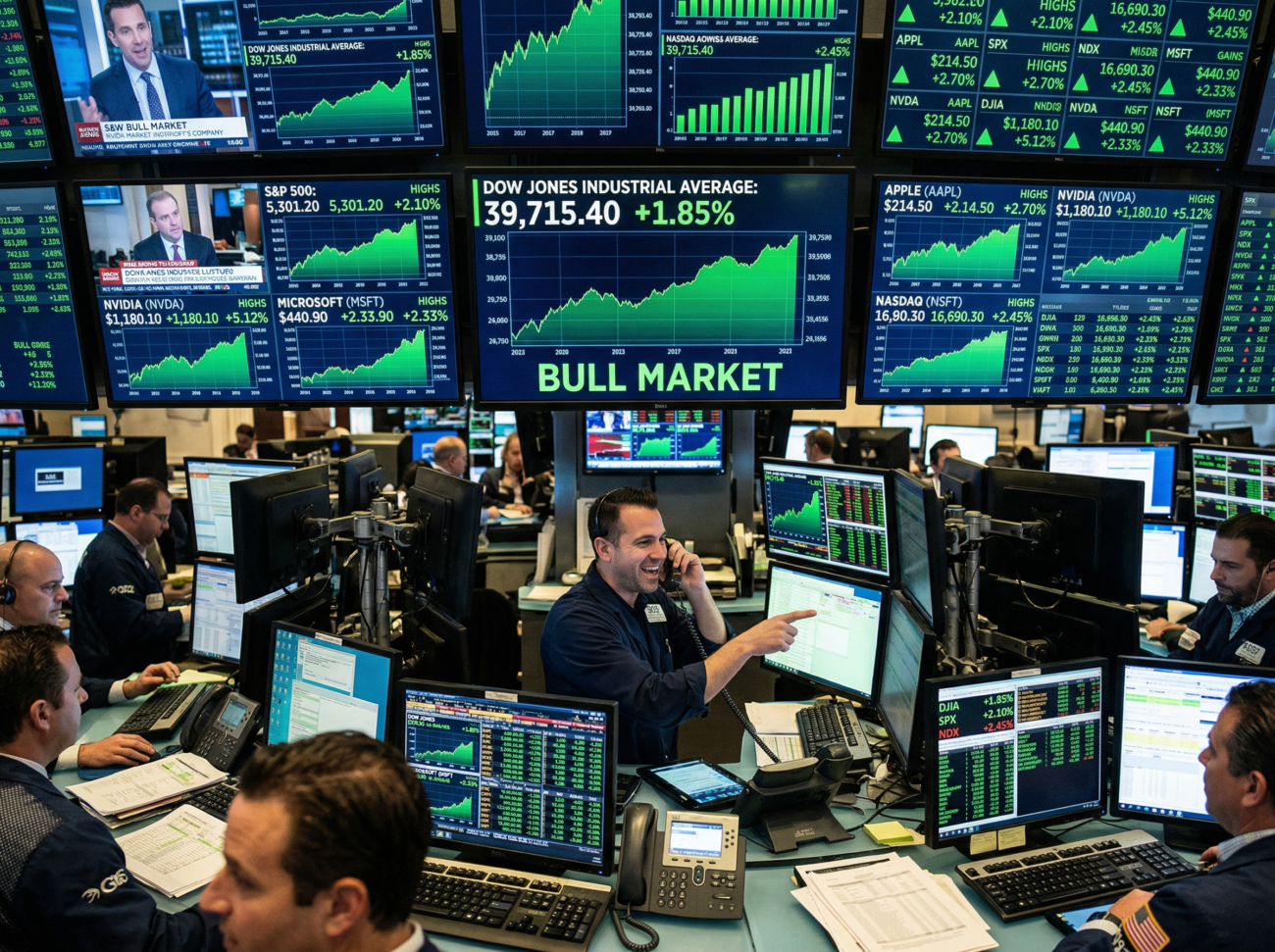
U.S. stock futures are staging a sharp rebound, with contracts tied to the S&P 500, Dow Jones, and Nasdaq rising nearly 1%, as investors react to signals that the Trump administration may move toward ending the ongoing Iran conflict even if the Strait of Hormuz remains partially closed. According to Bloomberg, the shift in tone marks a critical inflection point for markets that have been dominated by geopolitical risk, inflation fears, and energy-driven volatility over the past several weeks.
Market Reaction: Risk-On Sentiment Returns
Futures markets responded immediately to reports that Donald Trump is considering ending the war without securing full reopening of key oil transit routes. S&P 500 futures, Nasdaq-100 futures, and Dow futures are all up approximately 1%, reflecting a rapid reversal in risk sentiment as investors begin to price in a reduction in geopolitical escalation risk. This rebound follows a prolonged sell-off phase, during which rising oil prices and persistent war uncertainty pushed U.S. equities into a multi-week decline cycle.
Oil Markets Stabilize as Risk Premium Eases
Simultaneously, oil markets are showing early signs of stabilization, with easing geopolitical tensions beginning to reduce the risk premium embedded in crude prices. Brent crude is falling toward $105–$107 per barrel, with earlier geopolitical premiums beginning to unwind. The decline reflects expectations that reduced military escalation could ease supply concerns, even if logistical disruptions persist. However, analysts caution that a partially closed Strait of Hormuz still represents a structural constraint on global oil flows, meaning prices may remain elevated despite de-escalation signals.
Policy Shift: A Strategic Exit Without Full Resolution
The emerging U.S. strategy appears to reflect a pragmatic exit approach, prioritizing de-escalation over complete restoration of supply routes. As a result, war risk premiums are declining, but supply disruptions are expected to persist in the near term, forcing markets to price a “middle-ground scenario.” This creates a complex environment in which geopolitical tension may ease, yet structural supply constraints continue to influence market dynamics.
Stock-Specific Moves: High-Beta Names Back in Focus
Alongside the macro-driven optimism, several individual equities are drawing investor attention. Allbirds is experiencing strong speculative momentum, while Rocket Lab is benefiting from renewed interest in space and defense-linked innovation. Nebius Group is also gaining traction amid ongoing AI infrastructure narratives. These movements reflect a broader trend in which investors, as uncertainty begins to ease, rotate back into high-growth and high-volatility names.
Market Structure: From Fear to Tactical Optimism
The latest rally highlights how quickly market structure can shift in a headline-driven environment. Recent weeks were characterized by rising oil prices triggering inflation concerns, central banks adopting a more cautious stance, and equity markets reacting negatively to geopolitical escalation. Now, even a partial de-escalation narrative is sufficient to trigger a rebound, underscoring how deeply risk premiums had been embedded in equity valuations.
Risks Remain: Fragile Recovery Dynamics
Despite the rebound, risks remain elevated. The incomplete reopening of the Strait of Hormuz, the potential for renewed escalation, and persistent inflation pressures driven by elevated energy costs continue to pose challenges. Markets are transitioning from crisis pricing to conditional optimism, where sentiment remains highly sensitive to geopolitical headlines.
Forward Outlook: Headline-Driven Volatility Persists
Looking ahead, market direction will likely hinge on confirmation of diplomatic progress, actual changes in oil supply flows, and central bank responses to evolving inflation dynamics. Until greater clarity emerges, volatility is expected to remain elevated, with markets reacting swiftly to any new developments.
Expert Insight
The current rebound in U.S. equity futures is less about resolution and more about a recalibration of risk. What markets are pricing today is not peace, but the probability of reduced escalation. This distinction is critical. While equities may rally on improving sentiment, the persistence of structural supply constraints particularly in energy suggests that macro volatility is far from over. In this environment, markets are no longer driven purely by fundamentals, but by a dynamic interplay between geopolitics, energy flows, and investor psychology, making the current rally a tactical shift rather than a confirmed trend.
ALSO READ
• Exxon–QatarEnergy Golden Pass LNG Startup Reshapes Global Energy Supply
• Top Dividend Stocks to Buy Now: Energy Transfer, Chevron, Diamondback Lead Yields
• Huawei AI Chip Gains Orders from Alibaba, ByteDance as Nvidia Supply Tightens
Disclaimer
This article is based on publicly available information, market developments, and credible media reports. The content is intended for informational and analytical purposes only and should not be considered financial, investment, or legal advice.