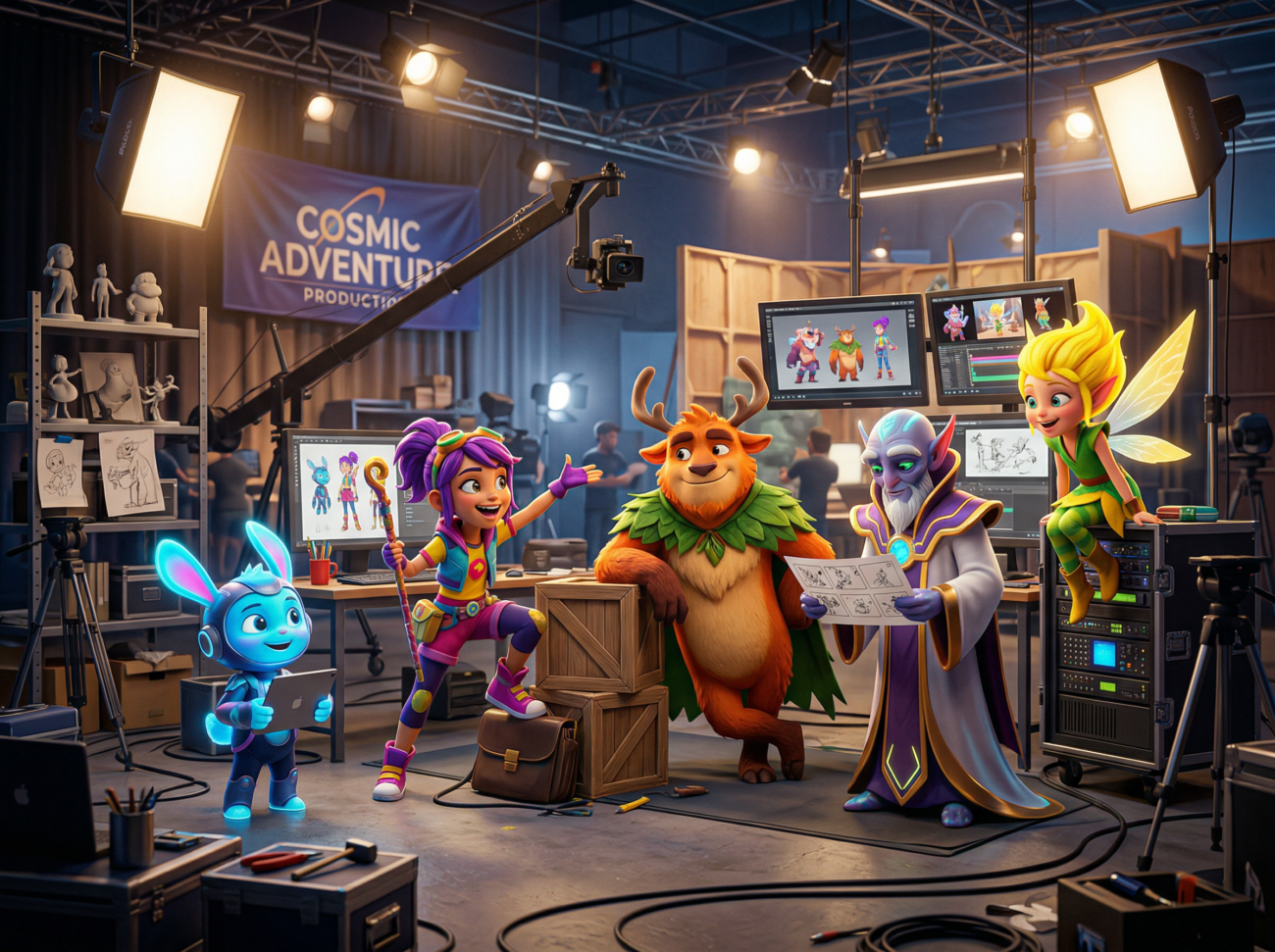
The proposed merger between Paramount Skydance and Warner Bros. Discovery is set to reshape the global film industry, but a key weakness is emerging in their combined movie slate: a limited pipeline of animated films.
The deal, valued at approximately $110–$111 billion, aims to create one of the largest entertainment studios globally, with plans to produce around 30 films annually, split roughly evenly between the two companies. According to CNBC, however, the combined slate lacks sufficient animated content, a genre that has consistently driven some of the highest box office returns in recent years.
Market Dynamics: Animation Dominates Box Office Economics
Animated films have become a critical revenue driver in Hollywood, often generating outsized returns relative to production budgets.
Recent blockbuster performances highlight this trend. Films like The Batman generated around $772 million globally, while other franchise-driven releases have approached or exceeded the $1 billion mark, demonstrating the scale of demand for high-quality, family-oriented content.
By comparison, Paramount’s animation division has produced films totaling roughly $1 billion in cumulative box office revenue, underscoring both its presence and its relative underinvestment compared to industry leaders such as Disney and Universal.
Strategic Gap: Limited Animation Pipeline in Combined Slate
Despite ambitions to dominate theatrical releases, the merged entity’s current slate remains heavily skewed toward live-action franchises, including superhero, action and sci-fi titles.
Paramount and Warner Bros are expected to deliver approximately 15 films each per year, yet only a small portion of these are animated projects.
This imbalance presents a strategic gap, as animation has proven to be one of the most resilient genres across economic cycles, attracting global audiences and generating strong merchandising and streaming value.
Competitive Landscape: Disney and Universal Maintain Edge
The lack of animation depth places the combined company at a disadvantage against competitors.
Studios such as Disney and Universal have consistently leveraged animation to drive:
- recurring franchise revenue
- global audience reach
- cross-platform monetization
These studios regularly release multiple animated titles annually, reinforcing their dominance in the family entertainment segment.
Without a comparable pipeline, the Paramount–Warner combination risks missing out on a key growth driver in the evolving media landscape.
Industry Context: Consolidation Meets Content Strategy Challenges
The merger reflects a broader wave of consolidation across the entertainment industry, as companies seek scale to compete with streaming platforms and rising production costs.
However, scale alone does not guarantee success. The combined company will need to balance:
- production volume
- genre diversification
- franchise development
While the merged studio could potentially control one of the strongest theatrical slates globally, the absence of a robust animation strategy could limit its long-term competitiveness.
Financial Implications: Box Office Potential vs Structural Weakness
The combined entity is expected to benefit from:
- a deep library of intellectual property
- strong global distribution
- significant cost synergies
However, animation represents a high-margin segment with long-term monetization potential through licensing, streaming and merchandising.
Failing to expand in this category could reduce overall revenue diversification and increase reliance on blockbuster performance, which tends to be more volatile.
Outlook: Animation Investment Likely to Become Strategic Priority
Looking ahead, analysts expect the merged company to increase investment in animation to address this gap.
With plans to produce 30 films annually, even a modest increase in animated output could significantly enhance:
- box office stability
- global audience reach
- recurring revenue streams
The challenge will be building a competitive animation pipeline quickly enough to match established leaders.
Expert Insight
The Paramount–Warner merger represents a powerful consolidation play that could reshape the global box office, but its current film slate reveals a structural imbalance that cannot be ignored.
While scale, franchises and distribution provide a strong foundation, the absence of a robust animation strategy introduces a critical vulnerability. In today’s entertainment economy, animation is no longer a niche segment, but it is a core revenue engine.
From an industry standpoint, the real question is not whether the combined studio can dominate in volume, but whether it can compete in the segments that deliver the most consistent and scalable returns. Unless animation becomes a central pillar of its strategy, the merged entity risks leaving significant value on the table despite its unprecedented scale.
ALSO READ
• Gold Rebounds From $4,000 Support as Fed Pressure Caps Upside
• Henkel to Acquire Olaplex for $1.4 Billion in Beauty Industry Deal
• Meta Appoints CTO Andrew Bosworth to Lead AI-Native Strategy
Disclaimer
This article is based on publicly available information, market developments, and credible media reports. The content is intended for informational and analytical purposes only and should not be considered financial, investment, or legal advice.