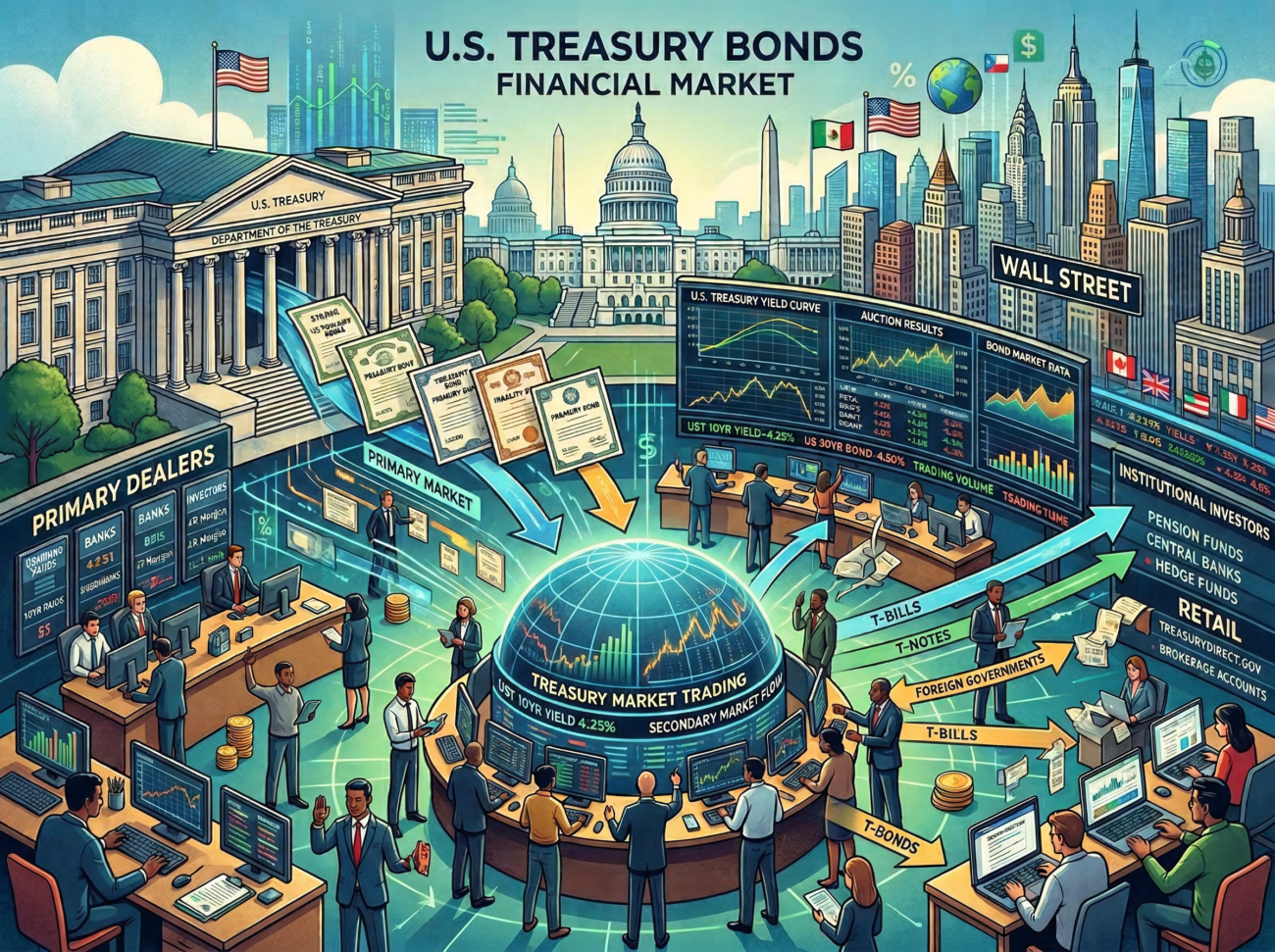
U.S. government bonds have erased their gains for 2026 as rising inflation concerns and geopolitical tensions push investors to reassess the outlook for interest rates and global growth.
The sell-off in Treasuries reflects growing anxiety that surging oil prices and supply disruptions linked to the war involving Iran could trigger another wave of inflation across major economies.
According to a report by Bloomberg, a key index tracking U.S. Treasury performance turned negative for the year after suffering sharp losses in recent weeks as investors reacted to the possibility of renewed inflationary pressure.
The development marks a notable shift in financial markets, where government bonds had previously been seen as a safe haven during geopolitical crises.
Bond prices fall as yields rise
When bond prices fall, yields move higher because investors demand greater returns to compensate for increased risk.
The recent sell-off has pushed U.S. Treasury yields higher, reversing earlier gains that had been supported by expectations that the Federal Reserve might soon cut interest rates.
Rising oil prices and supply disruptions have forced investors to reconsider those expectations, as higher energy costs could reignite inflation and delay potential rate cuts by the Fed.
As a result, the bond market has experienced increased volatility, with investors adjusting portfolios to reflect the changing economic outlook.
War-driven oil surge fuels inflation fears
The shift in bond markets has been closely linked to rising energy prices triggered by escalating tensions in the Middle East.
The conflict involving Iran has disrupted shipping routes and raised concerns about supply through the Strait of Hormuz, one of the world’s most critical oil transit corridors.
The strait normally handles roughly 20% of global oil shipments, meaning any disruption can have significant consequences for energy markets and global inflation.
Higher oil prices can quickly feed into consumer inflation by increasing transportation costs, production expenses and energy bills for households and businesses.
Because of these risks, investors have become increasingly cautious about government bonds.
Global bond markets under pressure
The sell-off is not limited to U.S. Treasuries.
Government bonds around the world have also declined as investors react to the possibility that inflation could remain elevated for longer than previously expected.
In recent days, global bond indices have similarly erased their gains for the year as markets respond to rising commodity prices and geopolitical uncertainty.
Analysts say the bond market reaction reflects concerns about stagflation — a situation where inflation rises while economic growth slows.
Such conditions can create difficult challenges for central banks attempting to balance economic stability with price control.
Federal Reserve policy outlook uncertain
The recent market volatility has complicated the outlook for U.S. monetary policy.
Earlier this year, investors had expected the Federal Reserve to begin reducing interest rates as inflation showed signs of cooling.
However, the surge in energy prices has raised doubts about whether the central bank will be able to move forward with those plans.
If inflation accelerates again, policymakers may need to keep borrowing costs higher for longer in order to stabilize prices.
Financial markets have therefore begun pricing in a lower probability of rate cuts during 2026.
Safe-haven status under scrutiny
U.S. Treasuries have historically served as a safe-haven asset during times of global uncertainty.
During geopolitical crises or economic downturns, investors typically buy government bonds because they are considered among the safest investments in financial markets.
However, the current environment is unusual because inflation concerns are offsetting the traditional safe-haven demand for bonds.
In other words, investors are worried that inflation could reduce the real value of fixed-income investments, prompting them to demand higher yields.
This dynamic has weakened the traditional relationship between geopolitical risk and bond market rallies.
Financial markets reacting to uncertainty
The shift in bond markets has also affected other asset classes.
Higher Treasury yields can increase borrowing costs across the economy, influencing mortgage rates, corporate borrowing and investment decisions.
Equity markets have also experienced volatility as investors adjust expectations for economic growth and interest rates.
When bond yields rise sharply, stock valuations can come under pressure because higher interest rates reduce the present value of future earnings.
Currency markets have also reacted to the changing outlook, with the U.S. dollar strengthening as global investors seek relatively stable assets during periods of uncertainty.
Economic implications of higher yields
Rising Treasury yields can have broad economic implications.
Higher borrowing costs may slow investment and consumer spending, potentially affecting economic growth.
For governments, higher yields increase the cost of servicing national debt.
The United States already carries a massive federal debt burden, and sustained increases in borrowing costs could place additional pressure on fiscal policy.
For investors, the shift in bond yields may require adjustments to portfolio strategies.
Some market participants may move capital toward commodities or inflation-protected assets if they expect price pressures to remain elevated.
Outlook for the bond market
The future direction of the U.S. Treasury market will depend largely on developments in energy markets and geopolitical conditions.
If oil prices stabilize and inflation pressures ease, bond markets could recover some of their recent losses.
However, prolonged disruptions to global energy supply could keep inflation elevated and maintain upward pressure on yields.
For now, the sudden reversal of Treasury gains illustrates how quickly global financial markets can react to geopolitical shocks and inflation fears.
As investors navigate this uncertain environment, the bond market remains a key indicator of expectations about the global economy and future monetary policy.
ALSO READ
• Starlink Launches in Kuwait as Middle East Conflict Highlights Need for Satellite Internet
• Sinopec Plans to Cut Crude Processing by Over 10% Amid Middle East Supply Crunch
• LPG Supply Concerns Spread Across India as Fuel Shortage Fears Rise
Disclaimer
This article is based on publicly available information, market developments, and credible media reports. The content is intended for informational and analytical purposes only and should not be considered financial, investment, or legal advice.