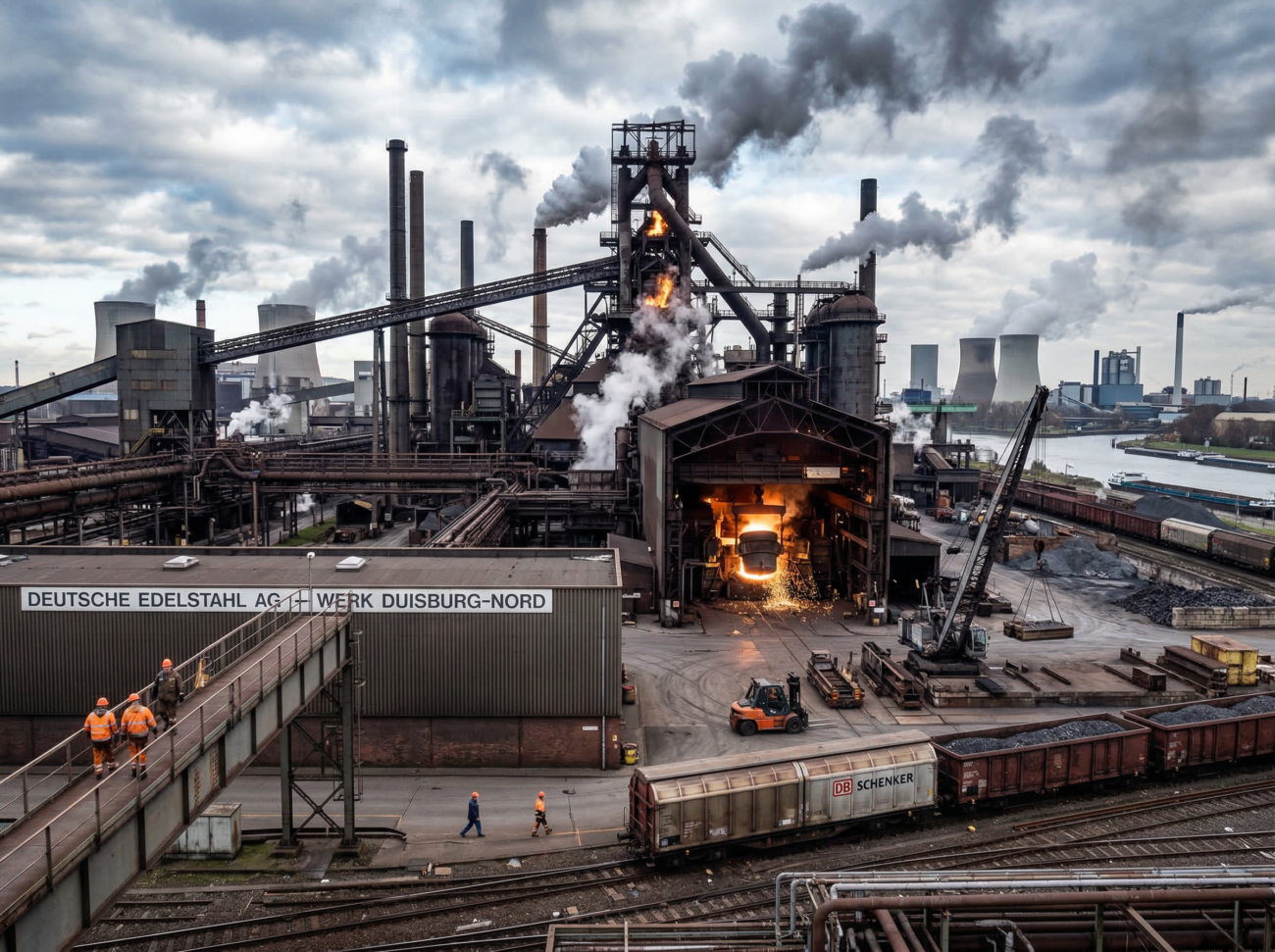
Efforts to sell Thyssenkrupp’s steel division to India’s Jindal Steel International appear to be losing momentum, raising concerns that a long-anticipated deal may not materialize.
The development comes as labour representatives warn that prolonged delays in negotiations are creating uncertainty for thousands of workers tied to the German industrial group’s steel business.
According to a report by Reuters, a senior union official said discussions between Thyssenkrupp and Jindal are “not moving forward,” suggesting the transaction may be increasingly difficult to finalize.
Talks stall amid prolonged delays
Juergen Kerner, deputy chairman of Thyssenkrupp’s supervisory board and a senior figure in Germany’s powerful IG Metall union, said progress in negotiations has been slower than expected.
Labour representatives had submitted a detailed questionnaire to Jindal as part of the due diligence process, but responses have reportedly been postponed multiple times.
“We were promised answers, but these have been delayed repeatedly,” Kerner said, adding that the lack of clarity is a major concern for employees.
The delays have led to growing frustration among workers, who remain uncertain about the future of the steel unit and potential changes to employment conditions.
Workers left in uncertainty
Union officials have warned that prolonged negotiations could leave workers in limbo for months.
Thyssenkrupp Steel Europe, one of the continent’s largest steel producers, employs tens of thousands of people and plays a significant role in Germany’s industrial economy.
Labour groups have emphasized the need for clarity on key issues such as:
- job security
- plant operations
- future investment plans
The uncertainty surrounding the deal has heightened concerns about potential restructuring measures, including job cuts and operational changes.
Strategic importance of the sale
The potential sale of the steel unit is central to Thyssenkrupp’s broader restructuring strategy.
The company has been seeking to divest or restructure its steel business for several years due to:
- volatile earnings
- high energy costs in Europe
- increasing competition from global producers
A successful transaction would allow Thyssenkrupp to streamline operations and focus on more stable and profitable business segments.
The steel division remains one of the most challenging parts of the group’s portfolio, making its future a key priority for management.
Jindal’s role and ambitions
Jindal Steel International emerged as a potential buyer after submitting a non-binding bid for the unit in 2025.
The deal would represent a significant expansion into Europe for the Indian steel group, giving it access to one of the region’s largest steel manufacturing platforms.
Jindal has also outlined plans to invest in modernizing the business, including initiatives aimed at reducing emissions and improving competitiveness.
Despite the current delays, the company has indicated that it remains engaged in discussions and committed to its long-term vision for the asset.
Thyssenkrupp maintains discussions ongoing
Thyssenkrupp has downplayed concerns about the pace of negotiations, stating that talks with Jindal are continuing.
Chief Executive Miguel Lopez has said that discussions are focused on key aspects such as:
- valuation of the steel business
- future investment requirements
- long-term strategic positioning
The company has emphasized that it is exploring options to ensure the steel division remains viable, with or without a deal involving Jindal.
This suggests that Thyssenkrupp is preparing contingency plans in case the transaction does not proceed.
Alternative buyers emerge
The uncertainty surrounding the Jindal deal has attracted interest from other potential buyers.
U.S.-based investment firm Flacks Group has signaled that it could step in with a bid if current negotiations fail.
The presence of alternative bidders could provide Thyssenkrupp with additional leverage in negotiations, while also increasing the likelihood that the steel unit will eventually be divested.
However, any new transaction would still need to address the same challenges related to restructuring, investment and labour relations.
Broader challenges facing the steel sector
The difficulties in finalizing the deal reflect broader challenges within the European steel industry.
Producers are facing multiple pressures, including:
- rising energy costs
- competition from lower-cost imports
- the need for significant investment in low-emission technologies
Transitioning to greener steel production is particularly capital-intensive, requiring billions of euros in investment.
These factors make potential buyers cautious and contribute to the complexity of negotiations.
EU policy support may influence outcome
European policymakers have been exploring measures to support the steel sector, including initiatives aimed at protecting domestic producers and encouraging investment in green technologies.
Thyssenkrupp has indicated that such measures could improve the attractiveness of its steel business to potential investors.
However, the impact of policy support will depend on how quickly and effectively these measures are implemented.
Outlook for the deal
At this stage, the future of the Thyssenkrupp-Jindal deal remains uncertain.
While discussions are ongoing, the lack of progress highlighted by union officials suggests that significant hurdles remain.
Key factors that will determine the outcome include:
- resolution of labour concerns
- agreement on valuation and investment plans
- broader market conditions in the steel industry
If these issues are not addressed, the deal could be delayed further or ultimately abandoned.
Implications for Thyssenkrupp
For Thyssenkrupp, the stakes are high.
A successful sale would mark a major milestone in its transformation into a more focused industrial group.
Failure to reach an agreement, however, could prolong uncertainty and require the company to explore alternative restructuring strategies.
For now, the stalled negotiations underline the complexity of large industrial transactions, particularly in sectors undergoing structural change.
ALSO READ
• China Brain Chip Firm Trails Neuralink by Three Years in AI Race
• SEC Proposal to End Quarterly Earnings Could Disrupt Finance Jobs
• Nebius Stock Surges After $27 Billion AI Data Center Deal With Meta
Disclaimer
This article is based on publicly available information, market developments, and credible media reports. The content is intended for informational and analytical purposes only and should not be considered financial, investment, or legal advice.