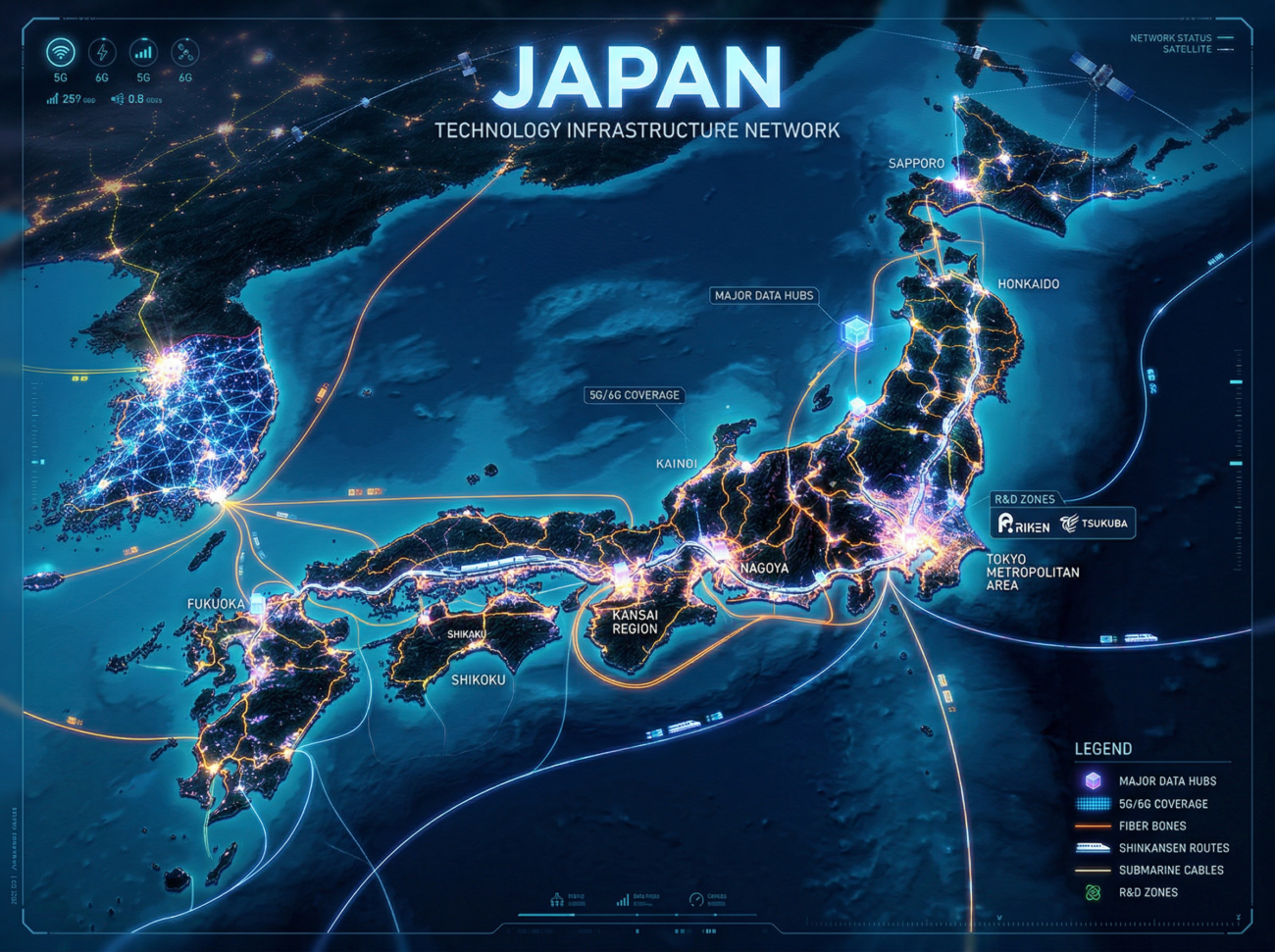
Shares of Japan’s Sakura Internet surged sharply after Microsoft outlined plans to significantly expand artificial intelligence infrastructure in the country, highlighting growing investor optimism around Japan’s role in the global AI supply chain. According to CNBC, the development comes as Microsoft announced a $10 billion investment in Japan between 2026 and 2029, aimed at strengthening AI capabilities and cybersecurity infrastructure while deepening its presence in a strategically important market.
The investment includes partnerships with domestic firms such as Sakura Internet and SoftBank, positioning them as key enablers of Japan’s emerging AI ecosystem and reinforcing a localized approach to global AI deployment.
Market Reaction: Sakura Internet Shares Jump on AI Momentum
Following the announcement, shares of Sakura Internet rose by as much as 20% intraday, reflecting strong market confidence in the company’s role in hosting AI computing infrastructure and supporting hyperscale cloud operations.
The rally underscores a broader capital market trend, where investors are increasingly rewarding companies directly exposed to AI infrastructure particularly those involved in data centers, cloud platforms, and high-performance computing capacity.
Strategic Investment: $10 Billion AI Expansion in Japan
Microsoft’s investment plan represents one of the largest AI infrastructure commitments in Japan’s history. The company will deploy $10 billion (approximately ¥1.6 trillion) over four years to build advanced data centers, expand cloud capacity, and enhance cybersecurity collaboration with the Japanese government.
A key component of the initiative includes training 1 million engineers and developers by 2030, addressing a critical talent shortage and ensuring that infrastructure investment is supported by a scalable workforce.
Partnership Model: Localizing AI Infrastructure
Microsoft is working with Japanese firms, including Sakura Internet and SoftBank, to expand domestic AI computing capacity and ensure localized processing capabilities. This approach enables businesses and government agencies to handle sensitive data within national borders while leveraging Microsoft Azure’s global cloud ecosystem.
The strategy reflects a broader structural shift toward data sovereignty, where countries prioritize control over critical digital infrastructure, AI workloads, and data governance frameworks.
Industry Context: Japan’s AI Adoption Accelerates
AI adoption in Japan has accelerated rapidly since 2024, with approximately 20% of working-age individuals now using generative AI tools, signaling growing integration of AI into both enterprise and consumer environments.
However, the country faces a projected shortage of more than 3 million AI and robotics professionals by 2040, highlighting a significant structural gap between technological ambition and workforce readiness. This imbalance underscores the urgency of simultaneous investment in infrastructure and human capital.
Role of SoftBank: Expanding AI Investment Ecosystem
SoftBank’s involvement further reinforces the scale and ambition of Japan’s AI strategy. The company has been aggressively investing in AI globally, including multi-billion-dollar commitments to OpenAI and large-scale infrastructure initiatives.
Its collaboration with Microsoft and Sakura Internet positions it as a central orchestrator of Japan’s AI backbone, spanning data centers, cloud infrastructure, and AI deployment platforms, while enabling integration across both domestic and global ecosystems.
Market Implications: AI Infrastructure Becomes Strategic Asset
The surge in Sakura Internet’s stock highlights a broader structural trend—AI infrastructure is emerging as one of the most valuable segments within the technology sector. Companies providing computing power, storage, and cloud services are increasingly viewed as foundational to the AI economy.
For investors, this signals a shift away from purely software-led growth toward infrastructure-driven value creation, where capital-intensive assets such as data centers, semiconductor capacity, and energy resources play a defining role.
Forward Outlook: Japan Emerges as Key AI Hub
Looking ahead, Japan’s AI trajectory will depend on its ability to scale infrastructure efficiently, develop a skilled workforce, and attract sustained global investment. Microsoft’s $10 billion commitment provides a strong initial foundation, but long-term success will require continued coordination between government policy, corporate investment, and technological innovation.
If successfully executed, Japan could position itself as a major AI hub in Asia, competing with established leaders such as the United States and China while carving out a distinct role in localized AI infrastructure.
Expert Insight
Microsoft’s investment in Japan and the resulting surge in Sakura Internet highlights a critical evolution in the AI landscape: the localization of global AI infrastructure. The competitive dynamics of AI are shifting. The race is no longer defined solely by algorithms, models, or applications but it is increasingly determined by where computing power is built, deployed, and controlled.
Governments and corporations alike are prioritizing domestic infrastructure to address concerns around security, data sovereignty, and long-term economic competitiveness.
In a nutshell, the next phase of the AI revolution will not be defined solely by innovation but by infrastructure ownership, geographic positioning, and control over digital capacity. In that sense, Japan’s emerging AI ecosystem represents not just a growth opportunity, but a strategic repositioning within the global technology order.
Written by Shalin Soni, CMA specializing in financial analysis, global markets, and corporate strategy, with hands-on experience in financial planning and analytical decision-making.
ALSO READ
• Silicon Valley Steps Back From Politics as Google AI Leader Speaks Out
• Raiffeisen to Buy BBVA Romania Unit for $680M, Becomes Top 3 Bank
• Tesla Stock Struggles Despite SpaceX IPO Hype and 366K Sales Outlook
Disclaimer
This article is based on publicly available information, market developments, and credible media reports. The content is intended for informational and analytical purposes only and should not be considered financial, investment, or legal advice.