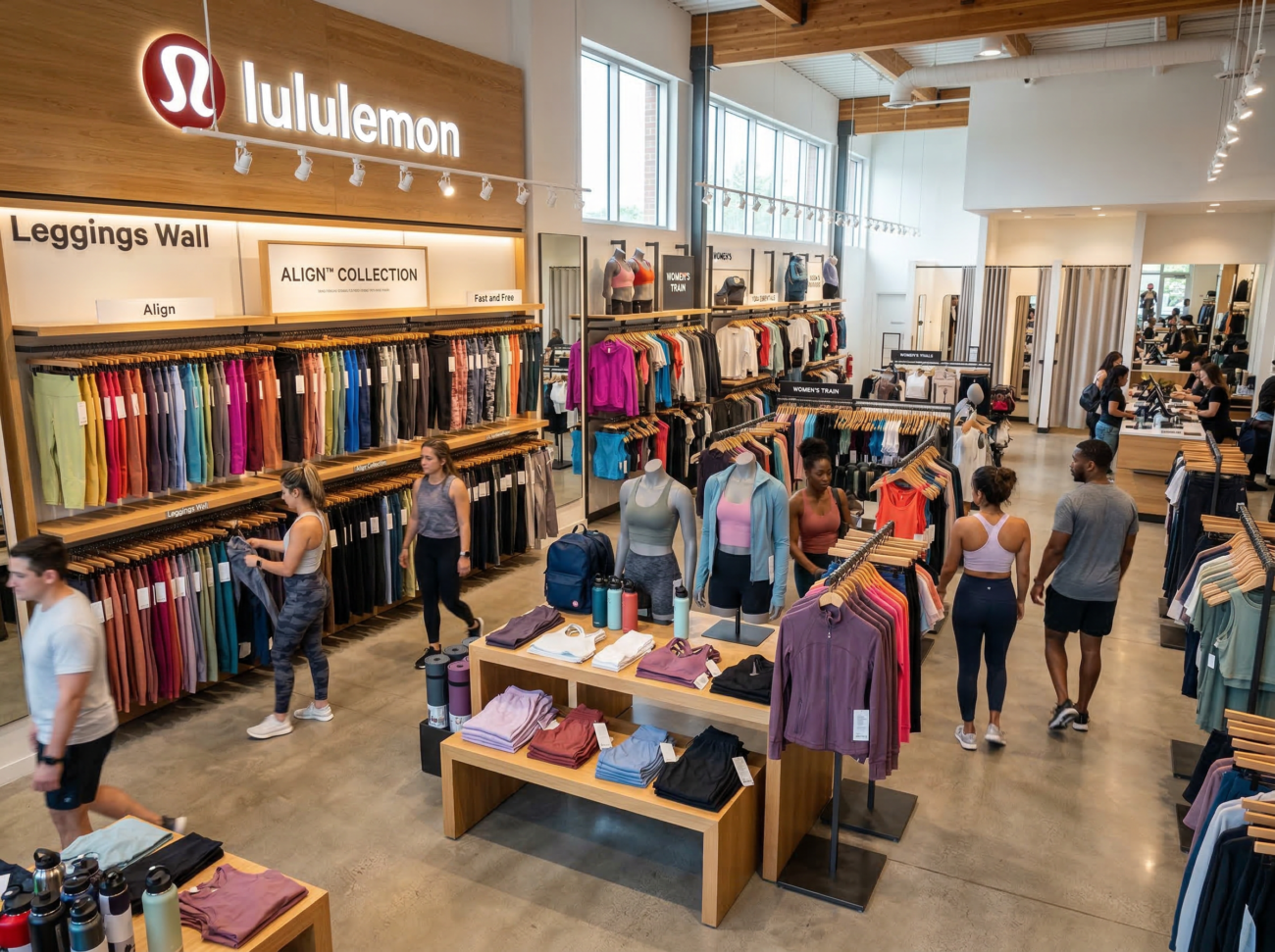
Lululemon Athletica is planning to scale back discounts and promotional pricing in 2026 as part of a broader strategy to strengthen its premium brand positioning and improve revenue performance.
The move comes as the athleisure company faces slowing growth in its core North American market and increasing competition from rival brands, prompting a reassessment of its pricing and inventory strategy.
According to a report by Business Insider, Lululemon intends to reduce markdowns and focus more heavily on full-price sales, signaling a shift away from promotional activity that has weighed on margins and brand perception.
Shift toward full-price selling
Lululemon’s new strategy reflects an effort to restore pricing discipline after a period in which the company relied more heavily on discounts to clear inventory.
Executives have emphasized the importance of returning to full-price selling in order to reinforce the brand’s premium positioning in the global sportswear market.
The company’s leadership has described the shift as a key priority for 2026, highlighting the need to rebuild brand value and improve profitability.
Reducing markdowns could help increase margins, as products sold at full price generate higher revenue per unit compared with discounted items.
Slowing growth prompts strategic reset
The decision follows a slowdown in revenue growth, particularly in Lululemon’s largest market, the Americas.
The company reported a 5% increase in annual revenue to about $11.1 billion, a deceleration from double-digit growth in previous years.
In the fourth quarter, sales in the Americas declined by around 4% year-on-year, underscoring challenges in the company’s core market.
Analysts say the slowdown reflects a combination of factors, including weaker consumer spending, product missteps and rising competition from newer brands.
These challenges have prompted Lululemon to rethink its strategy as it seeks to regain momentum.
Brand positioning under pressure
Lululemon has long positioned itself as a premium athletic apparel brand, known for high-quality products and strong customer loyalty.
However, increased discounting in recent periods has raised concerns about potential brand dilution.
Frequent promotions can erode a brand’s premium image by training customers to wait for discounts rather than purchasing products at full price.
Industry experts note that maintaining pricing discipline is critical for premium brands seeking to differentiate themselves from mass-market competitors.
By reducing markdowns, Lululemon aims to restore exclusivity and strengthen its brand identity.
Inventory and product challenges
The company’s reliance on discounts has partly been driven by inventory challenges.
In some cases, slower-than-expected sales have led to excess inventory, forcing the company to offer promotions to clear stock.
Product issues have also contributed to the situation.
For example, certain product launches have faced quality concerns or failed to resonate with customers, affecting sales performance.
Addressing these challenges will be critical for Lululemon’s strategy to succeed, as reducing discounts requires stronger demand for full-price products.
Competition intensifies in athleisure market
Lululemon’s strategic shift comes amid intensifying competition in the global athleisure market.
Rival brands such as Alo Yoga and Vuori have gained popularity in recent years, attracting customers with fresh designs and strong brand positioning.
At the same time, traditional sportswear companies continue to invest heavily in innovation and marketing, increasing competitive pressure.
Analysts say Lululemon will need to differentiate its products and strengthen its value proposition in order to maintain its market share.
International growth offers support
Despite challenges in North America, Lululemon has reported strong growth in international markets.
Sales outside the Americas have continued to expand at a faster pace, helping offset weakness in the company’s core region.
The company’s leadership has pointed to international performance as a key driver of overall growth, highlighting opportunities in markets across Asia and Europe.
Expanding its global footprint could help Lululemon diversify revenue sources and reduce reliance on any single market.
Marketing and partnerships to drive demand
In addition to pricing changes, Lululemon is also investing in marketing initiatives to support its growth strategy.
The company has increased its focus on brand partnerships and sponsorships, including a multi-year agreement with the BNP Paribas Open tennis tournament.
Such initiatives are aimed at increasing brand visibility and strengthening connections with consumers.
Marketing efforts will play an important role in driving demand for full-price products, particularly as the company reduces reliance on discounts.
Balancing growth and profitability
The shift toward full-price selling reflects a broader effort to balance revenue growth with profitability.
While discounts can boost short-term sales, they often come at the expense of margins.
By reducing markdowns, Lululemon aims to improve profitability even if it means slower sales growth in the near term.
However, the strategy carries risks.
If customers resist higher prices or if demand remains weak, the company could face further pressure on sales.
Investor and market reaction
Investors have been closely monitoring Lululemon’s performance as the company navigates a challenging environment.
Shares have faced pressure in recent months amid concerns about slowing growth and increased competition.
Analysts say the success of the company’s new strategy will depend on its ability to execute effectively across product development, marketing and inventory management.
A successful transition to full-price selling could help restore investor confidence and support long-term growth.
Outlook for 2026
Looking ahead, Lululemon’s performance in 2026 will depend on how well it implements its new strategy.
Reducing markdowns could strengthen the brand and improve margins, but it will require careful execution to maintain customer demand.
The company’s ability to innovate, manage inventory and expand internationally will be key factors in determining its success.
For now, Lululemon’s decision to cut discounts signals a shift toward a more disciplined pricing strategy as it seeks to navigate a competitive and evolving retail landscape.
ALSO READ
• Fed Set to Hold Rates as Oil Shock Complicates Policy Outlook
• SEC Proposal to End Quarterly Earnings Could Disrupt Finance Jobs
• Trump’s Delay of Xi Summit Gives China Time to Assess Iran War Impact
Disclaimer
This article is based on publicly available information, market developments, and credible media reports. The content is intended for informational and analytical purposes only and should not be considered financial, investment, or legal advice.