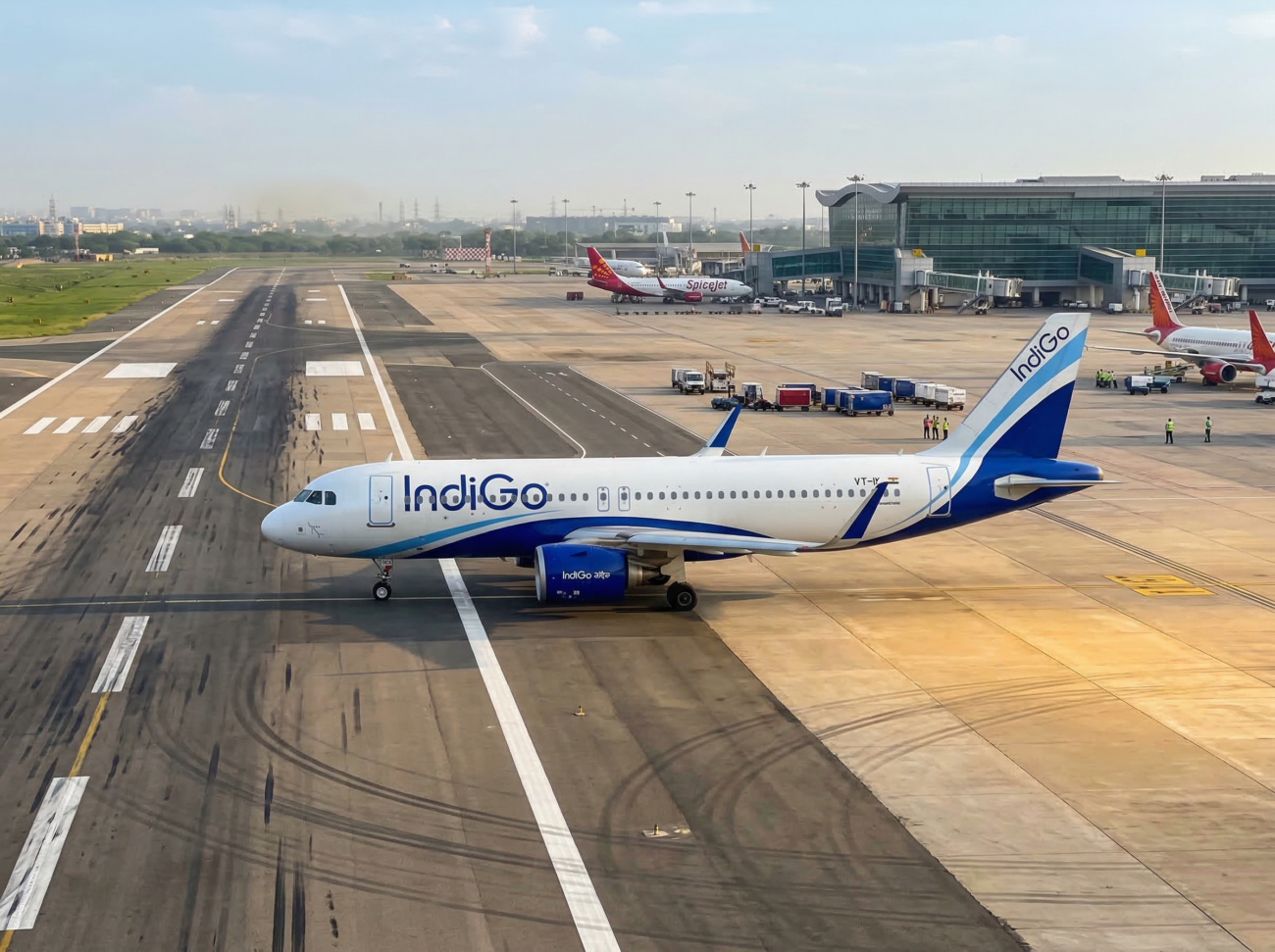
India’s largest airline, IndiGo, is undergoing a leadership transition after its Chief Executive Officer Pieter Elbers stepped down with immediate effect, marking a significant development for the country’s rapidly growing aviation sector.
The resignation comes months after the airline faced one of its most severe operational disruptions, which resulted in widespread flight cancellations and delays that affected thousands of passengers across India. According to a report by Financial Express, Elbers submitted his resignation citing personal reasons, and the airline’s founder and Managing Director Rahul Bhatia will oversee operations until a new chief executive is appointed.
The leadership change arrives at a sensitive moment for IndiGo, which has been navigating regulatory scrutiny and operational challenges following the disruptions that shook India’s aviation network late last year.
Operational disruptions put leadership under pressure
IndiGo’s crisis began in December when the airline experienced large-scale flight cancellations triggered by difficulties adapting to new pilot duty regulations and crew scheduling requirements.
The airline was forced to cancel thousands of flights over several days, leaving passengers stranded at airports and triggering criticism from both regulators and customers. The disruption was particularly severe because IndiGo dominates India’s domestic aviation market and carries a large share of the country’s air travelers.
Industry observers say that when a carrier of IndiGo’s scale experiences operational problems, the ripple effects spread quickly across the entire aviation system.
Airports become congested, ticket prices surge due to reduced capacity, and passengers often struggle to find alternative flights.
India’s aviation regulator also intensified its monitoring of the airline following the disruptions, seeking explanations for the operational breakdown and demanding improvements in scheduling and operational resilience.
Leadership transition at a critical moment
Pieter Elbers, a veteran aviation executive from the Netherlands, took charge as IndiGo’s CEO in 2022 after serving as President and CEO of KLM Royal Dutch Airlines.
His appointment was initially seen as a strategic move to guide IndiGo into a new phase of international expansion and global competitiveness.
Under his leadership, the airline strengthened its international ambitions and expanded routes connecting India with destinations across Asia, Europe, and the Middle East.
However, the operational disruptions that surfaced in late 2025 put intense pressure on the airline’s leadership and management structure.
Industry analysts note that large airlines operate on extremely tight schedules, and even minor issues with crew planning, aircraft rotation, or regulatory compliance can quickly escalate into system-wide disruptions.
For IndiGo, which operates thousands of daily flights and serves millions of passengers each month, operational reliability remains one of the most critical indicators of performance.
Founder Rahul Bhatia takes interim control
Following Elbers’ departure, the airline confirmed that Rahul Bhatia will temporarily oversee the company’s management while the board searches for a permanent replacement.
Bhatia is one of the co-founders of IndiGo and has played a central role in building the airline into India’s dominant low-cost carrier.
The airline’s parent company, InterGlobe Aviation, has grown significantly over the past decade, benefiting from the rapid expansion of India’s aviation market and rising demand for air travel.
India is currently one of the fastest-growing aviation markets in the world, driven by a rising middle class, expanding airport infrastructure, and increased connectivity between cities.
IndiGo has been at the center of that growth story.
The airline commands a major share of India’s domestic aviation market and operates one of the largest fleets of Airbus aircraft in the region.
However, such rapid expansion also brings operational complexity, particularly when regulatory changes or staffing challenges emerge.
Challenges facing India’s aviation industry
The leadership transition at IndiGo also highlights broader challenges facing India’s aviation sector.
Airlines are balancing strong passenger demand with rising costs, regulatory changes, and intense competition.
Fuel prices remain volatile, airport congestion continues to increase in major cities, and airlines must manage large workforces including pilots, cabin crew, and ground staff.
In recent years, regulators have also tightened rules related to pilot duty hours and safety standards, which can affect airline scheduling and operational planning.
The December disruption demonstrated how quickly operational weaknesses can escalate in a complex aviation environment.
For policymakers, the incident underscored the importance of strong regulatory oversight and better crisis management mechanisms within airlines.
Market reaction and industry outlook
Despite the disruption and leadership change, analysts say IndiGo remains fundamentally strong due to its dominant market position and cost-efficient business model.
The airline has historically maintained high operational efficiency and profitability compared with many competitors in the region.
Investors and industry experts are now watching closely to see how the airline’s board handles the leadership transition and what strategy the next chief executive will pursue.
Key priorities will likely include restoring operational stability, strengthening crew planning systems, and continuing the airline’s international expansion strategy.
The company has already placed large aircraft orders as it prepares to expand long-haul routes and compete more aggressively with full-service carriers.
A turning point for IndiGo
Leadership transitions often mark turning points for major airlines, especially when they follow periods of operational stress.
For IndiGo, the resignation of its CEO represents both a challenge and an opportunity.
The airline must restore confidence among passengers, regulators, and investors while continuing to scale its operations in one of the world’s fastest-growing aviation markets.
With India expected to become one of the largest aviation markets globally over the coming decades, the decisions taken by IndiGo’s leadership in the months ahead could shape the future of the airline and influence the broader industry.
For now, the immediate focus remains on stabilizing operations and ensuring that the disruptions seen earlier do not repeat.
ALSO READ
• US Core Inflation Slows Ahead of Iran War as Price Pressures Ease
• High Oil Prices Could Put Pressure on India’s Vulnerable Economy
• Canadian Stocks Slide as Middle East Conflict Fuels Inflation Concerns
Disclaimer
This article is based on publicly available information, market developments, and credible media reports. The content is intended for informational and analytical purposes only and should not be considered financial, investment, or legal advice.