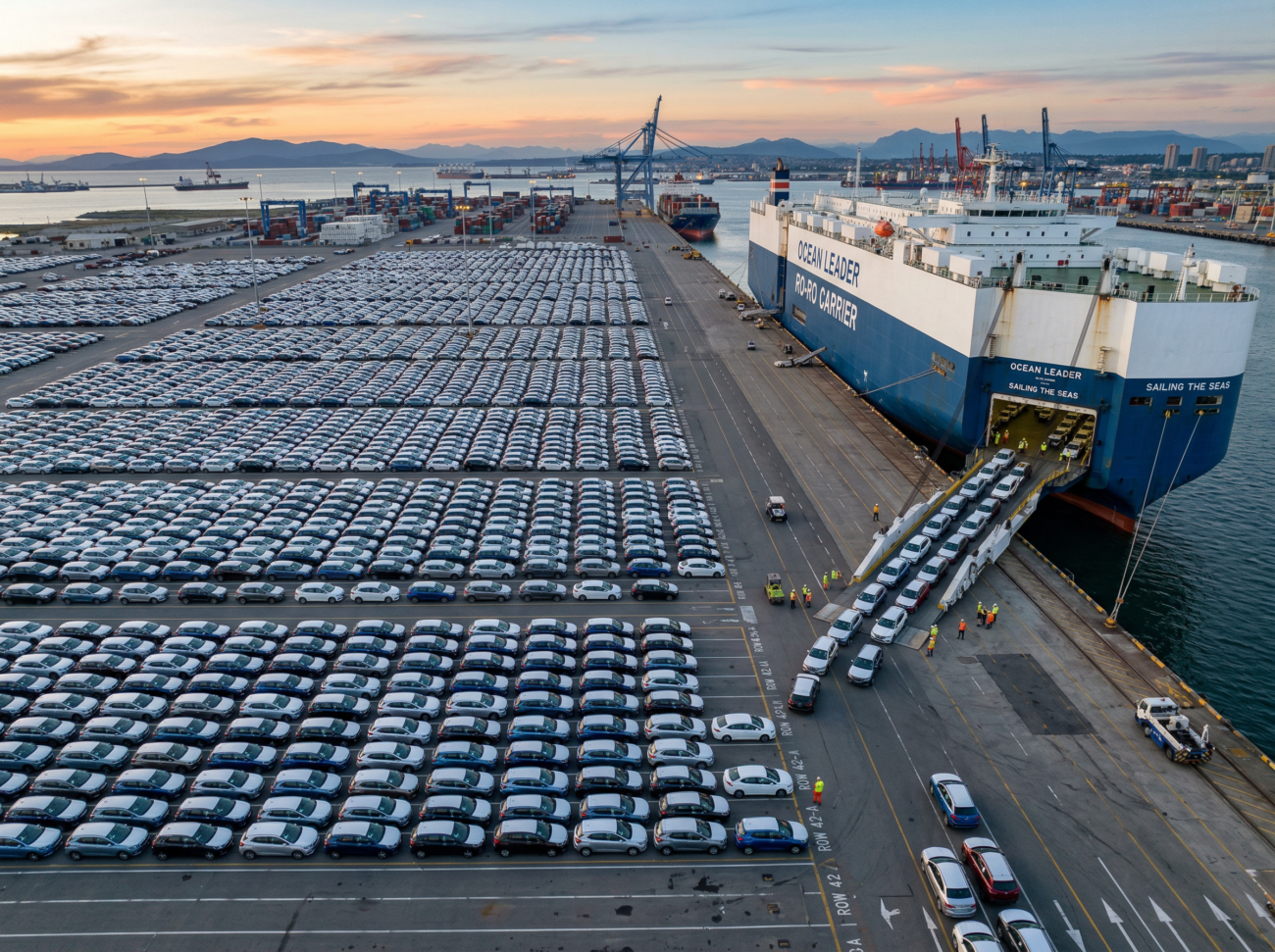
Hyundai Motor has warned of significant disruptions to its export operations as escalating conflict in the Middle East continues to impact global shipping routes, highlighting the vulnerability of automotive supply chains to geopolitical shocks. According to Reuters, the disruption is affecting shipments to key regions including Europe and North Africa, as rising costs and logistical bottlenecks strain the company’s global distribution network.
The situation underscores how the ongoing conflict is extending beyond energy markets into industrial sectors, with automakers increasingly exposed to trade route instability and freight volatility.
Logistics Disruption: Shipping Routes Under Pressure
Hyundai indicated that key maritime routes have been severely affected, forcing the company to reroute shipments and manage delays across its export network. Its logistics arm, Hyundai Glovis, has had to divert cargo and temporarily store vehicles due to restricted access through the Middle East.
In some cases, alternative routing via intermediate hubs such as Sri Lanka is being used, reflecting the growing complexity and inefficiency of global logistics operations under current conditions.
These disruptions come amid broader shipping challenges, including vessel rerouting away from critical passages like the Suez Canal and Strait of Hormuz due to security risks.
Cost Pressures: Freight and Fuel Costs Surge
The conflict has led to a sharp increase in logistics costs, driven by higher fuel prices and surging shipping rates. Industry data shows that freight costs have risen significantly, with some air freight routes seeing increases of up to 70% since the start of the conflict.
At the same time, marine insurance premiums and war-risk surcharges have escalated, adding further financial pressure on automakers dependent on global shipping networks.
For Hyundai, these rising costs are directly impacting margins and operational efficiency, particularly in export-heavy markets.
Trade Impact: Middle East Exports Decline Sharply
The disruption is already visible in trade data, with South Korea’s exports to the Middle East falling by approximately 49%, reflecting a sharp contraction in regional demand and logistical capacity.
Given that the Middle East is a key destination for automotive exports, this decline represents a significant headwind for Hyundai and other global automakers with exposure to the region.
Sales Performance: Global Volumes Under Pressure
Hyundai reported that its global vehicle sales declined by around 2.3%, with both domestic and overseas sales showing slight weakness amid the ongoing disruption.
This decline highlights the broader impact of supply chain instability, where logistical challenges translate directly into reduced delivery volumes and delayed revenue realization.
Market Reaction: Shares Reflect Growing Uncertainty
Despite broader gains in South Korea’s benchmark index, shares of Hyundai Motor and its logistics affiliate Hyundai Glovis declined, reflecting investor concerns over sustained disruption and rising cost pressures.
The divergence between broader market performance and auto sector weakness underscores how industry-specific risks are increasingly driving valuation dynamics.
Structural Impact: Supply Chains Face Prolonged Recovery
Hyundai has cautioned that even if geopolitical tensions ease, the recovery of logistics networks is likely to be gradual. Rebuilding disrupted supply chains, re-establishing shipping routes, and normalizing freight costs will take time.
This reflects a broader structural issue: global supply chains, optimized for efficiency, are highly vulnerable to geopolitical disruptions, particularly in critical chokepoints such as the Strait of Hormuz.
Market Dynamics: Automotive Industry Faces External Shock
The automotive sector is particularly exposed to shipping disruptions due to its reliance on global distribution networks for both finished vehicles and components. The Middle East conflict is compounding existing pressures from:
- Rising energy costs
- Supply chain fragmentation
- Demand volatility across regions
This combination is forcing automakers to reassess logistics strategies and geographic exposure.
Forward Outlook: Uncertainty to Persist Amid Geopolitical Risk
Looking ahead, Hyundai’s export outlook will depend on the stabilization of shipping routes and geopolitical conditions in the Middle East. Key variables include:
- Reopening of critical maritime corridors
- Normalization of freight and insurance costs
- Recovery in regional demand
Until these factors stabilize, export-oriented automakers are likely to face continued operational and financial headwinds.
Expert Insight
Hyundai’s warning highlights a critical shift in global manufacturing economics: logistics has become a strategic risk factor, not just an operational function. For decades, globalization allowed automakers to optimize supply chains for cost and efficiency. Today, those same networks are being tested by geopolitical fragmentation and trade route instability.
In a nutshell, in the current environment, competitive advantage is no longer defined solely by production capacity or product innovation but by resilience in logistics and supply chain adaptability. As conflicts continue to disrupt critical trade corridors, the automotive industry is entering a phase where geopolitics and shipping dynamics will play a central role in determining performance and profitability.
Written by Shalin Soni, CMA specializing in financial analysis, global markets, and corporate strategy, with hands-on experience in financial planning and analytical decision-making.
ALSO READ
• Visa Launches AI Tools to Transform Payment Dispute Management
• JPMorgan’s $80 Billion Small Business Lending Push Signals Banking Shift
• Nvidia’s $97 Billion Shareholder Bonanza Signals Capital Discipline Amid AI Boom
Disclaimer
This article is based on publicly available information, market developments, and credible media reports. The content is intended for informational and analytical purposes only and should not be considered financial, investment, or legal advice.