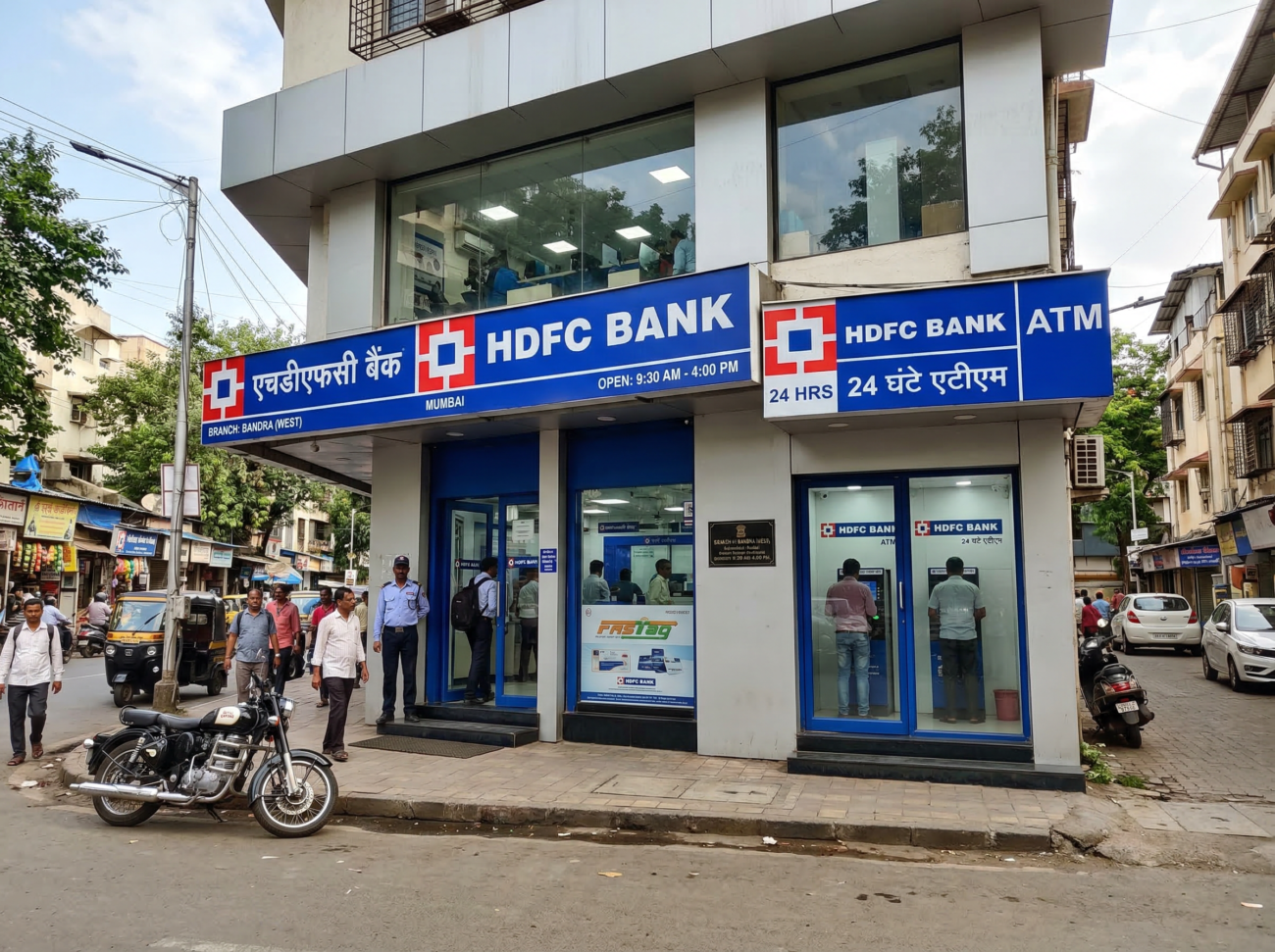
Shares of India’s largest private lender HDFC Bank fell sharply after the sudden resignation of its non-executive chairman, raising concerns about corporate governance and internal dynamics at the country’s most systemically important bank.
The stock dropped as much as 8.7% during trading, marking its steepest decline in more than two years, as investors reacted to the unexpected leadership change.
According to a report by Reuters, HDFC Bank said the chairman’s exit may have stemmed from a rift between him and the management, though the lender emphasized that there were no material operational or financial issues.
Chairman resigns citing “values and ethics”
Atanu Chakraborty, who had served as non-executive chairman since 2021, resigned abruptly, citing differences with the bank over “values and ethics.”
In his resignation letter, Chakraborty said that certain practices within the bank were not aligned with his personal principles, though he did not provide specific details.
The lack of clarity around the reasons for his departure has fueled speculation among investors and analysts about potential internal disagreements within the institution.
Possible rift with management
HDFC Bank indicated that the resignation could be linked to a relationship issue between the chairman and the management team.
Interim chairman Keki Mistry suggested that differences may have developed over time, though he stressed that there were no power struggles or governance failures within the bank.
“There could have been a relationship issue between Chakraborty and management,” Mistry said, adding that the resignation was not related to the bank’s operational performance.
RBI reassures on bank stability
India’s central bank moved quickly to reassure markets following the development.
The Reserve Bank of India (RBI) stated that it had found no material concerns regarding the bank’s governance or conduct, emphasizing that HDFC Bank remains financially strong and well capitalized.
The RBI also approved the appointment of Keki Mistry, a long-time HDFC Group executive, as interim chairman for a three-month period.
As a systemically important bank, HDFC Bank plays a critical role in India’s financial system, making stability and governance issues particularly sensitive.
Market reaction highlights investor concern
Despite regulatory reassurances, the stock market reaction reflected investor unease.
The sharp decline in share price indicates that investors are concerned about the implications of the chairman’s exit, particularly in terms of governance transparency and leadership stability.
Analysts say such developments can affect investor confidence even when the underlying business fundamentals remain strong.
Brokerage firms including Macquarie flagged governance concerns, noting that uncertainty around leadership could weigh on the bank’s valuation in the near term.
Strong fundamentals remain intact
HDFC Bank emphasized that the chairman’s resignation has no impact on its financial performance or operational strength.
The bank continues to report solid fundamentals, including strong profitability, stable asset quality and a large customer base.
As of December 2025, HDFC Bank had a balance sheet of over ₹40 trillion and serves more than 120 million customers, making it one of the largest financial institutions in India.
Its designation as a systemically important bank underscores its importance to the broader economy.
Governance credibility under scrutiny
While the bank’s financial position remains strong, the episode has brought governance practices into focus.
Corporate governance is a critical factor for large financial institutions, particularly those with significant public and institutional investor participation.
Even isolated concerns or leadership disputes can lead to heightened scrutiny from regulators and investors.
Analysts note that maintaining transparency and clear communication will be key for HDFC Bank in addressing market concerns.
Leadership transition and next steps
The appointment of an interim chairman provides stability in the short term, but investors will be closely watching for a permanent replacement.
The board is expected to evaluate candidates and determine the next steps for leadership continuity.
At the same time, the bank may seek to reassure stakeholders through additional disclosures or communication regarding governance practices.
Broader implications for Indian banking sector
The development has implications beyond HDFC Bank.
As one of India’s largest financial institutions, any governance concerns can influence investor sentiment across the broader banking sector.
The episode also highlights the importance of strong governance frameworks in maintaining trust in financial markets.
For regulators, the situation underscores the need for ongoing oversight of systemically important institutions.
Outlook for the stock
In the near term, HDFC Bank’s stock may remain under pressure as investors seek clarity on the circumstances surrounding the chairman’s exit.
Analysts expect volatility to persist until the bank provides more detailed explanations and completes the leadership transition.
However, many believe that the bank’s strong fundamentals could support recovery over the longer term, provided governance concerns are adequately addressed.
For now, the incident serves as a reminder that even well-established financial institutions can face market volatility when leadership changes raise questions about internal dynamics.
ALSO READ
• Singapore Gold Sellers Boost Supply and Storage as Demand Surges Amid Middle East Crisis
• Nvidia Sees $1 Trillion AI Chip Revenue Opportunity by 2027
• India’s Trade Deficit Narrows to $27.1 Billion in February as Imports Decline
Disclaimer
This article is based on publicly available information, market developments, and credible media reports. The content is intended for informational and analytical purposes only and should not be considered financial, investment, or legal advice.