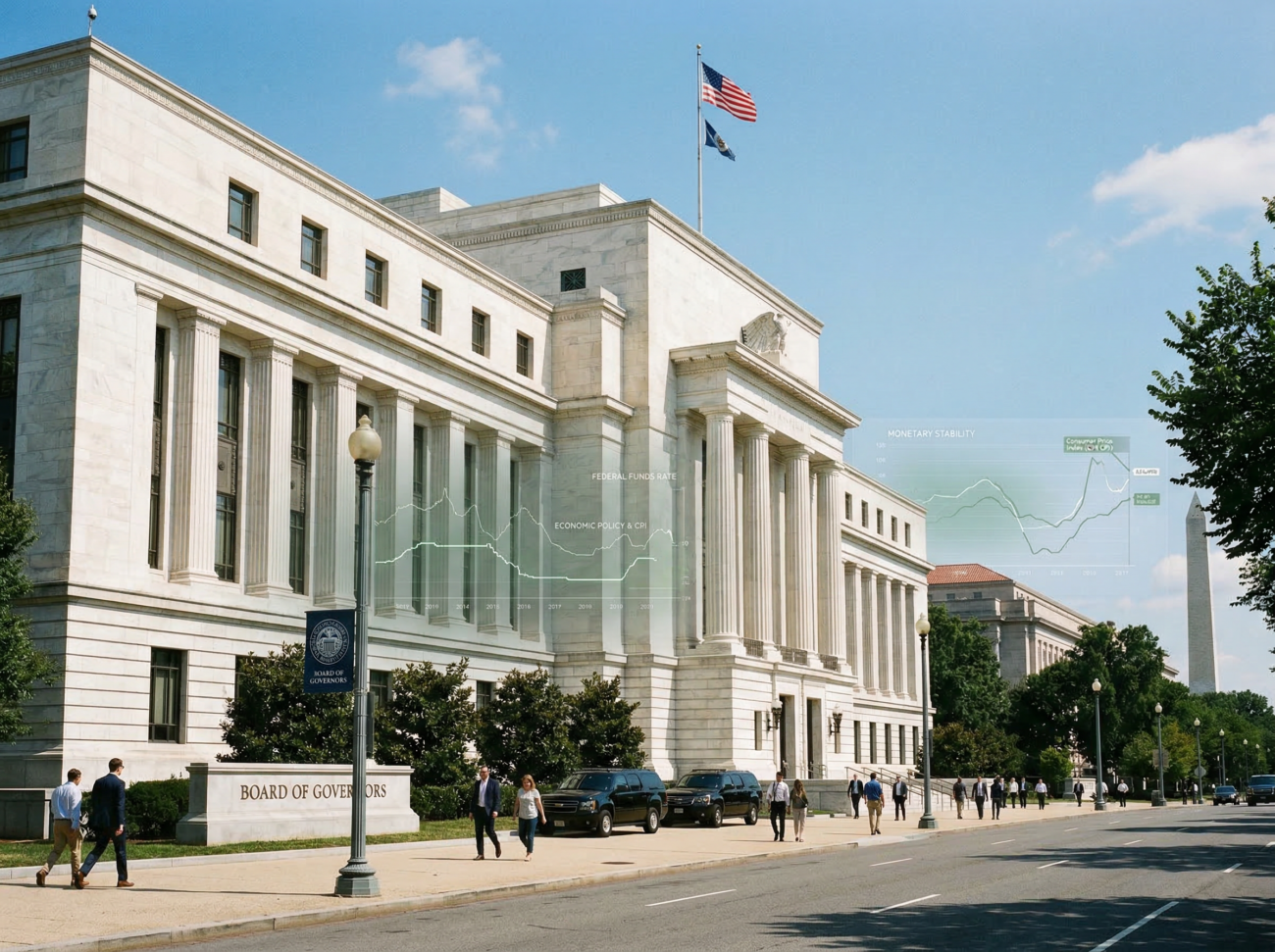
U.S. Federal Reserve officials are widely expected to keep interest rates unchanged as they confront growing uncertainty caused by a surge in oil prices linked to escalating conflict in the Middle East.
The central bank faces a complex policy environment, with rising energy costs threatening to push inflation higher even as concerns about slowing economic growth persist.
According to a report by Bloomberg, policymakers are likely to hold the benchmark interest rate steady in the 3.5% to 3.75% range for a second consecutive meeting, while signaling how the oil shock could influence future decisions.
A difficult balancing act for policymakers
The Federal Reserve’s dual mandate—maintaining price stability and supporting employment—is being tested by the current economic backdrop.
Higher oil prices are typically inflationary, as they raise costs for transportation, manufacturing and households. At the same time, they can also slow economic growth by reducing consumer spending and increasing business costs.
This combination creates a policy dilemma for central banks.
Officials must decide whether to prioritize controlling inflation through tighter monetary policy or supporting economic growth by maintaining or lowering borrowing costs.
Recent market developments suggest that the Fed is leaning toward a cautious approach, opting to wait for clearer signals before making any policy adjustments.
Oil shock reshaping inflation outlook
The surge in oil prices has become a central concern for policymakers.
Global crude prices have risen sharply amid supply disruptions and fears of prolonged instability in the Middle East, raising the risk that inflation could remain elevated for longer than expected.
Economists warn that sustained high energy prices could delay progress toward the Fed’s 2% inflation target, forcing policymakers to reconsider their outlook for interest rate cuts.
In previous months, markets had anticipated that the Fed would begin easing policy in 2026 as inflation cooled.
However, the oil shock has complicated those expectations, with investors now scaling back bets on aggressive rate cuts.
Updated projections in focus
While the Fed is expected to leave rates unchanged, attention will focus on updated economic projections and guidance from officials.
The central bank is likely to revise its forecasts to reflect the impact of higher energy prices on inflation, growth and employment.
Analysts expect:
- Higher inflation projections, due to rising energy costs
- Lower growth forecasts, reflecting economic uncertainty
- Possible adjustments to rate-cut expectations
These projections will provide insight into how policymakers view the evolving economic landscape.
Markets adjust expectations
Financial markets have already begun adjusting to the changing outlook.
Bond yields have risen in recent weeks as investors anticipate that inflation could remain elevated and delay any easing of monetary policy.
At the same time, traders have reduced expectations for rate cuts, with some now predicting only one cut in 2026, compared with earlier forecasts of multiple reductions.
The shift highlights how quickly market sentiment can change in response to geopolitical developments.
Risk of stagflation emerges
One of the key concerns facing the Fed is the possibility of stagflation—a scenario in which inflation rises while economic growth slows.
Such conditions are particularly challenging for policymakers because traditional tools may not address both issues simultaneously.
If the Fed raises rates to combat inflation, it could further slow economic activity.
If it lowers rates to support growth, it risks fueling inflation.
The current environment, shaped by rising energy prices and global uncertainty, has increased the likelihood of such a scenario.
Diverging views within the Fed
Policymakers themselves may hold differing views on how to respond to the oil shock.
Some officials may argue that the central bank should look through temporary increases in energy prices and focus on underlying inflation trends.
Others may worry that sustained high oil prices could lead to broader inflation pressures, requiring a more proactive response.
Recent comments from Fed officials suggest that the central bank is closely monitoring developments while remaining cautious about making premature policy changes.
Political pressure adds complexity
The Fed’s decision comes amid increasing political pressure.
U.S. President Donald Trump has publicly called for lower interest rates, arguing that easing monetary policy could support economic growth.
However, the central bank operates independently and bases its decisions on economic data and analysis rather than political considerations.
Balancing these external pressures with its policy objectives adds another layer of complexity to the Fed’s decision-making process.
Global central banks face similar challenges
The challenges facing the Federal Reserve are not unique.
Central banks around the world are grappling with similar issues as rising energy prices and geopolitical tensions affect their economies.
Some, like Australia’s central bank, have already taken action, while others are expected to hold rates steady while assessing the impact of the oil shock.
The global nature of the crisis means that monetary policy decisions in one country can have ripple effects across international markets.
Outlook for monetary policy
Looking ahead, the path of U.S. monetary policy will depend largely on how the oil shock evolves.
If energy prices stabilize and inflation pressures ease, the Fed may still be able to proceed with gradual rate cuts later in the year.
However, if oil prices remain elevated or continue to rise, policymakers may need to maintain higher interest rates for longer—or even consider tightening policy further.
For now, the Fed appears to be adopting a wait-and-see approach, prioritizing flexibility in an uncertain environment.
The upcoming decision and accompanying guidance will therefore be closely watched by investors, economists and policymakers around the world.
ALSO READ
• JPMorgan Hires Goldman Veteran Zhang as Co-Head of China Investment Banking
• US Treasuries Lose 2026 Gains as Inflation Fears Shake Bond Markets
• iPhone 18 Series: Expected Launch Date, Price in India, Camera and Features
Disclaimer
This article is based on publicly available information, market developments, and credible media reports. The content is intended for informational and analytical purposes only and should not be considered financial, investment, or legal advice.