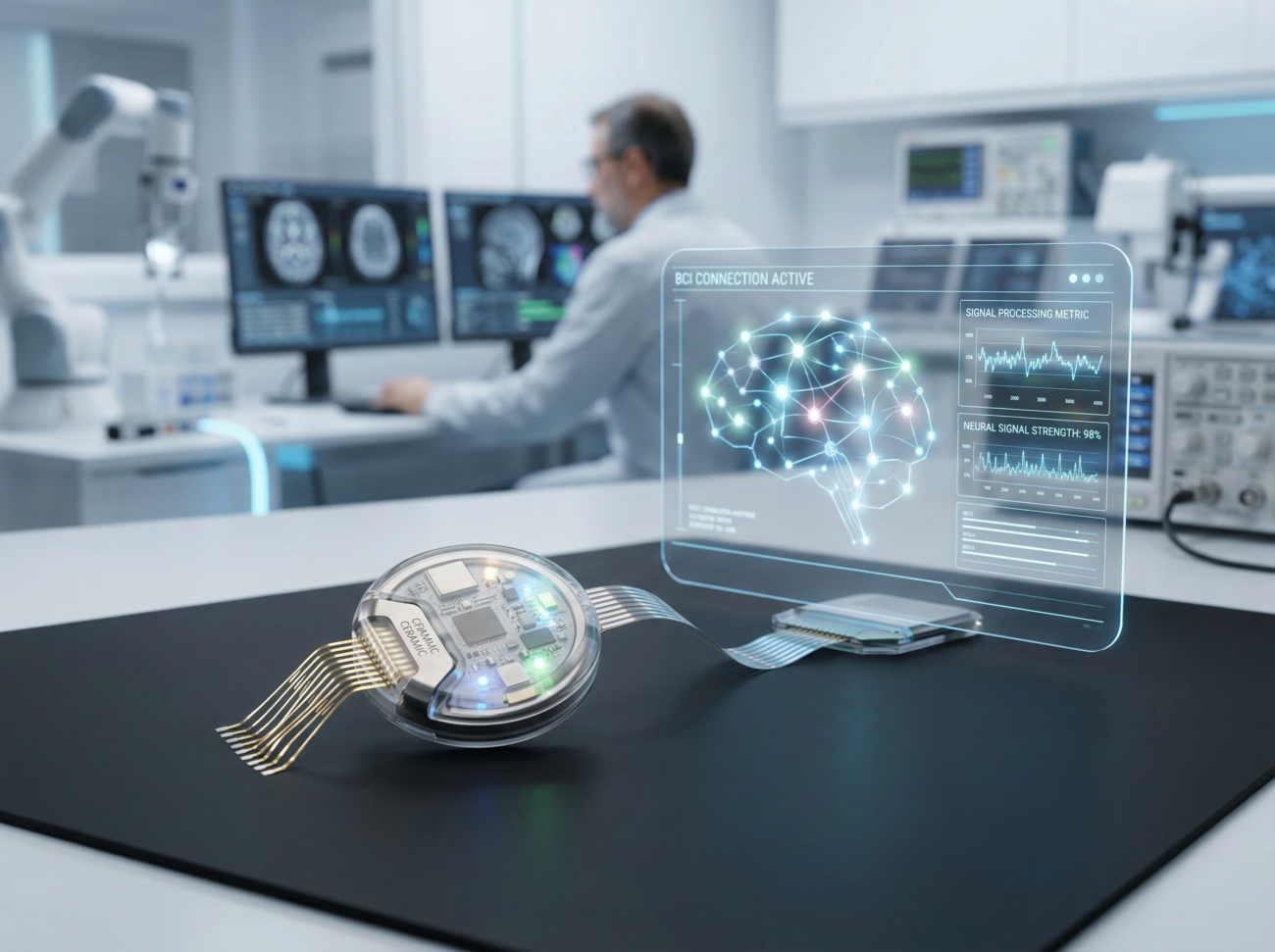
A Beijing-backed brain-computer interface (BCI) company has acknowledged that it remains several years behind Elon Musk’s Neuralink, highlighting the technological gap between China and the United States in one of the most advanced frontiers of artificial intelligence and neurotechnology.
The admission comes as China accelerates efforts to develop brain-chip technologies and expand clinical trials, positioning the sector as a strategic priority in its long-term technology ambitions.
According to a report by Reuters, NeuCyber Neurotech, a startup affiliated with the Chinese Institute for Brain Research, said its most advanced brain implant system lags Neuralink by about three years in development.
China acknowledges gap with Neuralink
NeuCyber’s rotating chief executive Li Yuan said the company’s next-generation implant, known as Beinao-2, is still in earlier stages compared with Neuralink’s system.
“The benchmark for Beinao-2 is Neuralink… there is about three years’ lag,” she said, noting that Neuralink already has more than 20 patients using its technology.
By contrast, NeuCyber is still progressing through animal testing and early-stage clinical development, with full-scale human trials expected to take additional time.
The comparison underscores the lead held by U.S. firms in invasive brain-computer interface technologies, particularly in terms of clinical application.
Neuralink’s technological advantage
Neuralink’s edge lies in its advanced surgical and hardware capabilities.
The company has developed a robotic system capable of inserting hundreds of ultra-thin electrodes into the brain with high precision in a matter of minutes.
This allows its implantable chip—designed to enable direct communication between the brain and computers—to collect neural data at scale.
The company has already moved into human trials, with participants using the technology to control devices through thought alone, marking a significant milestone in neurotechnology development.
China rapidly expanding BCI efforts
Despite the gap, China is moving aggressively to close the distance.
Beijing has identified brain-computer interfaces as a strategic “future industry” in its latest five-year plan, placing it alongside sectors such as quantum computing and advanced artificial intelligence.
The country has also been expanding clinical trials and regulatory support for BCI technologies.
Last week, China became the first country to approve a brain-computer interface device for commercial use, marking a significant milestone in the global race to bring such technologies to market.
The approved device, developed by a Shanghai-based company, is designed to help patients with spinal cord injuries regain motor function through neural signals.
Progress in human trials
NeuCyber has already made progress with its earlier-generation system, Beinao-1, a semi-invasive brain interface.
The company has conducted seven human implantations, including patients with severe paralysis, who have shown improvements in hand movement and the ability to control digital interfaces.
Patients have reportedly been able to move cursors and perform basic digital tasks after several months of use, demonstrating the potential of the technology.
NeuCyber plans to expand trials to around 50 patients, which could make it one of the most extensively tested brain-chip systems globally.
Different technological approaches
One key difference between Chinese and U.S. approaches lies in the type of implants being developed.
Neuralink focuses on fully invasive implants that penetrate brain tissue to capture high-quality neural signals.
Chinese developers, including NeuCyber, are exploring a mix of:
- invasive systems
- semi-invasive systems (placed on the brain’s surface)
- non-invasive solutions
Semi-invasive systems may offer lower medical risk but typically provide less precise signal quality compared with fully invasive implants.
This trade-off reflects differing priorities between safety and performance in early-stage development.
Strategic importance of brain-computer interfaces
Brain-computer interfaces are considered one of the most transformative technologies of the future.
They have the potential to:
- restore movement in paralyzed patients
- enable communication for individuals with neurological conditions
- create new forms of human-computer interaction
Governments and technology companies worldwide are investing heavily in the field, viewing it as a key component of future healthcare and digital ecosystems.
China’s push into BCIs reflects its broader strategy to achieve technological self-reliance and leadership in emerging industries.
Competitive global landscape
The global race in brain-computer interfaces is intensifying, with multiple companies and research institutions competing to develop viable commercial applications.
In addition to Neuralink, other U.S. and international firms are also working on similar technologies, though many remain in early stages of development.
China’s advantage lies in:
- strong government support
- large patient population for clinical trials
- integrated supply chains
However, challenges remain in translating research breakthroughs into scalable, commercially viable products.
Challenges ahead for Chinese firms
While progress has been rapid, Chinese BCI developers still face several hurdles.
The path from laboratory research to clinical application involves:
- extensive testing and regulatory approval
- ensuring long-term safety of implants
- developing reliable and scalable manufacturing processes
Experts note that while China is advancing quickly, bridging the gap with established players like Neuralink will require sustained investment and innovation.
Outlook for the brain-chip industry
The admission by NeuCyber that it trails Neuralink highlights both the progress made by Chinese firms and the challenges that remain.
As clinical trials expand and technologies mature, competition between global players is expected to intensify.
Industry experts believe that widespread commercial use of brain-computer interfaces could become a reality within the next decade, particularly in medical applications.
For now, the race between China and the United States in neurotechnology reflects a broader competition for leadership in next-generation technologies that could reshape healthcare, computing and human interaction.
ALSO READ
• Fed Set to Hold Rates as Oil Shock Complicates Policy Outlook
• Trump’s Delay of Xi Summit Gives China Time to Assess Iran War Impact
• Starlink Launches in Kuwait as Middle East Conflict Highlights Need for Satellite Internet
Disclaimer
This article is based on publicly available information, market developments, and credible media reports. The content is intended for informational and analytical purposes only and should not be considered financial, investment, or legal advice.