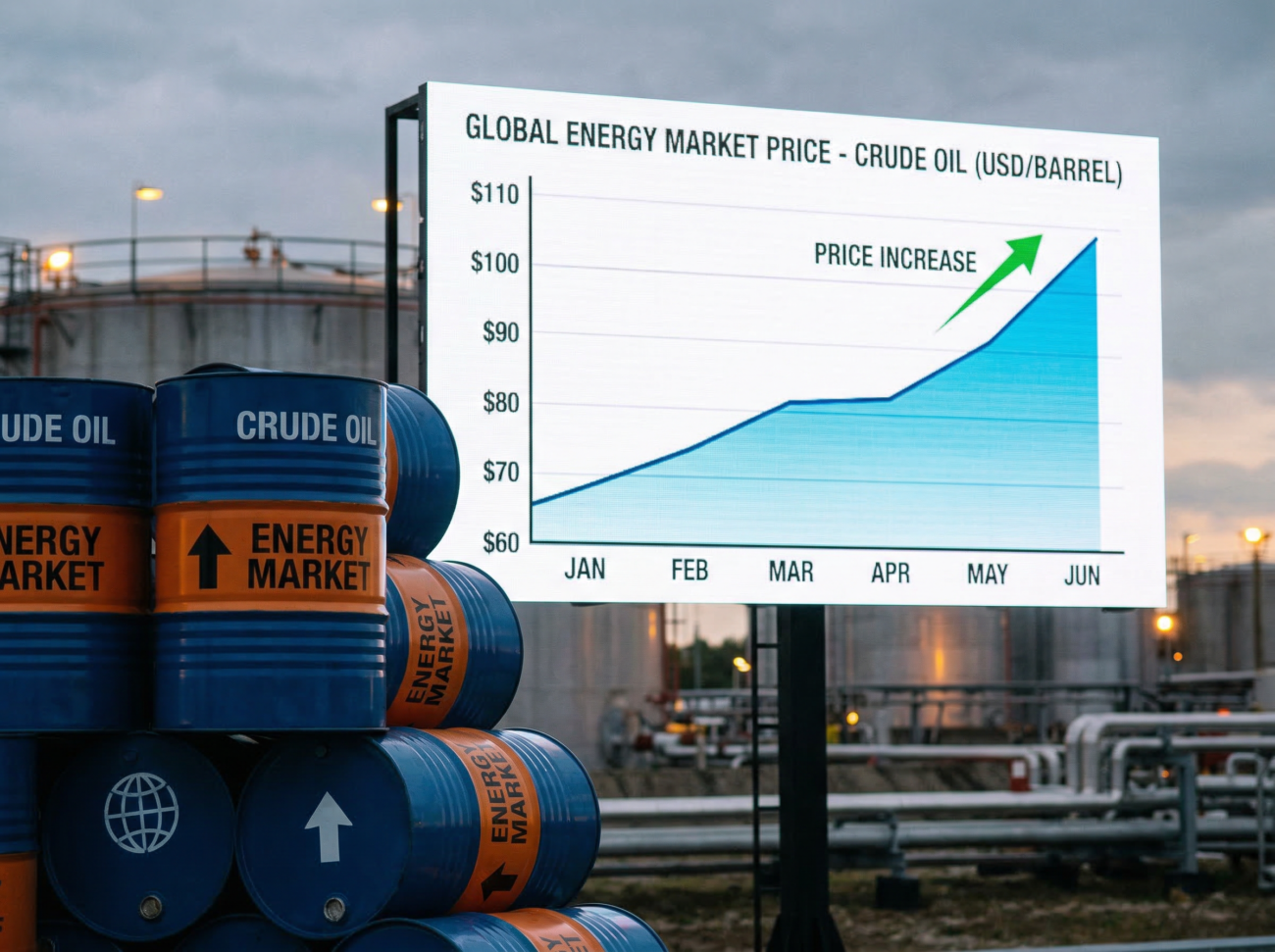
Global oil prices climbed sharply following the outbreak of conflict involving Iran, briefly reaching their highest levels in more than two years before retreating as traders reassessed the potential impact on global supply.
Energy markets reacted swiftly to the escalation of tensions in the Middle East, a region responsible for a significant portion of global crude production and export capacity. According to Reuters reporting, benchmark oil prices initially surged by roughly 10% as investors priced in the possibility of supply disruptions linked to the conflict.
The Middle East has long been considered one of the most strategically sensitive regions for global energy markets. Any conflict involving major producers or critical shipping routes can trigger sharp movements in oil prices as traders anticipate potential interruptions to supply.
In the early stages of the latest conflict, market participants feared that the situation could affect shipping routes through the Strait of Hormuz, a key passage through which a large share of the world’s crude oil exports flows each day. Even the possibility of disruption to this corridor can lead to heightened volatility in energy markets.
However, after reaching their highest levels since 2022, oil prices moderated somewhat as traders reassessed the immediate risks. Analysts noted that while geopolitical tensions remain high, there has not yet been a confirmed disruption to global energy flows.
The rapid price movements highlight the sensitivity of oil markets to geopolitical developments. Energy prices play a central role not only in commodity markets but also in the broader global economy, influencing transportation costs, industrial production, and inflation.
Higher oil prices can have wide-ranging implications for central banks and policymakers. If energy costs remain elevated for an extended period, they can contribute to higher inflation, complicating efforts by central banks to stabilize price growth after years of elevated inflation.
Financial markets are therefore closely watching how the situation unfolds. A prolonged conflict could lead to sustained upward pressure on energy prices, while diplomatic efforts or stabilization in the region could help calm markets.
Energy analysts also point out that global supply dynamics have become more complex in recent years. Production decisions by major producers, including members of OPEC and other oil-producing nations, can interact with geopolitical developments to influence market trends.
For now, the market remains highly sensitive to new developments. Traders will continue to monitor both geopolitical signals and production data as they attempt to assess whether the latest price surge represents a temporary reaction or the beginning of a more sustained shift in global energy markets.
ALSO READ
• US Core Inflation Slows Ahead of Iran War as Price Pressures Ease
• TTK Prestige Shares Jump as Induction Cooktops Surge Amid LPG Shortage
• IndiGo CEO Pieter Elbers Resigns After Major Operational Crisis
Disclaimer
This article is based on publicly available information, market developments, and credible media reports. The content is intended for informational and analytical purposes only and should not be considered financial, investment, or legal advice.