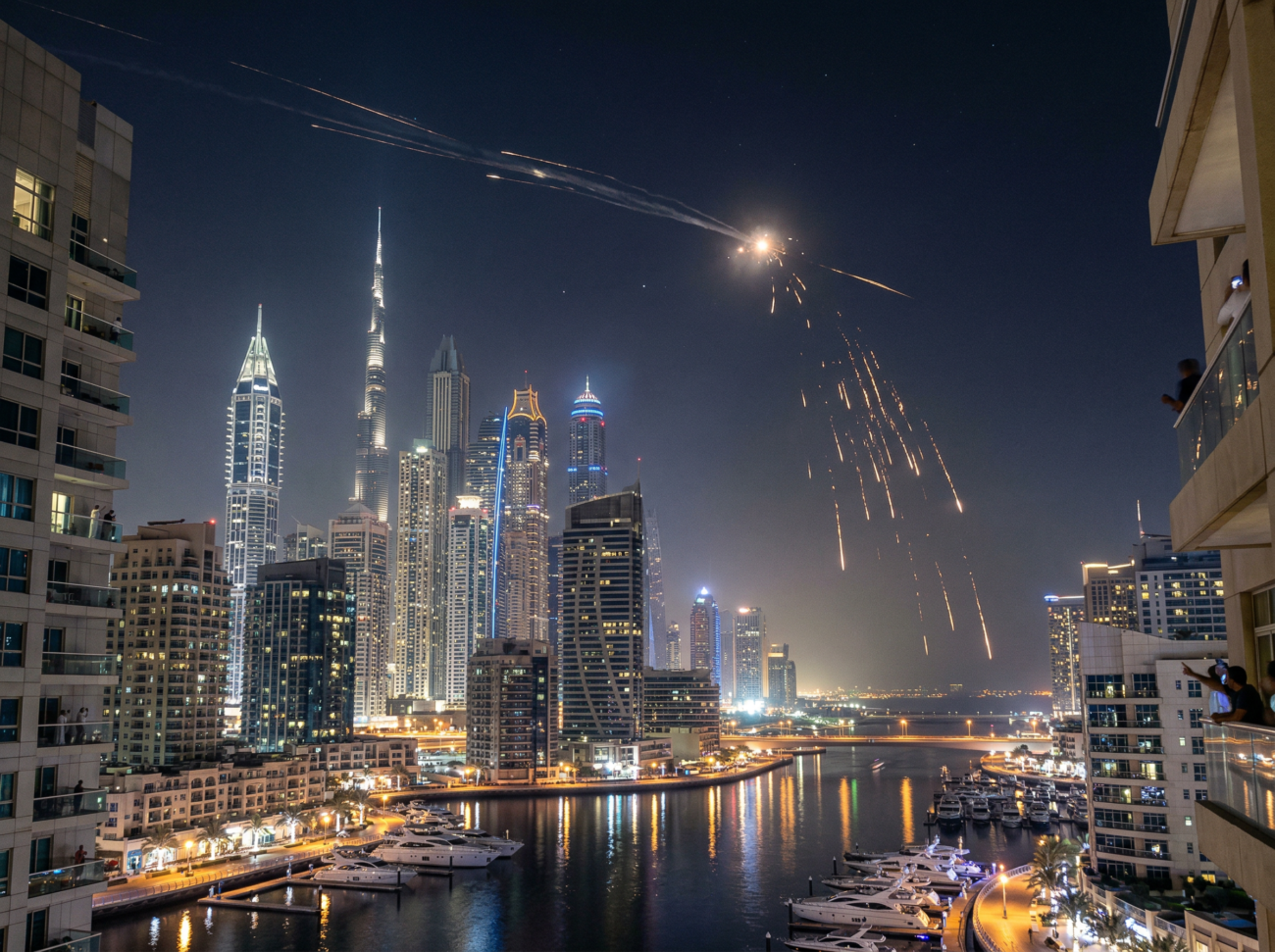
Debris from an aerial interception struck a building housing Oracle in Dubai, underscoring the widening spillover of the Iran conflict into key commercial hubs in the Gulf. According to CNBC, authorities in the United Arab Emirates confirmed the incident, describing it as minor, with no injuries reported, even as tensions continue to escalate across the region.
The development highlights how even successfully intercepted projectiles can create secondary risks in densely populated urban and business districts.
Incident Details: Minor Damage, No Casualties Reported
Dubai authorities stated that debris from an intercepted projectile fell on the facade of the Oracle building in Dubai Internet City, causing limited damage.
Officials emphasized that the situation was quickly contained, with no reports of injuries, fire, or major structural impact, reinforcing the effectiveness of emergency response systems despite the proximity of the incident to critical infrastructure.
Additional debris was also reported in nearby areas such as Dubai Marina, again without casualties.
Geopolitical Context: Conflict Expands Beyond Military Targets
The incident comes amid ongoing escalation in the 2026 Iran conflict, where missile and drone attacks have increasingly targeted Gulf states. The UAE has intercepted hundreds of missiles and thousands of drones since the conflict began, reflecting the scale of aerial threats in the region.
While most projectiles are successfully neutralized, falling debris has repeatedly caused localized damage to civilian and commercial infrastructure, including airports, ports, and financial districts.
Corporate Angle: Tech Infrastructure in the Risk Zone
The involvement of a building housing Oracle highlights a growing concern for multinational corporations operating in geopolitically sensitive regions. Iranian authorities have previously signaled intent to target Western-linked infrastructure and companies, increasing perceived risk for global tech firms in the Middle East.
Although the UAE denied earlier claims of direct strikes on corporate facilities, the latest incident demonstrates that even indirect exposure through interception debris can disrupt business environments.
Urban Risk Dynamics: Interception Does Not Eliminate Threat
The event underscores a critical limitation of modern air defense systems: while interception prevents direct impact, it does not eliminate risk entirely. Debris from intercepted missiles or drones can still fall into populated areas, posing safety and infrastructure challenges.
This dynamic is particularly relevant for cities like Dubai, which combine:
- High population density
- Concentrated financial and commercial districts
- Critical global business infrastructure
Market Implications: Perception of Stability Under Pressure
Dubai has long been viewed as a stable regional hub for finance, technology, and trade. However, repeated incidents involving falling debris are beginning to challenge that perception, even if physical damage remains limited.
Such developments may influence:
- Corporate risk assessments
- Insurance costs
- Investor sentiment toward regional exposure
Forward Outlook: Continued Spillover Risks in Urban Centers
Looking ahead, the risk of similar incidents remains elevated as long as regional hostilities persist. Even with effective interception systems, urban centers in the Gulf are likely to face ongoing exposure to secondary effects such as debris, temporary disruptions, and heightened security measures.
The trajectory of the conflict and any potential de-escalation will be critical in determining the extent of these risks.
Expert Insight
The Dubai incident highlights a crucial evolution in modern conflict dynamics as risk is no longer confined to direct targets but it extends to surrounding ecosystems. In highly interconnected urban economies, even indirect events such as interception debris can have outsized implications for business continuity, investor confidence, and geopolitical risk pricing.
Ina nutshell, in today’s environment, proximity to conflict zones carries systemic risk, even for cities not directly targeted. For global corporations and investors, the challenge is no longer just avoiding conflict but it is managing exposure to its secondary and cascading effects.
Written by Shalin Soni, CMA specializing in financial analysis, global markets, and corporate strategy, with hands-on experience in financial planning and analytical decision-making.
ALSO READ
• Sakura Internet Surges as Microsoft’s $10 Billion AI Investment Boosts Japan Tech
• Netflix Shifts to Original Franchises After Missing $72 Billion Harry Potter Deal
• Oracle Layoffs Signal AI-Driven Restructuring Across Tech Industry
Disclaimer
This article is based on publicly available information, market developments, and credible media reports. The content is intended for informational and analytical purposes only and should not be considered financial, investment, or legal advice.