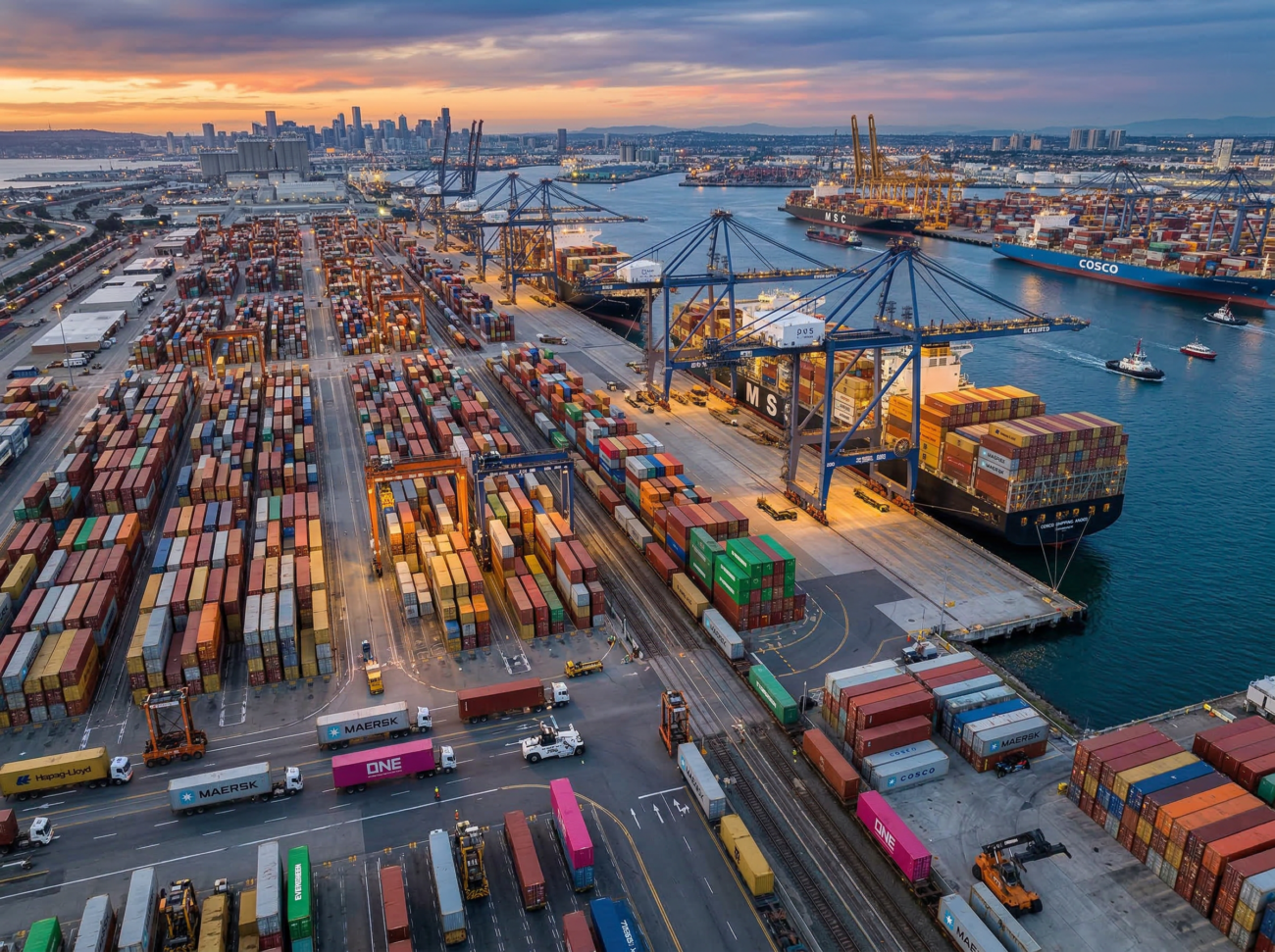
India’s merchandise trade deficit narrowed to $27.1 billion in February, supported by a modest rise in exports and a noticeable decline in imports compared with the previous month, according to official government data.
The improvement reflects easing import demand and stable export performance at a time when global trade flows remain under pressure from geopolitical tensions and volatile commodity prices.
According to a report by Financial Express citing commerce ministry data, India’s exports in February rose slightly while imports declined, helping reduce the gap between inbound and outbound shipments.
Although the narrower deficit suggests some stabilization in India’s external trade position, economists warn that ongoing geopolitical developments—particularly in the Middle East—could affect trade flows in the coming months.
Exports show modest growth
India’s merchandise exports for February stood at $36.61 billion, showing a marginal increase compared with the previous month.
The growth in shipments was driven by sectors such as engineering goods, textiles, food products and jewelry, which remain among the country’s most important export categories.
The United States continued to be India’s largest export market, with shipments to the country rising by about 3.5% during the month, reflecting steady demand for Indian products.
Trade officials say improved export performance in these sectors has helped cushion the impact of slower demand in other global markets.
However, export growth remains moderate compared with previous years due to global economic uncertainty and fluctuating commodity prices.
Imports fall from previous month
India’s imports declined to $63.71 billion in February, down from approximately $71.24 billion in January, helping reduce the country’s overall trade deficit.
The decline was partly attributed to lower purchases of certain commodities and raw materials during the month.
Economists note that fluctuations in imports often reflect shifts in domestic demand and changes in commodity prices.
For India, which imports significant quantities of crude oil, gold and industrial materials, global market conditions can quickly influence monthly import figures.
Despite the month-to-month improvement, the trade deficit remains significantly higher than in the same period last year.
Services sector continues to support trade balance
While the merchandise trade balance remains negative, India continues to generate a strong surplus in services trade.
Estimates indicate that services exports reached about $31.65 billion in February, while imports of services were approximately $14.51 billion, resulting in a surplus of over $17 billion.
The services sector—including information technology, business services and financial services—has become a critical pillar of India’s external trade performance.
This surplus helps offset part of the merchandise trade deficit and contributes to overall stability in the country’s current account balance.
India’s IT services industry in particular remains a major contributor to export earnings, providing services to companies and governments across the globe.
Middle East tensions pose risks to trade
Despite the narrower deficit, policymakers remain cautious about the outlook for India’s external trade environment.
The ongoing conflict in the Middle East has raised concerns about disruptions to global shipping routes and energy supplies.
A blockade of the Strait of Hormuz—one of the world’s most critical oil transit routes—has already affected shipments of commodities such as oil, liquefied natural gas, fertilizers and agricultural products.
Because India imports a large portion of its energy requirements from the region, any disruption to shipping routes could significantly increase import costs.
India currently imports more than 80% of its crude oil needs and about 60% of its cooking gas, making the country highly sensitive to global energy supply disruptions.
Higher energy prices could also increase transportation costs and inflation, potentially affecting economic growth.
Government considering support measures
In response to these uncertainties, Indian policymakers are exploring measures to support exporters and protect the economy from global trade disruptions.
Officials have discussed the possibility of establishing an economic stabilization fund that could provide financial support to exporters facing logistical challenges or declining global demand.
The government has also encouraged consumers to avoid panic buying of essential commodities such as cooking gas in order to prevent artificial shortages.
At the same time, India has increased purchases of Russian crude oil following a temporary waiver of certain U.S. sanctions, allowing the country to secure additional energy supplies during the current crisis.
Trade relations with the United States remain important
India’s trade relationship with the United States continues to play a key role in the country’s export performance.
The United States remains India’s largest export destination, accounting for a significant share of shipments in sectors such as textiles, pharmaceuticals and engineering goods.
Recent legal developments in the United States have also influenced trade conditions.
A ruling by the U.S. Supreme Court earlier this year led to lower tariffs for several trading partners, including India, benefiting exporters in industries such as jewelry and food products.
However, policymakers remain concerned about potential new investigations by U.S. authorities into industrial overcapacity that could affect trade relations in the future.
Outlook for India’s trade performance
Despite the improvement in February’s trade figures, economists expect India’s external trade environment to remain uncertain in the coming months.
Global economic conditions, energy prices and geopolitical developments are likely to continue influencing trade flows.
If energy supply disruptions persist or shipping routes remain unstable, import costs could rise and widen the trade deficit again.
At the same time, strong services exports and stable demand for Indian goods in key markets may help cushion the impact.
For policymakers, maintaining export competitiveness while managing rising import costs will remain a central challenge as India navigates a complex global trade environment.
ALSO READ
• EU Warns Iran Conflict Could Push Inflation Above 3%
• iPhone 18 Series: Expected Launch Date, Price in India, Camera and Features
• Goldman Sachs and General Atlantic Must Face $4 Billion Buyout Lawsuit
Disclaimer
This article is based on publicly available information, market developments, and credible media reports. The content is intended for informational and analytical purposes only and should not be considered financial, investment, or legal advice.