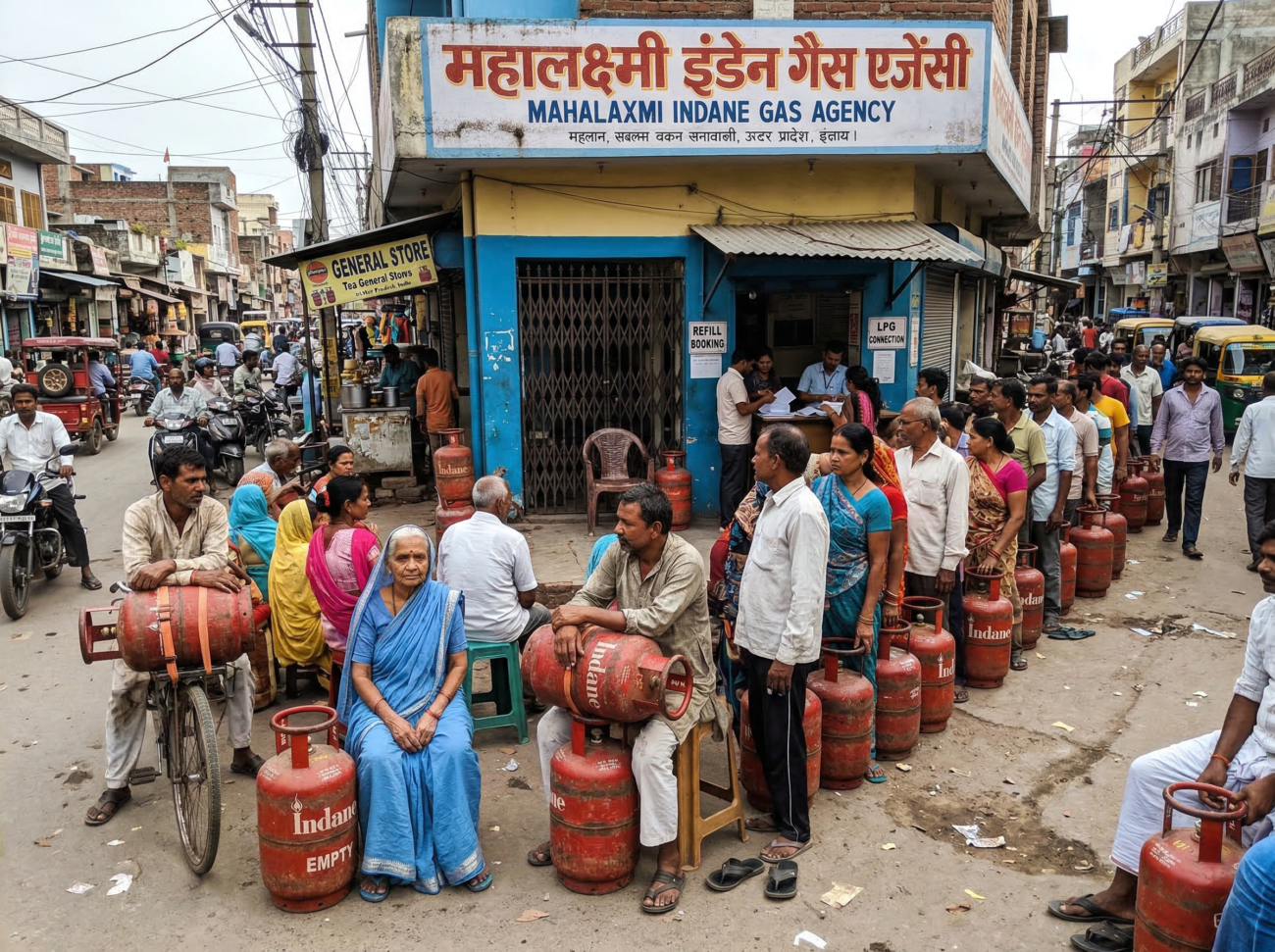
Concerns over a potential shortage of liquefied petroleum gas (LPG) are spreading across several major Indian cities as supply disruptions linked to tensions in West Asia begin to affect distribution networks and commercial users.
Long queues outside gas agencies, reports of delayed cylinder deliveries, and disruptions to restaurants and small businesses have highlighted the growing anxiety surrounding cooking fuel availability in cities including Bengaluru, Mumbai, Delhi and Chennai.
According to a report by Financial Express, authorities across several states are monitoring the supply situation closely as panic buying and logistical disruptions create pressure on LPG distribution channels.
The situation comes amid broader concerns about global energy supply routes after geopolitical tensions in the Middle East affected shipping movements and fuel markets.
Panic buying intensifies pressure on distribution
In several cities, the fear of supply shortages has triggered a surge in demand for LPG cylinders, causing distribution centres to experience heavy footfall.
Reports indicate that consumers have begun lining up outside LPG agencies to refill cylinders amid uncertainty about future availability.
Panic buying has compounded the challenge for distributors, as households and businesses attempt to secure additional cylinders as a precautionary measure.
State governments and energy officials have urged citizens not to hoard cylinders, warning that panic purchases can worsen temporary supply disruptions.
Authorities say distribution systems remain operational, but increased demand has created logistical pressure in some areas.
Commercial LPG users face the biggest impact
Restaurants, hotels and food service businesses are among the sectors most affected by the supply disruption.
Commercial LPG cylinders are widely used by eateries, catering companies and small food businesses across India.
Industry representatives say that irregular supply of commercial cylinders has forced some establishments to shorten menus or temporarily suspend operations.
Restaurant associations have warned that supply disruptions have already been reported in major urban centres such as Bengaluru, Mumbai, Delhi NCR and Chennai.
If the shortage continues for several days, the hospitality sector could face additional operational challenges.
Some restaurants have begun exploring alternative cooking options, including induction stoves or electric appliances, to maintain operations during the supply crunch.
Government steps in to stabilize supply
Government officials have sought to reassure the public that domestic LPG supply remains adequate and that steps are being taken to stabilize the distribution network.
Authorities say India has diversified its energy procurement strategy in recent years to reduce dependence on any single region.
Officials have also emphasized that domestic LPG production has been increased and supply chains are being closely monitored to prevent disruptions.
At the same time, authorities have warned that misinformation and panic buying could create artificial shortages even when overall supply remains sufficient.
State governments have therefore introduced monitoring mechanisms to track distribution and ensure fair allocation of cylinders.
Political debate intensifies over supply concerns
The LPG shortage concerns have also triggered political debate across the country.
Opposition leaders have criticized the government’s handling of the energy supply situation, arguing that geopolitical tensions have exposed vulnerabilities in India’s energy security.
Meanwhile, government officials have rejected claims of a nationwide shortage, describing such reports as exaggerated and emphasizing that supply remains stable.
Political exchanges in Parliament and state assemblies have highlighted the sensitivity of the issue, particularly as cooking fuel remains an essential household commodity for millions of families.
Impact on everyday life
Beyond political debates, the supply disruption is already affecting daily life in several parts of the country.
Educational hostels, community kitchens and restaurants have reported difficulties securing commercial cylinders needed for large-scale cooking operations.
In some locations, authorities have prioritized LPG supply for critical institutions such as hospitals, schools and hostels to ensure essential services continue uninterrupted.
Small food outlets and street vendors have also reported rising costs and limited availability of commercial cylinders.
For many small businesses that rely heavily on cooking gas, even short-term supply interruptions can significantly affect operations and income.
Energy markets and geopolitical risks
The LPG shortage concerns reflect broader uncertainty in global energy markets as geopolitical tensions affect supply routes and fuel availability.
India is one of the world’s largest importers of liquefied petroleum gas, making the country sensitive to disruptions in international energy supply chains.
Shipping routes in the Middle East remain critical for global energy trade, and any disruptions in these corridors can quickly influence domestic fuel markets in importing countries.
Energy analysts say that supply conditions will depend largely on how quickly shipping and energy markets stabilize in the coming weeks.
Alternative cooking technologies gain attention
As concerns over LPG availability grow, many households and businesses are exploring alternative cooking methods.
Retailers report rising demand for induction cooktops, electric stoves and other appliances that do not rely on LPG cylinders.
The trend highlights how energy supply disruptions can influence consumer behavior and accelerate shifts toward alternative technologies.
However, experts note that electric appliances may not fully replace LPG for large-scale cooking, especially in commercial kitchens.
For now, they are serving mainly as temporary solutions for households and small businesses coping with the supply crunch.
Outlook for the LPG supply situation
Energy officials say the current supply disruption is likely to be temporary, with authorities working to restore normal distribution levels.
Incoming shipments and improved logistics could help stabilize supply within the coming days.
However, the situation underscores the vulnerability of energy markets to geopolitical developments and supply chain disruptions.
For policymakers, the current LPG shortage concerns highlight the importance of strengthening energy security and diversifying supply sources in an increasingly uncertain global energy environment.
ALSO READ
• NY Fed Survey Signals Stable Inflation Expectations Before Iran Conflict
• Canadian Stocks Slide as Middle East Conflict Fuels Inflation Concerns
• China Moves to Limit Use of OpenClaw AI at Banks and Government Agencies
Disclaimer
This article is based on publicly available information, market developments, and credible media reports. The content is intended for informational and analytical purposes only and should not be considered financial, investment, or legal advice.